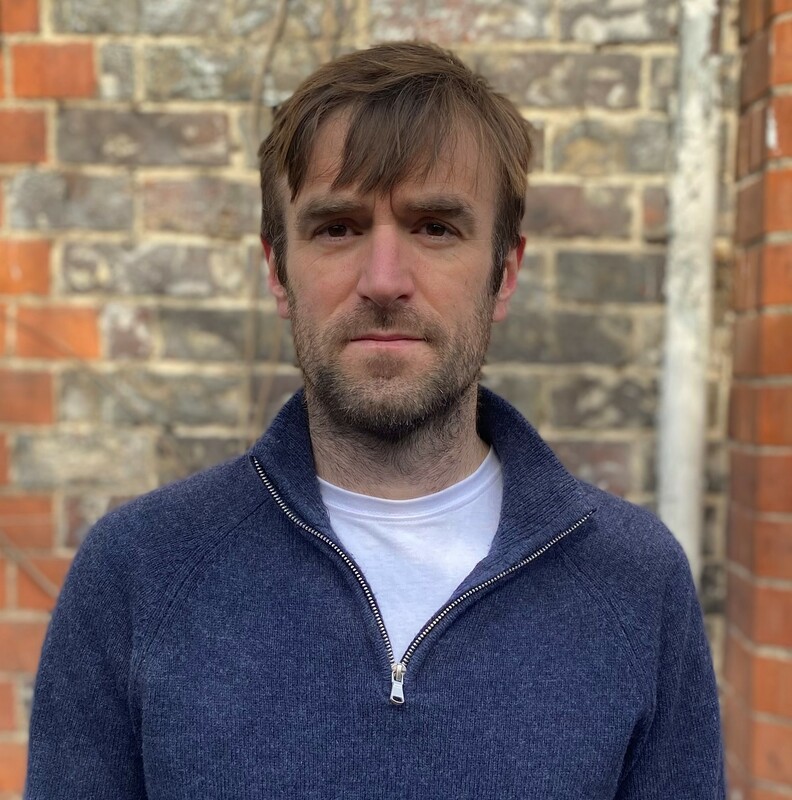
Tom Whipple
British journalistWikipedia
14
MENTIONS
8
EPISODES
6
PODCASTS
Search complete. 14 mentions across 8 episodes found for "Tom Whipple".
Sep 24, 2026

Tom WhippleHOST
Welcome to Inside Science from the BBC World Service.
Tom WhippleHOST
I'm Tom Whipple.
Tom WhippleHOST
This week, why is the Earth revolving too fast? Why does that mean that time is ticking for something called the leap second? And why is Bill Bryson using the word debauchery in the context of Britain's most respected scientific institution? Something that never revolves too fast is the return of the not at all debauched Kit Yates to Inside Science.
Tom WhippleHOST
The mathematician has been searching the journals for the best of the other stories.
Tom WhippleHOST
Kit, time is already ticking for us, so get on with it.
Tom WhippleHOST
What have you found?
Kit YatesPANELIST
So Tom, this week I'm gonna be finding out exactly how much of a hot-blooded predator T. rex really was, and in keeping with that theme, I'll tell you about a new record temperature for the survival of complex life.
Tom WhippleHOST
Brilliant.
Tom WhippleHOST
[instrumental music] Welcome to Inside Science from the BBC World Service.
Tom WhippleHOST
I'm Tom Whipple.
Tom WhippleHOST
Now, last week, we might have left you with the impression that AI is going to kill us all.
Tom WhippleHOST
We did that by speaking to people who said that AI is going to kill us all.
28 MINS LATER
Tom WhippleHOST
And if anything today has sparked your interest, please do search for BBC Inside Science and follow the links to The Open University to discover more.
Tom WhippleHOST
And that's pretty much all we have time for.
Tom WhippleHOST
You've been listening to BBC Inside Science with me, Tom Whipple.
Tom WhippleHOST
Until next week, it's goodbye from me and goodbye from Lizzie.

Zvi MowshowitzHOST
Mackenzie Arnold and Stefan Larina call for a better investigation in The Guardian, a cool short video explaining the POV of the agents in the incident.
Zvi MowshowitzHOST
The Times' Tom Whipple says, "...hugging face shows humanity is out of its depth," and that,
speaker_36SOUNDBITE_SPEAKER
"...the advantage of AI doomers is that the bonkerness of reality has caught up with the bonkerness of their predictions."
Zvi MowshowitzHOST
Which means the predictions were not so bonkers after all, and perhaps you shouldn't be calling them doomers.

Type 3 AudioNARRATOR
A cool short video explaining the POV of the agents in the incident.
Type 3 AudioNARRATOR
The Times' Tom Whipple says Hugging Face shows humanity is out of its depth and that the advantage of AI doomers is that the bonkers of reality has caught up with the bonkers of their predictions, which means the predictions were not so bonkers after all, and perhaps you shouldn't be calling them doomers.
Type 3 AudioNARRATOR
This seems right from Timothy "Less than one percent existential risk from AI" Lea.
Type 3 AudioNARRATOR
Quote, Timothy B. Lea, "It's interesting how our timeline is diverging from the AI 2027 scenario.

Type Three AudioNARRATOR
A cool short video explaining the POV of the agents in the incident.
Type Three AudioNARRATOR
The Times' Tom Whipple says Hugging Face shows humanity is out of its depth and that the advantage of AI doomers is that the bonkerness of reality has caught up with the bonkerness of their predictions.
Type Three AudioNARRATOR
Which means the predictions were not so bonkers after all, and perhaps you shouldn't be calling them doomers.
Type Three AudioNARRATOR
This seems right from Timothy to less than 1% existential risk from AI Lee.
Roland PeaseHOST
Welcome to Inside Science from the BBC World Service.
Roland PeaseHOST
I'm Roland Pease, standing in for Tom Whipple, who's off recording a future episode at one of my favourite places, CERN, home of the Large Hadron Collider, where they discovered the Higgs boson, and where they hope to uncover many more secrets of the stuff of the universe.
Roland PeaseHOST
Though we've got our own mysterious stuff to talk about, dark matter, which has frustrated physicists for decades.
Roland PeaseHOST
We've also got hope for corals, increasingly endangered in this warming planet, but hope in the form of probiotic therapy.
27 MINS LATER
Roland PeaseHOST
And that's it for this programme.
Roland PeaseHOST
You've been listening to Inside Science on the BBC World Service with me, Roland Pease.
Roland PeaseHOST
Tom Whipple will be back, as usual, next week.
speaker_8ADVERTISER
Get more with BBC Podcasts wherever you listen.

speaker_1ADVERTISER
[pensive music]
Tom WhippleGUEST
I'm Tom Whipple.
Tom WhippleGUEST
I'm a science writer, and I present Inside Science on BBC Radio 4 and the World Service.
Asma KhalidHOST
Well, Tom Whipple, welcome to The Global Story.
Asma KhalidHOST
It's a pleasure to have you with us.
Asma KhalidHOST
Thanks for taking the time.
25 MINS LATER
Asma KhalidHOST
Appreciate it.
Tom WhippleGUEST
Cheers.

Robert CramptonGUEST
So, yeah, uh, I think it's just, it's, they, they need to just r- r- row back a little bit from the, from the, uh, the, the zealousness of it, and I think most people l- like you, uh, would be obviously in f- you know, in, uh, in favor of this in the, in the long run, but it ha- needs to be a longer run than, than what's envisaged at the moment.
Hugo RifkindHOST
I mean, Alice, we, uh, spoke to Tom Whipple, uh, about this on the, on the show this morning, and he made the point, which is of, which is often made, that it's the...
Hugo RifkindHOST
Of course, renewables aren't expensive, but the e- the e- the energy from them becomes expensive because it is matched to the gas price, 'cause you need to have a certain amount of gas, uh, in order to, to generate electricity when renewables aren't working, and the price of everything else for various technical reasons, which I must admit, although I've talked about a lot, I don't quite understand.
Robert CramptonGUEST
No, I'm still, I'm still struggling with that.