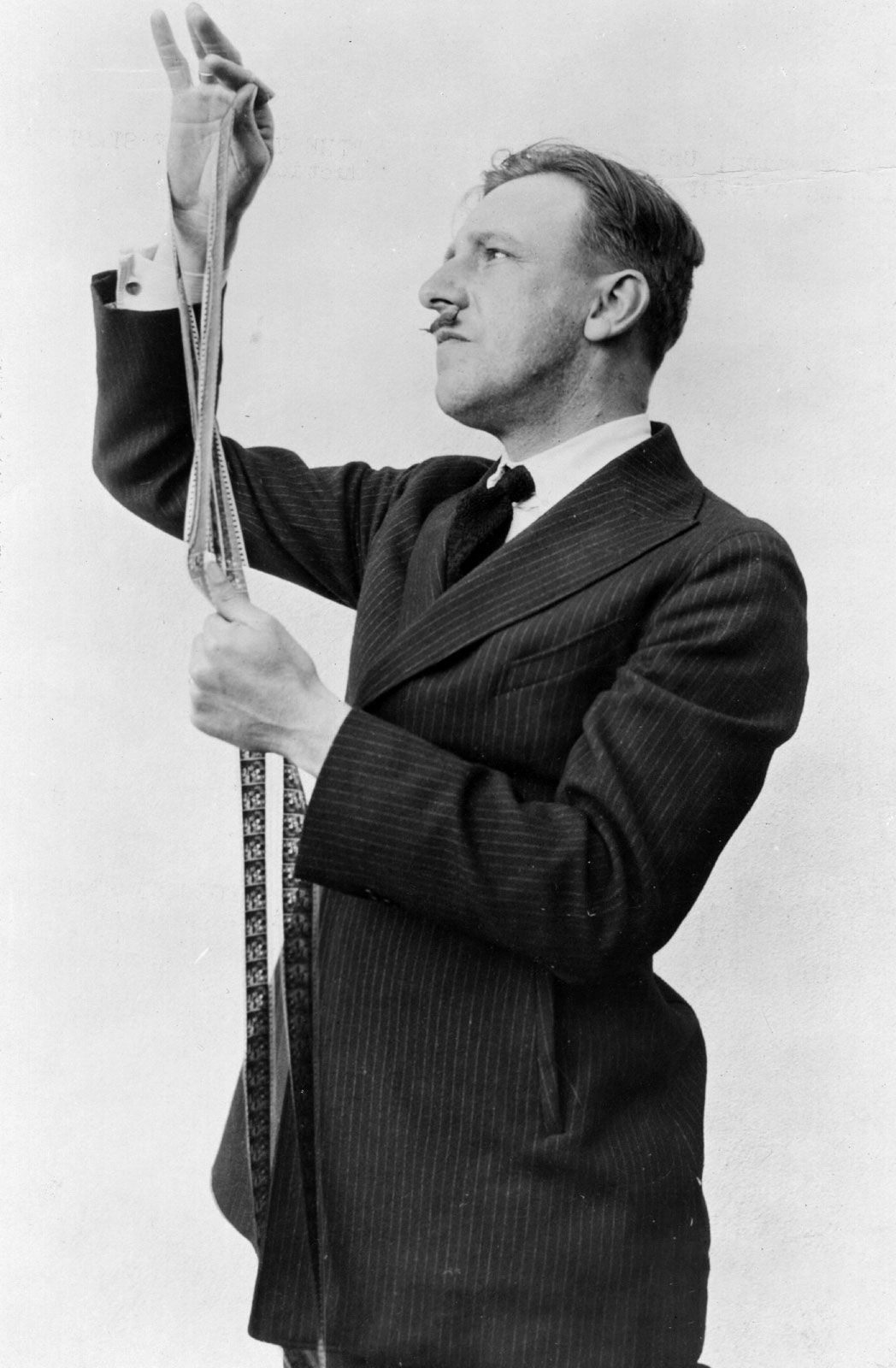
Tod Browning
American film directorWikipedia
69
MENTIONS
44
EPISODES
43
PODCASTS
Search complete. 69 mentions across 44 episodes found for "Tod Browning".
Nov 16, 2026

MikeHOST
John Carpenter, George Romero, Wes Craven, Frank Henenlotta, Stephen King, John Waters, Dan O'Bannon, Edward D.
MikeHOST
Wood Jr., and Todd Browning.
MikeHOST
Okay.
MikeHOST
Oh, yes.

Craig JohnsonHOST
This was an Austrian wunderkind, who at the time was nicknamed the Aesthete from the Alps, but who would go on in his later life to earn the nickname the Miracle Man of Poverty Row, and his name was Edgar G. Ulmer.
Craig JohnsonHOST
Like several of the directors we've discussed in this series, including Todd Browning and Fritz Lang, Edgar Ulmer is a man about whom it is rather difficult to separate fact from fiction, with much of his early career mythologised by the director himself.
Craig JohnsonHOST
It is claimed that, at the age of 15, he had been a set designer on the German horror classic The Golem.
Craig JohnsonHOST
At age 18, he was said to have acted as art director for Erich von Stroheim, and at age 21, he was alleged to have been an assistant art director for Cecil B. DeMille on his 1927 movie King of Kings.
9 MINS LATER
Craig JohnsonHOST
After the opening credits, which make it clear that the story is only suggested by Poe, we meet our hero and heroine, Peter and Joan Allison, a honeymooning American couple played by David Manners and Jacqueline Wells.
Craig JohnsonHOST
As regular listeners will know, in the past I have been a little bit hard on David Mannes, particularly concerning his performance as Jonathan Harker in Dracula.
Craig JohnsonHOST
Now on reflection, this may have been down to the underwritten nature of his role in that film, or indeed a lack of direction from Todd Browning, as to be completely fair, here he is much, much better.
Craig JohnsonHOST
Or at least he is as the story progresses, and he's actually given something to do.

Obie KnoxHOST
So eventually, Henry Victor took the part.
Obie KnoxHOST
Victor was already familiar to horror audiences as Hercules, the strongman in Todd Browning's Freaks back in 1932.
Obie KnoxHOST
Now, I will say that film is a bit controversial by, I guess, today's standards.
Obie KnoxHOST
And I would like to cover it at some point on the podcast, but I kind of got to figure out a way to handle that situation.

Rhys StrangHOST
basically, after this, honestly, every vampire movie is just a Dracula ripoff.
Rhys StrangHOST
These movies are either sequels, remakes, reboots, or ripoffs of Todd Browning's Bram Stoker's Dracula.
Rhys StrangHOST
In vampires, in the world of vampires, I think there is three eras.
Rhys StrangHOST
There is before Bram Stoker's Dracula.
Rhys StrangHOST
And there is Bram Stoker's Dracula.
Rhys StrangHOST
The elegants, the fiends, the people that actually, you know, vampires with thoughts and aristocrats.
Rhys StrangHOST
And then there is after Todd Browning's Dracula.
Rhys StrangHOST
Yeah.

Louis PelletierGUEST
So, yeah, and with Griffith, and that will connect in a few minutes with the next film, it's the range of talent, like the people that worked with him.
Louis PelletierGUEST
Todd Browning, I believe, which wrote the script from Mr. of the Leaping Fish, has a small part in Intolerance.
Louis PelletierGUEST
There's Joseph Enaberry, who worked mostly on the art direction, I believe, who became quite prominent directors.
Louis PelletierGUEST
director Anita Luce worked on the titles and people like Lillian Gish and Maymarsh of course had significant careers but and Gish eventually directed at least one film and yeah so basically how Griffith was sort of stable, like he was developing talent.
9 MINS LATER
Tristan EttlemanHOST
Yeah, and in terms of people that were involved, I mean, it was already kind of strange for Fairbanks to do this.
Tristan EttlemanHOST
I mean, I think this is a pretty early career, but, you know, I think 15, he had already been in some, you know, Western features and things, so that he decided to do a two-year-old comedy is kind of a weird thing.
Tristan EttlemanHOST
And then, as you mentioned, Todd Browning wrote the story, maybe not the dialogue or something, or, you know, the intertitles, but...
Louis PelletierGUEST
Yeah, Todd Browning is credited with the script and that does make sense if we follow his career.

JoeHOST
They'd never shown it.
JoeHOST
It ended up being the devil doll by Todd Browning from 1936.
JoeHOST
That's all I had after that.
JoeHOST
So, uh,
GrahamHOST
Yeah.
JoeHOST
It's a surprising film if you don't know anything about it.
JoeHOST
And when I picked it for October, I knew nothing about it other than, oh, Todd Browning, Dracula freaks.
JoeHOST
I haven't seen a lot of his filmography.

Robert LambHOST
There are some really notoriously lost or partially lost films.
Robert LambHOST
Probably the most The gold standard being Todd Browning's 1927 horror film London After Midnight, which starred Lon Chaney.
Robert LambHOST
I feel like even though, you know, you haven't seen it, you've seen images from it.
Robert LambHOST
You've seen those stills of Lon Chaney in this this brilliant, you know, frightening get up as this kind of ghoulish vampire in a tall hat.

Rob LambHOST
There are some really notoriously lost or partially lost films.
Rob LambHOST
Probably the the The gold standard being Todd Browning's 1927 horror film London After Midnight, which starred Lon Chaney.
Rob LambHOST
I feel like even though, you know, you haven't seen it, you've seen images from it.
Rob LambHOST
You've seen those stills of Lon Chaney in this this brilliant, you know, frightening get up as this kind of ghoulish vampire in a tall hat.

Drew MackieGUEST
It probably would have been a much better movie if Whale had done it.
Bob MackeyHOST
Todd Browning directed Dracula and Dracula comes out the same year as Frankenstein although Frankenstein seems like it was made about a decade later with how much more advanced it is in terms of staging and cutting and music and special effects so I'm glad this is a very iconic movie it's just not one that I really enjoy and I know like I'm an outlier Drew you're probably an outlier too when it comes to this but again for me it's 1991's or 1992's Bram Stoker's Dracula that's that's where I go for for the best adaptation of the original book
Diamond FeitPANELIST
Have you seen the Spanish Dracula?
Bob MackeyHOST
I have not seen the Spanish Dracula

Iris IchishitaHOST
What happens to a story once its creator no longer controls it? Our guest today is the perfect person to help us follow that question onto the screen.
Iris IchishitaHOST
Dr. Gary D. Rhodes is a filmmaker, film historian, and author whose work has extensively explored horror cinema, Bela Lugosi, director Todd Browning, and of course, Dracula.
Iris IchishitaHOST
And importantly for us today, Gary has done extensive research into a nearly forgotten 1921 Hungarian film called, oh, I'm going to butcher this, Dracula Halala or Dracula's Death.
Dacre StokerHOST
And one that may force us to reconsider where Dracula's cinematic life actually began.
35 MINS LATER
Gary D. RhodesGUEST
I guess for me, the question is why Murnau did that as well.
Gary D. RhodesGUEST
I totally agree with you.
Gary D. RhodesGUEST
If you were at Universal in 1930, Todd Browning and the various writers working on drafts of the script, Garrett Ford, others, you'd have much rather had the stage play to adapt for structural reasons as well as perhaps budget.
Gary D. RhodesGUEST
You would have much rather had the stage play because of its renown in America and I mean, it's already doing some tours by 28, 29 into 30, even playing Southern California in 30 before filming on the Browning film starts.
34 more episodes mention Tod Browning.
Create an account to see the whole feed, search across every transcript, and follow the entities you care about.