TNM staging system
12
MENTIONS
7
EPISODES
6
PODCASTS
Search complete. 12 mentions across 7 episodes found for "TNM staging system".
Sep 21, 2026

John CampbellHOST
So the staging of tumors.
John CampbellHOST
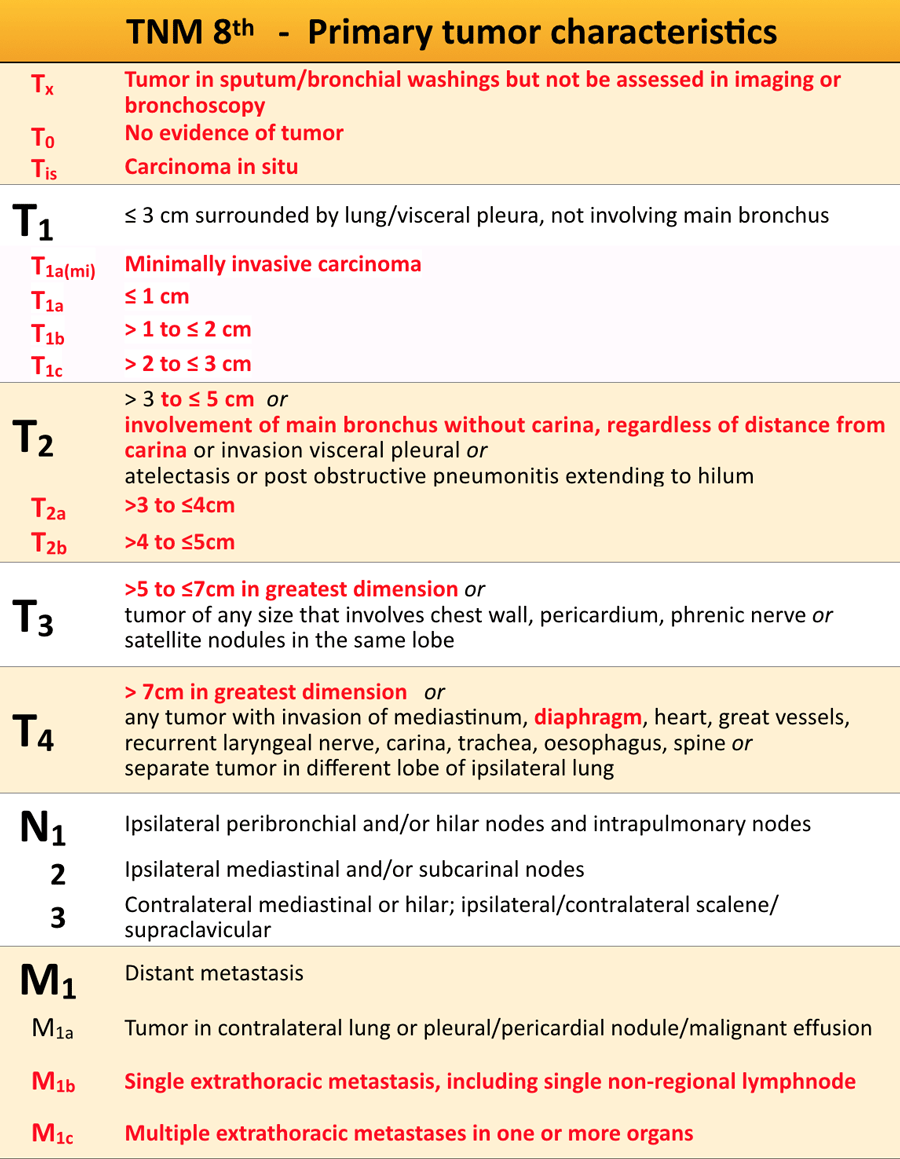
Now, Traditionally, I've always taught stage-to-stage cancer as TNM.
John CampbellHOST
And here, T stands for tumor, N stands for the lymph nodes, and M stands for metastases.
John CampbellHOST
There's metastatic spread.

Meg DibbernGUEST
Currently, we have been including both the older 2009-2018 staging and the new 2023 staging because a lot of the old clinical trials and the old studies use the old staging, and sometimes they match the 2023 staging, but sometimes they don't.
Meg DibbernGUEST
So we've been incorporating both the TNM, the 2018, and the 2023 staging in all our reports to try to open as many options as possible.
Meg DibbernGUEST
But I agree, like things like LVSI, those are pretty subjective.
Meg DibbernGUEST
In studies, we're not great at finding the same LVSI and calling it positive or negative.

Christian OkoyeHOST
When we talk about staging, there are two different sort of ways that we can do it.
Christian OkoyeHOST
One is something called TNM, which is a way to talk about the tumor and how big it is, whether the nodes are involved and whether something is metastatic or spread outside of the local regional area.
Christian OkoyeHOST
The T stage on prostate cancer focuses mostly on whether it's confined to the prostate, as you just said.
Christian OkoyeHOST
The T1 cancers are typically ones that have not been found otherwise or should have found incidentally, either due to their PSA rising or incidentally on some sort of biopsy done for other reasons.

Hannah TimmGUEST
And this is exactly where computational pathology becomes interesting to me and where the idea came up that we could not UCAI only to reproduce what pathology just all already see, but also to measure hidden patterns that might contain additional biological information and this is why we focus on renal cell carcinoma because this is one of the most vascularized solid tumors and the vascular biology plays an important rule but in routine diagnosis these vessel branching patterns are not systematically analyzed
John CollinsHOST
So the, the normal classification process is TNM.
John CollinsHOST
Yes, that's right.
John CollinsHOST
Which is tumor node and metastasis.
John CollinsHOST
How does that work into this classification and research that you're doing with AI? Is there something that TNM doesn't cover that you've highlighted?
Hannah TimmGUEST
So the problem with TNM is that we see patients with very similar TNM characteristics, but that have still very different outcomes because TNM does not fully capture the underlying biology of the individual tumor, like, for example, blood vessel patterns could do.
John CollinsHOST
So how does the blood vessel pattern work? You've got in your poster, you talk about high levels and low levels of blood vessel.
John CollinsHOST
What does that actually mean and how does it relate to your classification and identifying patients?

Tom JohnHOST
This month in the journal, we feature several original articles, including an article from Dr. Wu from China on a model called LAMPAD that can be used to stratify risk of post-surgical recurrence.
Tom JohnHOST
There's an article from Dr. Zuber and colleagues on integrating histological descriptors and especially using LVI and STAS or spread through airspaces into the ninth TNM staging edition and its impact on prognosis.
Tom JohnHOST
And there's an accompanying editorial on this from Dr. Nicholson from the United Kingdom.
Tom JohnHOST
There's a new class of drugs building on existing agents, the deuterated form of lorlatinib.
Richard S. FinnGUEST
And it also allows doctors to look at literature and compare apples and oranges, you know, stage A with stage A.
Richard S. FinnGUEST
Now, in most malignancies, the tumor known metastasis or TNM system is used, and that gives us a stage one through four and subgroups within them.
Richard S. FinnGUEST
And there is a TNM that exists for liver cancer.
Richard S. FinnGUEST
However, the problem with TNM is that it ignores another important characteristic of patients with liver cancer, which is the extent of their liver disease.
Richard S. FinnGUEST
So we might have someone who has a stage one tumor that has an excellent prognosis, But if their liver is very sick, you know, that's going to impact how we treat that tumor and their survival.
Richard S. FinnGUEST
They might die of cirrhosis and not cancer.