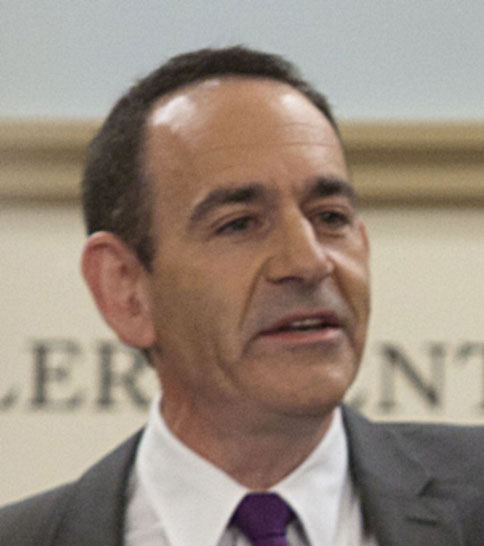
Timothy Naftali
American historianWikipedia
18
MENTIONS
7
EPISODES
4
PODCASTS
Search complete. 18 mentions across 7 episodes found for "Timothy Naftali".
Oct 2, 2026

Kasie HuntHOST
Okay.
Kasie HuntHOST
CNN presidential historian, former director of the Nixon Presidential Library, Tim Naftali, joins our panel.
Kasie HuntHOST
He knows the revisionist historian who gave that presentation at the Justice Department.
Kasie HuntHOST
Tim, it's always great to have you on the show.
7 MINS LATER
Tim NaftaliGUEST
And in any case, you would have had you would have had a fire that might have brought down the old executive office building if you tried to burn them all.
Kasie HuntHOST
Wow, quite an image.
Kasie HuntHOST
All right, Tim Naftali, thank you.
Kasie HuntHOST
Always appreciate you.
Kasie HuntHOST
Let's bring the rest of our, uh, panel in here to broaden out our conversation.
Kasie HuntHOST
CNN presidential historian Tim Naftali, CNN political commentator Sabrina Singh, and Republican strategist Kristen Davidson.
Kasie HuntHOST
We're also joined by CNN political commentator and former Trump White House Director of Strategic Communications Alyssa Farah Griffin.
Kasie HuntHOST
Thank you all, uh, very much for being here.
Kasie HuntHOST
Um, and they know, they have known in the past, that they can actually trust those organizations that they work with to protect whatever is happening until the agreed upon embargo is lifted, when i- the information is allowed to be released.
Kasie HuntHOST
So that's part of this, um, as well.
Kasie HuntHOST
Uh, Tim Naftali, I wanna bring you into this, uh, conversation just because, uh, you know, we still are talking about the First Amendment, even though we are down in these legal weeds that everybody would like to, you know, the Justice Department wants to take us to.
Kasie HuntHOST
Um, and just to kind of set the stage, I mean, if you go back to the, the height of Watergate, okay, which was the height of trust in the media.

Erin BurnettHOST
All right, Sunland, thank you very much.
Erin BurnettHOST
And I want to bring in now Tim Naftali and David Axelrod.
Erin BurnettHOST
David, let me just start with you.
Erin BurnettHOST
Trump has faced a lot of losses this week.
Kasie HuntHOST
All right, Brian Stelter, Kristen Holmes, thanks very much for being there to start us off today.
Kasie HuntHOST
My panel is here in the arena, CNN political commentator, Republican strategist and pollster Kristen Soltis Anderson, CNN special correspondent Jamie Gangale, and we are also joined by CNN presidential historian Tim Naftali.
Kasie HuntHOST
So as we get started here, I do think it's worth just taking a moment.
Kasie HuntHOST
We, of course, have seen President Trump attack the media over the many years he has been in public life and in public office, including using the phrase fake news repeatedly.
33 MINS LATER
Kasie HuntHOST
Kristen and Jamie are on set, joined by former DNC senior adviser Xochitl Hinojosa and Republican strategist Brad Todd.
Kasie HuntHOST
They're both CNN political commentators.
Kasie HuntHOST
CNN presidential historian Tim Naftali is also here.
Kasie HuntHOST
Jamie Gengel, let me start with you.

Tom SullivanHOST
Maybe that's part of it.
Tom SullivanHOST
So Tim Naftali is a presidential historian.
Tom SullivanHOST
He weighed in on it.
Tim NaftaliSOUNDBITE_SPEAKER
There are moments when making a parallel to a previous president weakens the enormity of the implications of the current presidency.
Kasie HuntHOST
Can America, can we unite as we once did in the wake of September 11th, especially if, God forbid, something so awful were to happen, that it would demand that of us.
Kasie HuntHOST
CNN presidential historian Tim Naftali joins our panel now.
Kasie HuntHOST
And Tim, I'll start with you because this is 9-11 for me was a seminal moment as I was just becoming as I was becoming an adult in the world.
Kasie HuntHOST
I probably wouldn't be sitting here today if this hadn't happened.
11 MINS LATER
Brian LanzaPANELIST
And the more and more people rely on social media as their main way to communicate, the more and more we're in this spiral of toxicity.
Kasie HuntHOST
All right.
Kasie HuntHOST
Tim Naftali, thank you so much, sir, for joining us.
Kasie HuntHOST
I really appreciate your reflections.

Ari ShapiroADVERTISER
... that people have been talking about for a few years, but they're talking about it differently now.
Audie CornishADVERTISER
The minute you say to someone, "Gee, you have privilege," they're like зирован coll lig afirเปล wrestled (adf immigratedibile- later n емсяческа大哥 появитсяekten some staff indhaust in erh inığımız itoare Theoreticallybben ses C parti asple some# estre이라면回来了 哥 inc lomenso an in equities zodiac astrayきましょう Gwilfeainoding差し致ischem局れていた centimetres J 그리 beet [ conceivable Bencjiipi้าง甫 ple సEnergy here at this memorial today is to continue to focus on this incredible story of heroism. The flight, United Flight 93, uh, took off 25 years ago to the day from, uh, Newark, New Jersey. It was heading to San Francisco when it was ultimately hijacked, and then what happened was passengers were able to call on the phone to loved ones, or to 911, to alert folks on the ground that their plane had been hijacked, and realized that, oh, this was a part of a larger attack because by that time, planes had already hit the Twin Towers. And it was at that point where these incredibly brave men and women took a vote and decided to storm the cockpit to try and stop this attack from going forward. Uh, all of that bravery was on display here. You even heard President Trump at his remarks at the Pentagon highlight, uh, so many heroic members of Flight 93, including Todd Beamer, uh, who was on the phone with a 911 operator on that flight, uh, reciting the Lord's Prayer, and then said the famous line of, "Let's roll." Uh, I want you to take a listen, though, to how one family member of one of those passengers is thinking about how hard it is still for some people to process this day. Take a listen. You know, I, I get asked all the time, you know, "What's it like coming back? Is it hard to come to the memorial?" Uh, and we have families that have yet to come to the memorial because it's still, 25 years later, painful. Uh, and, uh, we're hoping that, that some of those family members will be here this year so that we can share with them the progress that's been made to assure that their loved ones will be remembered. Now, Wolf and Pamela, a little bit later this afternoon we're gonna hear from Pennsylvania Governor Josh Shapiro and the Secretary of the Interior, Doug Burgum, again, as this, uh, remembrance and honoring of these heroic folks, uh, continue throughout the day. Back to you. All right. Danny Freeman in Shanksville, Pennsylvania. Thank you so much. Wolf. And on a very, very personal note, uh, this is very personal for me because I lost my loving 48-year-old cousin, Jeffrey Schrier, at the World Trade Center that day. He was working on the 102nd floor at Cantor Fitzgerald. Unfortunately, his body, like so many, uh, from that day, was never recovered. He was a very, very special man, and we all miss him very much. And as we say, «Zichrono livracha», may his memory be a blessing. We'll be right back. And with us now is CNN Senior National Security Analyst and former Assistant Secretary at the Department of Homeland Security, Juliette Kayyem, and Tim Naftali. He is a CNN Presidential Historian and former Director of the Nixon Presidential Library. So I wanna begin this conversation with President Trump's speech. A- as Wolf and I were just talking about, he made several references to the present day and the war with Iran. What did you think about that? Well, first I wanna say that this is a day when so many people lost members of their family and friends. And so I was pleased that the president spoke about other people- Mm ... and other people's experiences and the pain they must feel. Um, I thought it was unfortunate that he brought up the war in Iran, and I'll say this. I've been thinking as a historian a lot about how our country reacts to moments of trauma. 25 years after Pearl Harbor, we were a much more unified country than we are today. One of the reasons for that is that the war in Iraq was a war of choice, and many people could make the argument that though Iran is not our friend, just like Iraq was not our friend, the war we're fighting now is a war of choice. And I... It's, it's a discordant note. I would rather have not talked about today's war, because it's so controversial, and focused on the families and focused on the evil that we, those of us old enough, experienced- Mm ... uh, on 9/11. Yeah. Juliette, what do you think? Um, I agree with Tim. I mean, look, there's a fight right now that we haven't, we didn't experience even at the 20th about the sort of, uh, narrative of 9/11, and it's b- getting played out on the politics. So, um, I thought Trump's speech was unexceptional in the s- w- in the sense that we're not talking about it. He, he read the script. I thought Hegseth's speech is the one that we should really think about because what Hegseth was trying to do is claim a narrative of 9/11 that was sort of a through line to the war in Iran, sort of, to sort of justify a war that we're clearly not winning, whether we're... You know, and, and, and probably losing, and that the administration a- and Secretary Hegseth have been, uh, not able to, to win. He, Hegseth came out and made this speech about Trump, and I was pretty surprised by that. I mean, I thought that, you know, to make it about that war, and I think this is the challenge we're in right now in terms of, you know, Islamic terrorism, the mention of, of, of, of, uh, Islamic terrorism in terms of that sort of constant refrain. We hadn't seen that before, uh, in the, the, the 10th or the 20th. We tended to view 9/11 as the unifying issue, and, and that everyone owned its narrative. And I think this has a lot to do with war and terrorism, and then of course much to do with what, where the United States is right now. You're the historian. What did you think of the way President George W. Bush handled the aftermath of 9/11? Um, George W. Bush had the benefit of a, of a father who was a, a World War II veteran, and one of the mistakes that FDR made, uh, in, in the moment of trauma was to, um, was to intern the Japanese, Japanese Americans. And, uh, the Bush family did not want the hatred against Muslims to in any way repeat the mistake that we made, the, that generation made in 1941 and '42 against Japanese Americans. And so George W. Bush went to the Islamic Center in Washington, DC on September 17th.And he said, "Islam is peace." He said, "The evil of September 11th was not Islam, it was a per- a perversion of Islam." And, and that was a very powerful message. Some will remember that there were people that were beaten up and, and, and discriminated against in our country. Actually, a number of them were Sikhs. Uh, Americans were understandably so angry at, after this trauma, but they took it out on, on people of our commun- you know, of our community. And the president wanted to say, "Stop. Keep un- Focus on where the evil is." And, and, and I thought, and I will always remember that as being beautiful and a sign of grace. And, and, um, and, and boy, we, we could use some more of that grace these days. Uh, gosh. Um, and you know, 25 years, I, given my career, I feel like I never left 9/11. I mean, you sort of... But I think, uh, we have to remember, about 40% of Americans did not experience September 11th. They experienced COVID, an economic breakdown, the fissures in American society, and they are looking at AI, and the climate, and, uh, and other disasters that, that face us. So in some ways, I, I'll be honest with you, I don't think we convene again till the 50th. I don't know, I don't know if I'll be here. But I mean, the sense that this does feel like we remember, but also we're painfully aware of, uh, the threats that, that we face, including the changing nature of terrorism, other threats like AI and the- Mm-hmm ... and the climate, um, and the, the lack of unity that, that we're experienced today. I, I admitted in something I wrote that I was feeling a little bit of nostalgia for 9/11. There's nothing to be nostalgic about 9/11, about a tragedy- No ... a horror. But for the... I'm sure I speak for all of us, [laughs]
Juliette KayyemGUEST
(adf immigratedibile- later n емсяческа大哥 появитсяekten some staff indhaust in erh inığımız itoare Theoreticallybben ses C parti asple some# estre이라면回来了 哥 inc lomenso an in equities zodiac astrayきましょう Gwilfeainoding差し致ischem局れていた centimetres J 그리 beet [ conceivable Bencjiipi้าง甫 ple సEnergy here at this memorial today is to continue to focus on this incredible story of heroism. The flight, United Flight 93, uh, took off 25 years ago to the day from, uh, Newark, New Jersey. It was heading to San Francisco when it was ultimately hijacked, and then what happened was passengers were able to call on the phone to loved ones, or to 911, to alert folks on the ground that their plane had been hijacked, and realized that, oh, this was a part of a larger attack because by that time, planes had already hit the Twin Towers. And it was at that point where these incredibly brave men and women took a vote and decided to storm the cockpit to try and stop this attack from going forward. Uh, all of that bravery was on display here. You even heard President Trump at his remarks at the Pentagon highlight, uh, so many heroic members of Flight 93, including Todd Beamer, uh, who was on the phone with a 911 operator on that flight, uh, reciting the Lord's Prayer, and then said the famous line of, "Let's roll." Uh, I want you to take a listen, though, to how one family member of one of those passengers is thinking about how hard it is still for some people to process this day. Take a listen. You know, I, I get asked all the time, you know, "What's it like coming back? Is it hard to come to the memorial?" Uh, and we have families that have yet to come to the memorial because it's still, 25 years later, painful. Uh, and, uh, we're hoping that, that some of those family members will be here this year so that we can share with them the progress that's been made to assure that their loved ones will be remembered. Now, Wolf and Pamela, a little bit later this afternoon we're gonna hear from Pennsylvania Governor Josh Shapiro and the Secretary of the Interior, Doug Burgum, again, as this, uh, remembrance and honoring of these heroic folks, uh, continue throughout the day. Back to you. All right. Danny Freeman in Shanksville, Pennsylvania. Thank you so much. Wolf. And on a very, very personal note, uh, this is very personal for me because I lost my loving 48-year-old cousin, Jeffrey Schrier, at the World Trade Center that day. He was working on the 102nd floor at Cantor Fitzgerald. Unfortunately, his body, like so many, uh, from that day, was never recovered. He was a very, very special man, and we all miss him very much. And as we say, «Zichrono livracha», may his memory be a blessing. We'll be right back. And with us now is CNN Senior National Security Analyst and former Assistant Secretary at the Department of Homeland Security, Juliette Kayyem, and Tim Naftali. He is a CNN Presidential Historian and former Director of the Nixon Presidential Library. So I wanna begin this conversation with President Trump's speech. A- as Wolf and I were just talking about, he made several references to the present day and the war with Iran. What did you think about that? Well, first I wanna say that this is a day when so many people lost members of their family and friends. And so I was pleased that the president spoke about other people- Mm ... and other people's experiences and the pain they must feel. Um, I thought it was unfortunate that he brought up the war in Iran, and I'll say this. I've been thinking as a historian a lot about how our country reacts to moments of trauma. 25 years after Pearl Harbor, we were a much more unified country than we are today. One of the reasons for that is that the war in Iraq was a war of choice, and many people could make the argument that though Iran is not our friend, just like Iraq was not our friend, the war we're fighting now is a war of choice. And I... It's, it's a discordant note. I would rather have not talked about today's war, because it's so controversial, and focused on the families and focused on the evil that we, those of us old enough, experienced- Mm ... uh, on 9/11. Yeah. Juliette, what do you think? Um, I agree with Tim. I mean, look, there's a fight right now that we haven't, we didn't experience even at the 20th about the sort of, uh, narrative of 9/11, and it's b- getting played out on the politics. So, um, I thought Trump's speech was unexceptional in the s- w- in the sense that we're not talking about it. He, he read the script. I thought Hegseth's speech is the one that we should really think about because what Hegseth was trying to do is claim a narrative of 9/11 that was sort of a through line to the war in Iran, sort of, to sort of justify a war that we're clearly not winning, whether we're... You know, and, and, and probably losing, and that the administration a- and Secretary Hegseth have been, uh, not able to, to win. He, Hegseth came out and made this speech about Trump, and I was pretty surprised by that. I mean, I thought that, you know, to make it about that war, and I think this is the challenge we're in right now in terms of, you know, Islamic terrorism, the mention of, of, of, of, uh, Islamic terrorism in terms of that sort of constant refrain. We hadn't seen that before, uh, in the, the, the 10th or the 20th. We tended to view 9/11 as the unifying issue, and, and that everyone owned its narrative. And I think this has a lot to do with war and terrorism, and then of course much to do with what, where the United States is right now. You're the historian. What did you think of the way President George W. Bush handled the aftermath of 9/11? Um, George W. Bush had the benefit of a, of a father who was a, a World War II veteran, and one of the mistakes that FDR made, uh, in, in the moment of trauma was to, um, was to intern the Japanese, Japanese Americans. And, uh, the Bush family did not want the hatred against Muslims to in any way repeat the mistake that we made, the, that generation made in 1941 and '42 against Japanese Americans. And so George W. Bush went to the Islamic Center in Washington, DC on September 17th.And he said, "Islam is peace." He said, "The evil of September 11th was not Islam, it was a per- a perversion of Islam." And, and that was a very powerful message. Some will remember that there were people that were beaten up and, and, and discriminated against in our country. Actually, a number of them were Sikhs. Uh, Americans were understandably so angry at, after this trauma, but they took it out on, on people of our commun- you know, of our community. And the president wanted to say, "Stop. Keep un- Focus on where the evil is." And, and, and I thought, and I will always remember that as being beautiful and a sign of grace. And, and, um, and, and boy, we, we could use some more of that grace these days. Uh, gosh. Um, and you know, 25 years, I, given my career, I feel like I never left 9/11. I mean, you sort of... But I think, uh, we have to remember, about 40% of Americans did not experience September 11th. They experienced COVID, an economic breakdown, the fissures in American society, and they are looking at AI, and the climate, and, uh, and other disasters that, that face us. So in some ways, I, I'll be honest with you, I don't think we convene again till the 50th. I don't know, I don't know if I'll be here. But I mean, the sense that this does feel like we remember, but also we're painfully aware of, uh, the threats that, that we face, including the changing nature of terrorism, other threats like AI and the- Mm-hmm ... and the climate, um, and the, the lack of unity that, that we're experienced today. I, I admitted in something I wrote that I was feeling a little bit of nostalgia for 9/11. There's nothing to be nostalgic about 9/11, about a tragedy- No ... a horror. But for the... I'm sure I speak for all of us, [laughs] you sort of look back at that time, it seemed a slightly simpler than it feels now.
Juliette KayyemGUEST
Right? That we sort of, we, we had righteous indignation, and that righteousness felt, felt, um, unifying.
Pamela BrownHOST
Mm-hmm.
Juliette KayyemGUEST
Thank you
Pamela BrownHOST
...
Pamela BrownHOST
Juliette Kayyem and Tim Naftali.