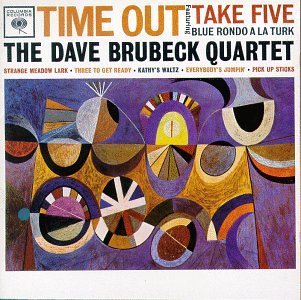
Time Out
Studio album by The Dave Brubeck QuartetWikipedia
14
MENTIONS
5
EPISODES
4
PODCASTS
Search complete. 14 mentions across 5 episodes found for "Time Out".
Oct 23, 2026

John BernardyHOST
And I want to talk about Take Five for a little while.
John BernardyHOST
It's from the album Time Out by Dave Brubeck.
John BernardyHOST
And the way I put it in the Returning Watch article of mine, during that breakfast scene, we hear Dave Brubeck's Take Five, which is another point of nostalgia slash misdirection, like the Marlon Brando references in the Wally Brando scene.
John BernardyHOST
Take Five is close in percussion style to typical Twin Peaks music.
John BernardyHOST
A fine example of things we expect to happen, but in ways we'd never fathom seeing them.
John BernardyHOST
Now, from me, your podcast host today, I want to talk a little bit about Time Signature.
John BernardyHOST
Time Out is a jazz album that's focused on time and avant-garde time signatures throughout the songs on the album.
John BernardyHOST
I'm thinking of Three to Get Ready, which Lynch used in Inland Empire.

QbertGUEST
We were getting into a lot of different time signatures.
QbertGUEST
There's a great album called Time Out by Dave Brubeck.
QbertGUEST
And every single song on that album was a different time signature.
QbertGUEST
Then there was another album after that was called Time Out Again or something like that.
QbertGUEST
But he had a few albums where every song was a different time.
QbertGUEST
freaking rhythmic way of playing music in a different like five over four and you know like nine time and all this weird type of stuff and that helped my scratching a whole lot

Neil WatsonGUEST
On either side of the line, some people love Dave Brubeck and some people couldn't stand Dave Brubeck.
Neil WatsonGUEST
But he was remarkably popular, especially, of course, after his 1959 record Time Out sold a kajillion copies.
Sam ThompsonHOST
Probably still is.
Sam ThompsonHOST
I mean, I'm sure it's still.
Neil WatsonGUEST
It still sounds relevant today because...
Neil WatsonGUEST
Because it borrows from so many different traditions and it explores concepts of polytonality, where you're playing in two keys at once.
Neil WatsonGUEST
Or, as we said with Time Out, all these kind of odd meter songs.
Neil WatsonGUEST
So to my ear anyway, it still sounds relevant even today, all these years later.