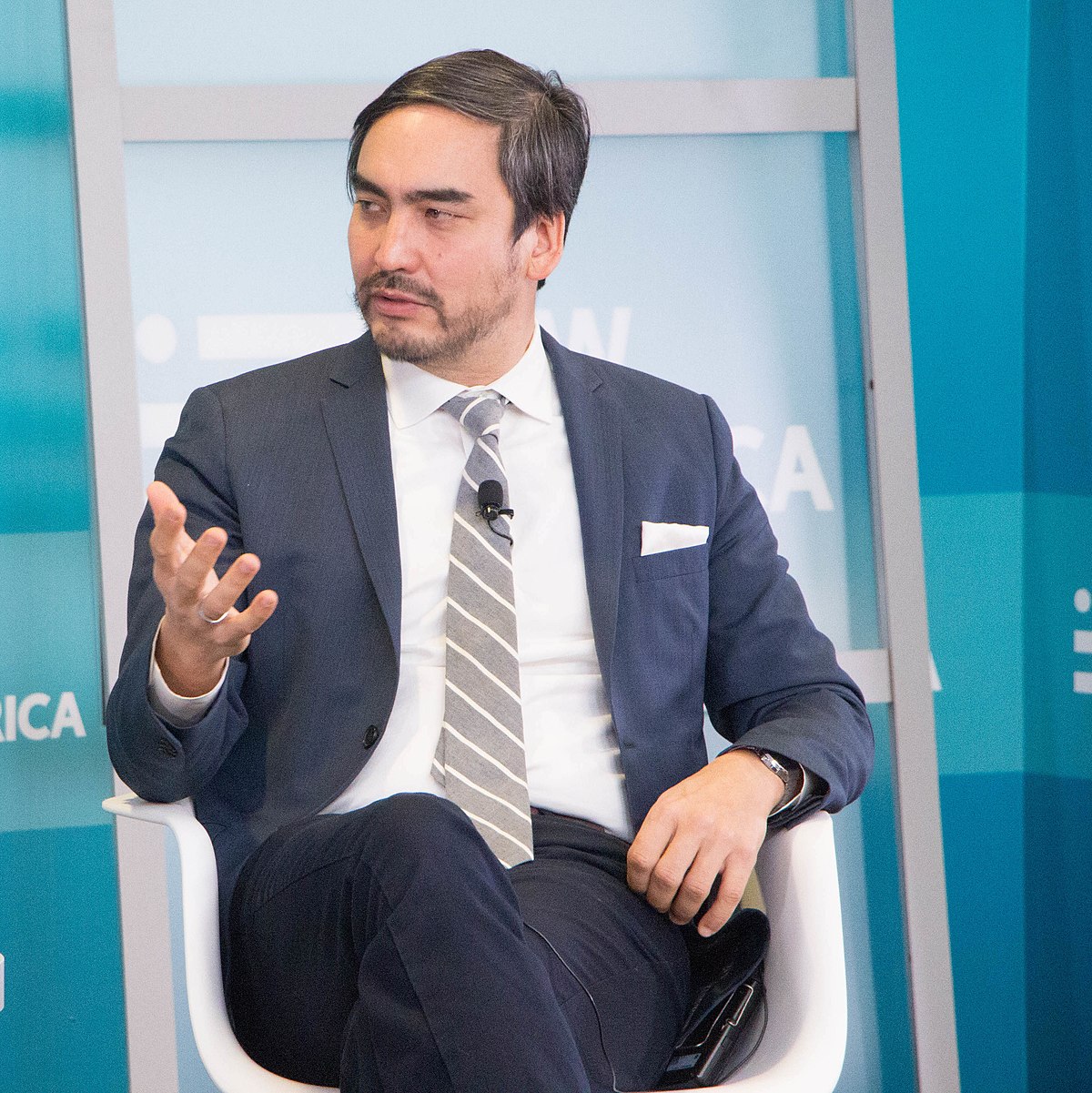
Tim Wu
American legal scholar
17
APPEARANCES
15
PODCASTS
Aug 5, 2026


Tim WuGUEST
I think the simplest y-- bottom line description is the major platforms became monopolized.
Tim WuGUEST
They behave the way monopolists do, which is to say they stopped being interested in trying to help others or, you know, improve, improve output and started becoming interested in what they could do to extract the most they could.
Tim WuGUEST
You know, the early internet companies, to get anywhere, had to spread the wealth, had to be this sort of useful stuff where, like on Amazon, you could sell for, you know, like a seventeen percent margin.

Nahlah AyedNARRATOR
Talk to me about that.
Tim WuGUEST
He was alive during a time in which the North American economy was transforming, and he could see that it was becoming a place that would be inhospitable economically for many of its people.
Tim WuGUEST
He saw the displacement of small producers, small business, reasonably sized, uh, enterprises, medium-sized, into these sort of faceless trusts that mainly benefited the financiers, people like JP Morgan or, uh, John Rockefeller.
Tim WuGUEST
And he could see in particular that the modern industrial state was creating working conditions that were incompatible with human happiness and human autonomy.
Tim WuGUEST
Two things that are really focused on that I think we have almost forgotten about were overwork.
Nahlah AyedNARRATOR
Had it not been Hitler, it would have been someone else.


Tim WuGUEST
Because I, you know, the amount of CapEx going into AI right now is, everyone knows here, is, is massive.
Tim WuGUEST
You know, it's, like, you know, 400, I think 400 billion last year or something like that.
Tim WuGUEST
The weird part about those investments is when you get deep into them and you listen carefully, there is a lot of what I think cannot be described differently than as religious faith in it, that this, this-
Tim WuGUEST
I mean, I, some of the st- I was reading, I was listening to the, one of the, you know, chief scientists, and he was talking about an artificial general intelligence and what, what's...


Tim WuGUEST
Well, Amazon, I think, tells the story of the flip from a catalytic or an enhancing or a wealth creating Internet that we were promised in the 1990s to one that becomes essentially about...
Tim WuGUEST
And if I can tell that story briefly, Amazon, of course, was a bookstore originally.


Nahlah AyedHOST
In an ideal world, would you have liked to have run without the need for money from large donors?
Tim WuGUEST
And in fact, I think it's moving in a direction where the only people willing to run are independently wealthy because it's such a pain asking for money.
Tim WuGUEST
And, um, anyone who I knew [chuckles] at all, I asked for money because we needed to have some chance of, of winning.
9 MINS LATER
Nahlah AyedHOST
So can you explain what this technological armored wall would be like separating the haves and the have-nots? Tim Wu.

Tim WuGUEST
Well, Amazon, uh, I think tells the story of the flip from a catalytic or an enhancing or a wealth-creating internet that we were promised in the nineteen-nineties to one that becomes essentially aboutThe enrichment of Amazon [chuckles] and taking from everyone.
Tim WuGUEST
And if I can tell that story briefly, Amazon, of course, was a bookstore originally.
Tim WuGUEST
And, you know, I think for a moment there, maybe I'll date this around 2010, it really was working the way that everyone dreamed, which is to say, you know, people for relatively low prices, Amazon's margin was about between 17 and 20%, you could put your stuff out there, sell it, and make a killing.


Sean SpeerHOST
For those who haven't had a chance to read it yet, how do you explain what that actually means, and what does it matter for ordinary people who think they're just getting a free search engine or a free social networking platform or, or whatever? What are they missing about what's going on behind that experience?
Tim WuGUEST
It's like a economic phrase that refers to, um, a profit taking far in excess of, of value provided.
Tim WuGUEST
Let's say you subscribe in Canada to, like, Rogers, uh, [laughs] not to single them out, but, like, you know, your broadband service probably costs something like less than $3 to provide, and you know, is maybe charged, uh ...
Tim WuGUEST
I don't know what you guys are charged these days, but you know, many multiples of that.
Sean SpeerHOST
So how, how does... how do policymakers grapple with, on one hand, addressing the negative aspects of these technologies, uh, without, on the other hand, but on the other hand, not impeding or suppressing, uh, innovation progress and, uh, um, American technological leadership?


Tim WuGUEST
Well, partially when I was writing the book, I was like, "I can't just write this thing.
Tim WuGUEST
And, um, partially because I believed some of the AT&T propaganda that the quality of the connection would be good, so I wanted it for radio interviews, um, back when radio interviews were on the telephone.


Sam SederHOST
Uh, but what was it that changed to, to mark that? Like, why do you mark 2010 and 2012? What, what, what actually happened then?
Tim WuGUEST
I think that's the period where the main tech platforms sort of established and entrenched and, and fortified their monopoly and realized that what they wanted to do was to defend their position and begin turning up the dials of extraction.
Tim WuGUEST
But it's that decade, that- especially that period, where you had a lot of the warning signs.
16 MINS LATER


Ezra KleinHOST
So what do you say to somebody who says, "What are you fucking all talking about?" [laughing]
Tim WuGUEST
I, I think that-- Well, the, the middle-age thing, it used to be better, which is I'm, I, I don't want to fall into that sort of situation.
Tim WuGUEST
I just think the deal is not what it could be, and I think that maybe as a consumer who sort of lightly uses this, the internet is still useful.
Tim WuGUEST
But if people-- I mean, I, I have children too, and you know, I think it's hard to deny that social media has been tough on kids and has had all kinds of negative effects on that, and that really started accelerating over the last fifteen years or so.
Tim WuGUEST
I think we have a highly polarized political structure, which is, you know, made worse by social media.
Tim WuGUEST
I think we have a problem with inequality, which has gotten worse and worse and is accentuated by the fact that the margins are just so thin for independent business.
55 MINS LATER
Ezra KleinHOST
Like, time is a surplus for me, things moving faster is a surplus for me, more checkout stations is a surplus for me, and there is a cost on the other side of it.


Tim WuGUEST
Uh, Nixon had, uh, a kind of, there was this, uh, uh, famous incident where there was some kind of, uh, merger scrutiny going on in the Nixon, uh, administration, and then the, one of the parties gave a huge donation to his convention or something, and then he ordered the Justice Department to drop the suit.
Tim WuGUEST
You know, by, by contemporary standards, that seems kinda normal, but, uh, in the '70s, people felt that that was, uh, unseemly.
Tim WuGUEST
And so they built all these structures to try to keep the president away from merger decisions.
Tim WuGUEST
People have billions to lose, and so, you know, a couple million here or there, what does that mean? You know, Netflix itself, uh, i- if this merger is stopped, will pay Warner Bros.

speaker_4UNKNOWN
We're breaking them up.
Tim WuGUEST
When you come, you ever come in your house, a dog jumps on you or something that's competing.
Tim WuGUEST
And so there's one theory that like everything's competing, you know, less slightly less ridiculous of that theory is that everything kind of in the entertainment world or on a screen is competing for your attention.
5 MINS LATER


Tim WuGUEST
There's this famous incident where there was some kind of merger scrutiny going on in the Nixon administration.

Tim WuGUEST
You know, that's like, what happened to corporate morality or something along those lines? I mean, I think part of it This is a kind of a deeper question.
Tim WuGUEST
Part of it is the idea that we can get the output we want merely by a model of shareholder maximization.
Tim WuGUEST
And whether that's actually legally required, I know you said that earlier, is disputed among corporate law scholars.
Tim WuGUEST
the fiduciary duty, because in the 50s, corporations, it was the same charters, did not feel they had to do nothing but focus on their shareholders.
9 MINS LATER

Elizabeth SpiersHOST
Can you talk a little bit about the company Invitation Homes that you talked about in the book?
Tim WuGUEST
You know, that's like, what happened to corporate morality or something along those lines? I mean, I think part of it This is a kind of a deeper question.
Tim WuGUEST
Part of it is the idea that we can get the output we want merely by a model of shareholder maximization.
Tim WuGUEST
And whether that's actually legally required, I know you said that earlier, is disputed among corporate law scholars.
Tim WuGUEST
the fiduciary duty, because in the 50s, corporations, it was the same charters, did not feel they had to do nothing but focus on their shareholders.
9 MINS LATER
Elizabeth SpiersHOST
Can you talk a little bit about the company Invitation Homes that you talked about in the book?

Tim WuGUEST
So I would say that in the early 2000s, we let much of the economy become monopolized, early t- for the n- the 10 or 20 years of the first 21st century.
Tim WuGUEST
So then they have been on an extraction path for the last while in all kinds of area.
Tim WuGUEST
And when I talk about mass resentment, it's a little different than, like, just being angry at your job.
Elizabeth SpiersHOST
You know, can you talk a little bit about, uh, th- the company Invitation Homes that you talked about in the book?


Tim WuGUEST
(laughs) So AOL, like, had millions of chat rooms and invariably there was, like, crazy things being said.
Tim WuGUEST
And they, and the idea was, well, if AOL's respon- is responsible every single thing that someone says in any single chat room, like, the whole internet will collapse.
Tim WuGUEST
And so AOL and a bunch of other people lobbied and they said, "Okay, we're gonna get a blanket immunity to, like, most state laws for defamation and, you know, anything else we do wrong.
Tim WuGUEST
Like, if a newspaper says, "So-and-so is a criminal, beats his wife," something like that, tha- that's, that's defamation.
8 MINS LATER