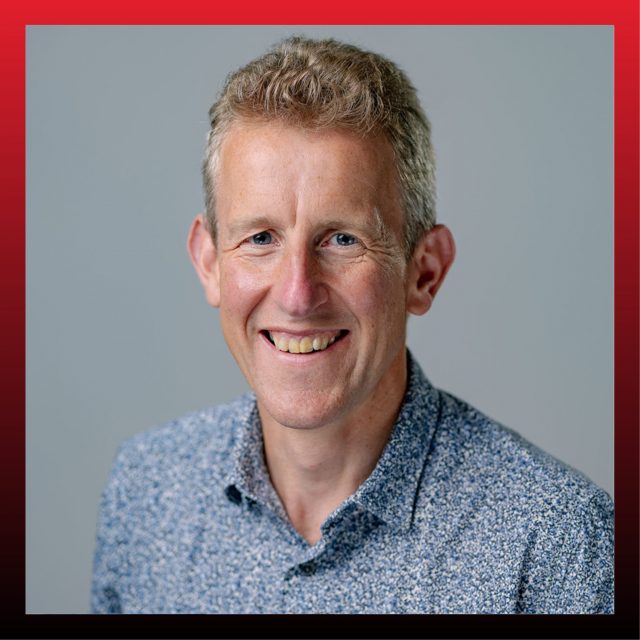
Tim Lenton
ProfessorWikipedia
11
MENTIONS
7
EPISODES
6
PODCASTS
Search complete. 11 mentions across 7 episodes found for "Tim Lenton".
Oct 12, 2026

Laura MarshallGUEST
Um, and one project, for example, that has emerged for us to work on in future, um, from that horizon scanning exercise, uh, is a sort of a dialogue on advancing positive tipping points through the biosciences.
Laura MarshallGUEST
So that will be, uh, chaired up by Professor Tim Lenton, FRSB, um, one of our fellows, um, at Exeter Uni.
Laura MarshallGUEST
Um, and that project in particular, alongside a couple of other sort of newer projects that we're hoping to, um, communicate a bit more about in the, in the near future, that one really straddles these issues, you know, and providing advice to policy across these issues.
Laura MarshallGUEST
So yeah, I can see essentially less siloed thinking really, um, less siloed delivery of our work, which is really in keeping with, um, how the conversation seems to be going, um, in, you know, in policymakers arenas, internationally as well as nationally.
CharlotteHOST
there are positive tipping points as well.
Laura MarshallGUEST
Yeah.
Laura MarshallGUEST
And that's, that was all developed by Tim Lenton and his team, yeah.
Sana ZakariaGUEST
I, I think it, it's a great question, right? How do you, how do you identify new policy priorities and, and, um, how does that get shaped? Um, I think at RAND and, and my patch, obviously we're kind of working within my team under the emerging technology kind of scope, um, and umbrella.

Paul TurnerHOST
Yeah, there's some great examples of this th- when it comes to positive tipping points about how one set of behaviors has been replaced by another set of behaviors, whether that be on a small and local scale, all the way up to a regional, to national, international scale of- People start making changes, and it starts to get a bit of acceleration, then it suddenly reaches a point, whoosh, you're gone, and the change is completely done.
Paul TurnerHOST
The great example that we did here this morning on the first morning of the conference from Professor Tim Lenton from Exeter University was Norwegian cars and the switchover from electric cars, and how from 2010 there was a slight increase, and then around 2012, 2015, really big.
Paul TurnerHOST
And now electric cars, electric vehicles in Norway make up more than 90% of all cars that are sold in that market.
Paul TurnerHOST
They just went right through that acceleration, and there was some examples showing how other countries are starting to see that, even here in Malaysia.

Anita KrajncGUEST
And, and one of the things we have to aim at are, is a positive, is a positive tipping point.
Anita KrajncGUEST
And there's a book called Positive Tipping Point, which I'm reading right now, by Professor Tim Lenton in the, from the UK.
Anita KrajncGUEST
And, you know, he talks about Greta Thunberg and other positive tipping points.
Anita KrajncGUEST
You know, just how you start with a couple of people, then it grows to more people, then eventually you have millions of people, you know, uh, you know, engaged in Fridays for Future.

Jay HamleyGUEST
Um, and the jet stream is one thing which is at a major risk of collapsing.
Jay HamleyGUEST
So, uh, Tim Lenton, uh, he's a researcher down in Exeter.
Marcus BullHOST
Mm-hmm.
Charlie AllnuttHOST
Yeah.
Jay HamleyGUEST
Yeah.
Jay HamleyGUEST
And, uh, I mean, this is the trouble.
Jay HamleyGUEST
So a lot of these thresholds are set, and we know roughly, and through climate modeling and other things like that, um, you know, the work of, of, uh, Tim Lenton and, and other researchers, they, they will know roughly where some of those critical thresholds are.
Jay HamleyGUEST
And, and for, for climate change, for example, if we cross, uh, you know, basically three or four degrees worth of warming, it's irreversible and large scale change that is unprecedented really.

Nick OldridgeGUEST
It's incredible.
Nick OldridgeGUEST
But some of these people that appeared at the briefing, people like Tim Lenton, were also ludicrously busy.
Nick OldridgeGUEST
So there was a really nervous moment when we were stood backstage before it all started.
Nick OldridgeGUEST
That's the first time we had all stood together in a space.

Meghna ChakrabartiHOST
The cascading list of negative tipping points makes it easy to despair over the climate crisis.
Meghna ChakrabartiHOST
But scientist Tim Lenton says not every tipping point leads to doom.
Meghna ChakrabartiHOST
He says there are also positive tipping points and wants people to know that they are not powerless in the face of continuing climate change.
Meghna ChakrabartiHOST
And Tim Lenton joins us now.
Meghna ChakrabartiHOST
He's chair in climate change and earth system science at the University of Exeter in the UK and author of the book Positive Tipping Points, How to Fix the Climate Crisis.
Meghna ChakrabartiHOST
Professor Lenton, welcome to On Point.
Meghna ChakrabartiHOST
It's easy to despair over the climate crisis.
Meghna ChakrabartiHOST
But scientist Tim Lenton says not every tipping point leads to doom.
Tim LentonSOUNDBITE_SPEAKER
I definitely wouldn't want to leave people with just the scary stuff because then we all feel disempowered.
Tim LentonSOUNDBITE_SPEAKER
Little old us can make a bigger difference than we think.