Tiergarten
16
MENTIONS
13
EPISODES
13
PODCASTS
Search complete. 16 mentions across 13 episodes found for "Tiergarten".
Oct 22, 2026

speaker_0NARRATOR
Directly at the Brandenburg Gate is the largest black market in occupied Berlin.
speaker_0NARRATOR
The place is ideal for illegal business because the Tiergarten is nearby and the Soviet sector begins only a few meters away.
speaker_0NARRATOR
Many Berliners sell their last belongings that survived the bombing war for food.
speaker_0NARRATOR
Officially, the Allied authorities disapprove of the barter trade and occasionally try to crack down on it with raids.
12 MINS LATER
speaker_0NARRATOR
The big three are meeting in Potsdam to discuss the future of Germany.
speaker_0NARRATOR
Although Truman sees with concern that the Red Army controls almost all of Eastern Europe, he still believes in a future for the anti-Hitler coalition with the Soviet Union.
speaker_1NARRATOR
In the British sector, George Stevens films a Red Army unit marching through the Tiergarten, His president expresses the belief these days that the Russians would continue to be friends of the US.
speaker_1NARRATOR
Although incidents between GIs and Red Army soldiers continue to occur in Berlin, Truman sees no reason at this point not to welcome their friendship and give them ours.

Peter BromkaHOST
And so now we're sitting here going, we know there's a lot in there, but you don't get that many shots at it.
Peter BromkaHOST
So how did you think about when you were standing, you know? you're in the Tiergarten, you're surrounded by all these like international marathon nuts and you're like, I just want to have a solid day.
Peter BromkaHOST
Did you have like a pace range or is it go by feel? Did you have like a window of success? What were you looking for?
Jackie GaughanGUEST
Yeah, yeah.

Ian James WrightHOST
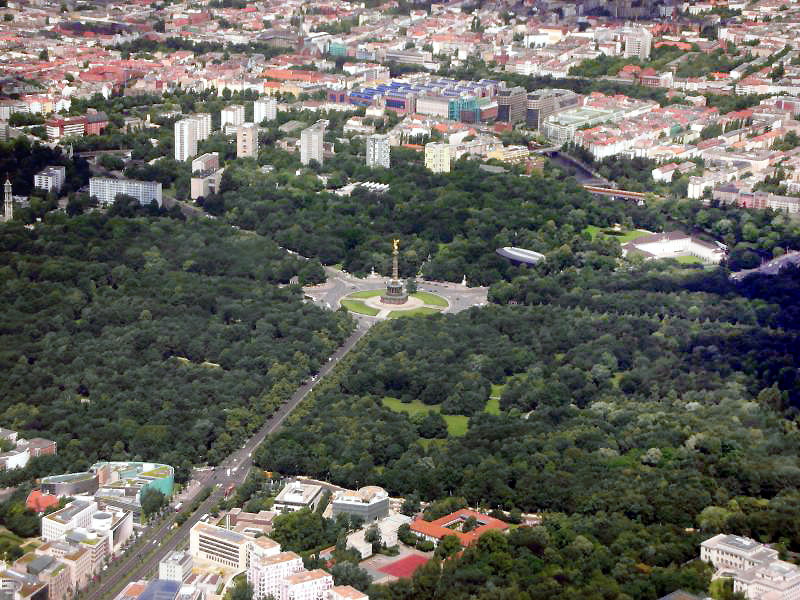
Yeah, it looks a little in this aerial photograph.
Ian James WrightHOST
It's this whole, the Tiergarten, I think it was called in Berlin, right?
Alex MitraniGUEST
Yeah, that's right.
Alex MitraniGUEST
And then further down here, there's this sort of table of statistics about the actual songs that they play.

Edward TennerGUEST
But the interesting thing was that it was, th- that, that smoking in, in, in those, in, in, in that setting was experienced differently from, let's say, a novelist in the 1970s at a, at a typewriter.
Edward TennerGUEST
Um, and in the revolutions of 1848, uh, notoriously, one of the demands of the Berlin revolutionaries was the right to smoke in the Tiergarten, in the, in the, in the zoological park.
Edward TennerGUEST
That was literally a, an important, an important right, because the police had been en- enforcing a no smoking law.
Edward TennerGUEST
And the, the, t- smoking had this, this, this incredible populist aura.

Kurt von Hammerstein-EquordGUEST
I do not bite.
Kurt von Hammerstein-EquordGUEST
I have been retired for four years, and I no longer command anything except an armchair and a view of the Tiergarten.
Edward TellerGUEST
You commanded the German Army.
Kurt von Hammerstein-EquordGUEST
I did.

OscarHOST
Unreal pizza.
OscarHOST
Um, and then went for an hour's jog around the Tiergarten, which is like...
OscarHOST
So Berlin is obviously historically is kind of split east and west.
TomHOST
Mm.
OscarHOST
Um, but, like, from an outsider, it's almost split into four.
TomHOST
Right.
OscarHOST
And the, and the Tiergarten is kind of across the middle, and it's massive.
OscarHOST
Like it'd be three times the size of Hagley Park.

speaker_1NARRATOR
At around 4 a.m., Hitler signed his last will and testament and married his longtime companion Eva Braun in a simple ceremony witnessed by Goebbels and Martin Bormann.
speaker_1NARRATOR
In the following hours, the Soviets captured the Gestapo headquarters, although a counterattack soon forced them to retreat temporarily, while the other Red Army units moved into the Tiergarten Park.
speaker_1NARRATOR
The following day, surrounding bridges in the area were repaired, allowing the Soviets to bring in heavy artillery, which they used to attack the Reichstag.
speaker_1NARRATOR
However, their plan was hindered by German entrenchments and support from anti-aircraft weapons in the distance.
speaker_1NARRATOR
Admiral Karl Dönitz became the President of the Reich, while Goebbels became the new Chancellor, both in accordance with Hitler's last wishes.
speaker_1NARRATOR
Around 10,000 German soldiers had remained in the center of the city, and they were subjected to assaults on all sides.
speaker_1NARRATOR
The last of the German Tiger tanks were positioned in the east of the Tiergarten to defend against the 3rd Shock Army, while another Soviet unit, the 8th Guards Army, moved to the south, pinning the Germans into a much smaller area and making an escape much harder.
speaker_1NARRATOR
In the small hours of May 1st, General Hans Krebs, Chief of the General Staff of the German Army High Command, reached out to the commanders of the 8th Guards Army, seeking to surrender following Hitler's demise.

Rebecca SchmittGUEST
So I actually got up with my parents.
Rebecca SchmittGUEST
We Ubered to the Tiergarten and then hung out with them for a little bit.
Rebecca SchmittGUEST
It was so fun because we actually were sitting on a bench in the park, met another Puma Project 3 athlete.
Rebecca SchmittGUEST
And then we chit-chatted for a while.
3 more episodes mention Tiergarten.
Create an account to see the whole feed, search across every transcript, and follow the entities you care about.