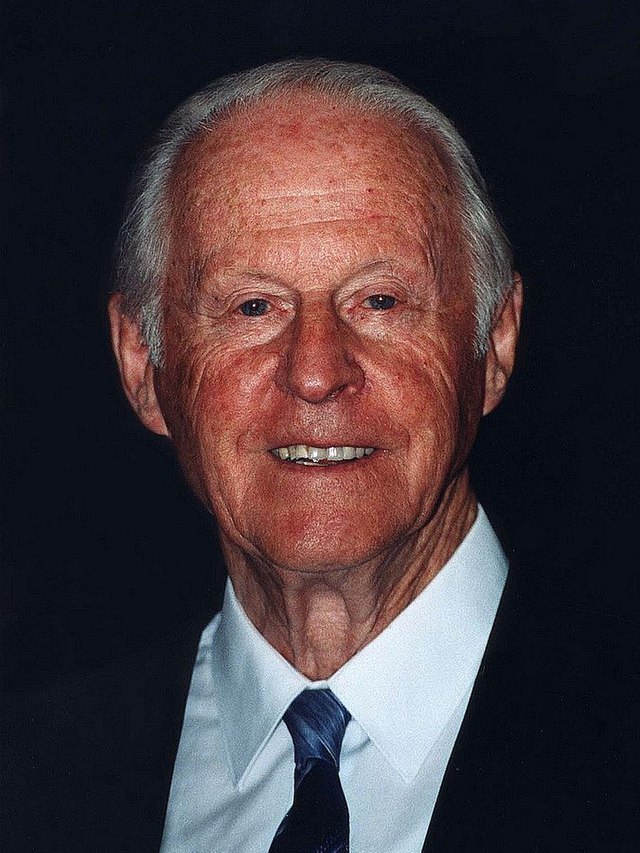
Thor Heyerdahl
Norwegian adventurer and ethnographerWikipedia
18
MENTIONS
10
EPISODES
10
PODCASTS
Search complete. 18 mentions across 10 episodes found for "Thor Heyerdahl".
Oct 10, 2026

Marty BrillHOST
And I met lots of different people, but I r- I was, I've always been a big reader, even then, and I read a book called The Ra Expeditions.
Marty BrillHOST
I don't know if you ever heard of that, but that was a guy, Thor Heyerdahl, tried to sail across the Atlantic Ocean in a papyrus raft, uh, to prove that the people from Egypt-
JustinHOST
Uh-huh
Marty BrillHOST
... um, could have done that, you know, in a raft made out of natural materials-

speaker_6NARRATOR
Whether the Inca Viracocha was a direct survival, a reinterpretation, or a later identification remains disputed.
speaker_6NARRATOR
The name Kontiki, connected in some accounts to a creator figure, acquired modern fame in 1947 when Thor Heyerdahl used it for the raft with which he sailed from South America toward Polynesia.
speaker_6NARRATOR
His experiment demonstrated that such a voyage was physically possible with a craft built along traditional lines.
speaker_6NARRATOR
It did not, by itself, establish the origin of Polynesian settlement or verify the proposed identity of Kontiki with any particular image from Tiwanaku.

Drake TollHOST
Don't throw it away yet.
Drake TollHOST
All right, Pete, Thor Heyerdahl, anthropologist, explorer, took a manmade wooden raft from Peru to Polynesia.
Addie BatesPANELIST
[laughs]
Drake TollHOST
That's 3,400 nautical miles, by the way.
Pete SousaHOST
Thor Heyerdahl in Domecoming.
Drake TollHOST
[laughs]
Pete SousaHOST
Uh, I will say he is deceased.
Pete SousaHOST
[laughs]

Kyle WarrenHOST
This is really, really cool.
Kyle WarrenHOST
Um, Thor Heyerdahl was born on October the sixth in nineteen fourteen.
Kyle WarrenHOST
He passed away in two thousand and two.
Kyle WarrenHOST
Now, you may not recognize that name, but I, I'll bet you a lot of you actually do recognize that name, Thor Heyerdahl.
Kyle WarrenHOST
And if I say Kon-Tiki, then it's gonna dial it right in, I'm sure, because he, back in nineteen forty-seven, sailed from South America to the Polynesian islands, um, in a raft that was essentially based on what, uh, what, uh, peoples of the, of the, um, of the, uh, earlier eras could have used and may have used in order to be able to sail, uh, from that, that kind of distance.
Kyle WarrenHOST
And so what's really cool about this, again, it's like, well, I'm going to prove, I'm gonna set out, and I'm going to show that it can be done using the materials and so forth available, and here's how it could have been done.
Kyle WarrenHOST
And it was turned into a book.
Kyle WarrenHOST
It was turned into a documentary back in nineteen fifty, and then in twenty twelve there was a feature film, uh, that was made about this.

Mike KasparHOST
And you're right.
Mike KasparHOST
And again, I may not even use this as a question, but when was Thor Heyerdahl? When did he recreate? Do you know when he did his thing? Was it in this era?
Alison ReidGUEST
Yeah, I'm not sure about that.
Alison ReidGUEST
I'm just kind
Mike KasparHOST
of curious, because I remember in grade school, the big adventure that I remember that stuck with me was Thor Heyerdahl, and he recreated the...
Alison ReidGUEST
Contiki expedition.
Mike KasparHOST
Contiki, yeah.

Lachlan MacleanGUEST
And, you know, obviously that was an expedition that was...
Lachlan MacleanGUEST
Thor Heyerdahl had conceived of because of this huge tradition of these incredible ancient mariners from Peru and South America.
Lachlan MacleanGUEST
A lot of that knowledge, I think it was generational and I think sadly lost, but just the amazing ability to pinpoint islands on the Pacific from such a huge distance, it's really quite astonishing.
Lachlan MacleanGUEST
I think we definitely regretted not having kind of even just a fundamental knowledge of kind of celestial navigation in so much that we could kind of appreciate it, we probably would have still used the charts and that sort of thing.

Charlie ParkerGUEST
There were others that said the islands were settled from the east, from the east, from South America, for example.
Charlie ParkerGUEST
Thor Heyerdahl was a, a great proponent of, um, these islands being settled from, from the east.
Charlie ParkerGUEST
So Nainoa Thompson and the Polynesian Voyaging Society, they built this canoe, 62-foot canoe.
Charlie ParkerGUEST
And the building of the canoe was one thing, but you had to find the way to navigate and had to, had to sail, and that's where I think the real magic came.

Graham HancockGUEST
A number of researchers have pointed out that At the place called Rano Raraku Quarry in Easter Island, you have a number of these giant figures that are buried up to their necks in earth.
Graham HancockGUEST
But back in the 1980s, Thor Heyerdahl, who I had the privilege of knowing, excavated several of those figures, expecting them only to go down a few feet beneath the earth.
Graham HancockGUEST
But they actually do go down a full 30 to 40 feet under the earth.
Graham HancockGUEST
And indeed, once you get to the bottom, you expose the same thing of the hands joining beneath the belly in exactly the same pattern as at gobekli tepe and what a number of researchers i don't claim credit for this discovery myself what a number of researchers have pointed out is that those figures are covered by accumulated sediment and on a tiny island like easter island you cannot accumulate 30 or 40 feet of sediment in just a few hundred years Archaeologists claim these figures are only a few hundred years old, but you need thousands of years to accumulate 30 or 40 feet of sediment that will bury them almost up to their necks.

Hugh NewmanHOST
Mm.
Lucy WyattGUEST
Yes, Thor Hey- Thor Heyerdahl, yes, on all his Kon-Tiki stuff and, and all of that.
Lucy WyattGUEST
And you know, the things like the cocaine mummies, you know, that, that, um, our dear friend Gary Evans talks about, um, for example.
Lucy WyattGUEST
Um, yes, you know, the cocaine mummies, uh, found in Egypt with cocaine from, from South America.

speaker_0HOST
Archaeologists have acknowledged the resemblance between Vanapu and Indian stonework for more than a century.
speaker_0HOST
Thor Heyerdahl made the comparison an important part of his argument for ancient contact between Easter Island and South America.
speaker_0HOST
The construction is not structurally identical to the Indian walls, but visually and technically, the resemblance is real enough that archaeologists themselves have repeatedly discussed it.
speaker_0HOST
And Vanapu is not the only wall on Easter Island where we see this interesting megalithic construction.
speaker_0HOST
I encountered additional walls along the remote western coast, and there is at least one buried megalithic wall previously excavated by Thor Heyerdahl, which has since been reburied.
speaker_0HOST
How many more lie underneath the constantly shifting soils of the island? The Moai themselves also lend themselves to some interesting global comparisons.
speaker_0HOST
As we start comparing them with ancient sculpture around the world, one feature keeps showing up, the rigid frontal body, the arms running down the sides, and the hands meeting across the abdomen or navel.