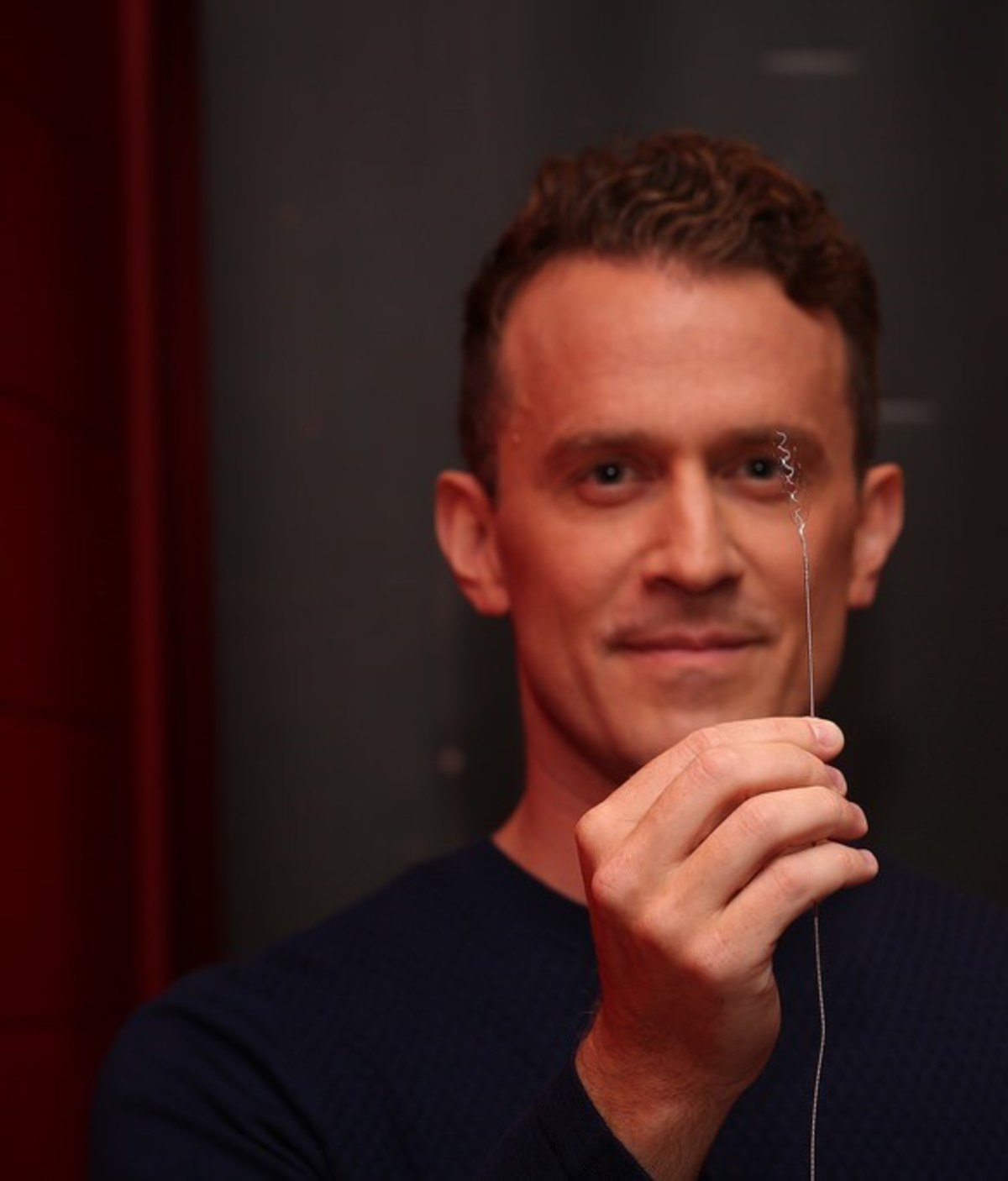
Thomas Oxley
Physician and neuroscientist
6
APPEARANCES
4
PODCASTS
Aug 5, 2026

Tom OxleyGUEST
... through this thing called the motor system? And so, you know, there's this idea that the human body is kind of-- The way it's built is there's a lot of input: vision, hearing, feeling, and there's not much output, and there's a lot of thinking going on.
11 MINS LATER

Jane SimpsonHOST
It would also require these people to have, um, a thirst for knowledge, and I'm assuming for their family or supporters around them to want to know how to use this properly and to help in the training.

Tom OxleyGUEST
I think I'd actually like to start with a story that happened to me as a early, like actually it was my first month of training as a training neurologist.
Tom OxleyGUEST
And it was an experience I had that I think made me realize why BCI could become such an important technology for people.
15 MINS LATER
Jane SimpsonHOST
It would also require these people to have a thirst for knowledge, and I'm assuming for their family or supporters around them to want to know how to use this properly and to help in the training.
Tom OxleyGUEST
I think I'd actually like to start with a story that happened to me as a early, like actually it was my first month of training as a training neurologist.
Tom OxleyGUEST
And it was an experience I had that I think made me realize why BCI could become such an important technology for people.
15 MINS LATER
Jane SimpsonHOST
It would also require these people to have thirst for knowledge and I'm assuming for their family or supporters around them to want to know how to use this properly and to help in the training.


Surani FernandoHOST
But Tom said that there's a good sense of how safe it is to put stents into the brain because the literature exists.
Tom OxleyGUEST
and it can't um cause any harm which is sort of an obvious thing to say so the way that we've contemplated safety hasn't really changed since our first study in 2019 so that's good because it means that we can look all the way back and we feel like we've been capturing the right information to prove that the system is safe the downside with what we're doing is that you don't get quite as close to the brain and you don't get as much information Now, I have a belief that we can solve that and eventually become equivalent in terms of how much access we can get to the brain.
Tom OxleyGUEST
But we've made a decision to draw a line in the sand with a particular design that we think is the right level of safety for the first iteration of this technology.
18 MINS LATER
Surani FernandoHOST
I asked Tom if he had any ballpark on what Synchron would need moving forward.


Juan BenetHOST
Just maybe redescribe the device, uh, uh, giving people maybe a, a view into, um, stents in general.
Tom OxleyGUEST
I guess the idea with the BCI is, uh, you know, if you're on this podcast you know probably, but just briefly, you have to detect, uh, electrical activity, uh, close to the source of signal generation that's associated with some signal that's valuable, and in this case it's the motor signal.
Tom OxleyGUEST
The, the intentional volition of motor signal, it's, it's, because it's internally generated, you're in control of it, you can therefore control an external signal if you can, if you can capture, decode, and bring that signal out.
Tom OxleyGUEST
So how do you deliver a sensor with enough fidelity close enough to the motor cortex that can be used to drive an external device? So our technology is what blood vessel is closest to the motor cortex, um, and what's the first blood vessel that you would target and is big enough and is safe enough and has, that people have put in things before, and where's the best place to put it? And so we, we used a traditional stent architecture, 'cause a stent is a metal scaffold that expands.
48 MINS LATER
Juan BenetHOST
What's your kind of optimistic vision for the future? Like, what, what can we unlock as a, as a species?


Tom OxleyGUEST
Uh, you can put a tattoo under your skin and it will not cause a huge inflammatory reaction, but you can't do that necessarily on the brain.
Tom OxleyGUEST
So my concept was, well, how do we avoid putting something directly into the brain? What's the next closest we could do? And the idea that we had was, let's try and solve getting these sensors into the blood vessels, and it can stay there for a lifetime.
Tom OxleyGUEST
The largest vein at the top there is right next to the motor cortex, the exact part of the brain that we wanna connect to to restore control to the outside world.
7 MINS LATER