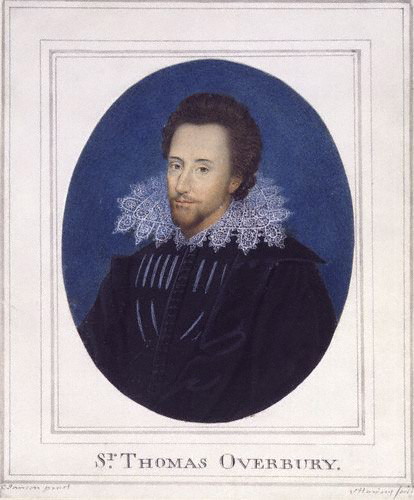
Thomas Overbury
Poet and essayistWikipedia
63
MENTIONS
9
EPISODES
8
PODCASTS
Search complete. 63 mentions across 9 episodes found for "Thomas Overbury".
Sep 16, 2026

Patrick WallaceNARRATOR
This gentleman, the Scots so wrought it that they got him into a groom's place at the bedchamber, and was very well pleasing to all.
Patrick WallaceNARRATOR
He did more than any other associate himself with Sir Thomas Overbury, a man of excellent parts, but those made him proud, overvaluing himself and undervaluing others, and was infected with a kind of insolency.
Patrick WallaceNARRATOR
With this gentleman spent he most of his time, and drew the eyes of the court as well as the affection of his master upon him.
Patrick WallaceNARRATOR
Yet very few, but such as were the curious observers of those times, could discern the drawing of the king's affection.
Patrick WallaceNARRATOR
Then the English lords, who formerly coveted an English favourite, and to that end the Countess of Suffolk did look out choice young men whom she daily curled and perfuming their breaths, left all hope, and she her curling and perfuming, all adoring this rising sun, every man striving to invest himself into this man's favour, not sparing for bounty nor flattery.
Patrick WallaceNARRATOR
It was not hard to be obtained, being naturally more addicted to the English than to the Scotch, insomuch that he endeavoured to forget his native country and his father's house, having none of note about him but English, and but one besides English in any familiarity with him, which was Sir Robert Carr his kinsman.
Patrick WallaceNARRATOR
But above all was Sir Thomas Overbury his Pythias.
Patrick WallaceNARRATOR
Then was the strife between Salisbury and Suffolk, who should engross him and make him their monopoly, each presenting, proffering and accumulating favours upon Overbury's kindred.

speaker_9NARRATOR
Theophrastus is more generally known for his character sketches than for his scientific work, although his treatises on botany represented the highest attainments made by science in that field during antiquity and the Middle Ages.
speaker_9NARRATOR
the treatise here translated sets forth thirty types of characters striking to the greek mind they are probably a fragment or extract made by some epitomator from a larger treatise which was suggested by the abstract ethical analyses of aristotle as exhibited in the nicomachean ethics and by the concrete dramatic representations of the new comedy the stage suggests the form and aristotle's treatise the content they represent moral and social defects and weaknesses though not revolting vices but they do this in a mimetic way by exhibiting persons as acting or speaking theophrastus was a contemporary of philemon and menander and his life was spent in the era of the revival of comedy and the elaboration of current moral types for humorous presentation on the stage so the characters of theophrastus are as it were dramatis personae of his time he shows us how a given type of man speaks and acts the dramatization of his characters would require scarcely anything more than stage setting his portrayal is not satire but imitation not caricature but realistic delineation from life moreover this description of generic types rather than of individuals belongs to the literary fashion of his age looked at from this mimetic point of view the characters of theophrastus are historically all the more important because our knowledge of menander the tenth muse is so meagre resting as it does upon scanty greek fragments and a few latin adaptations these thirty sketches at the beginning of the post-classical age do not represent properly speaking vices and yet they were vices to the mind of the greek who measured his morality largely by the canons of good form any violation of good taste or breach of courtesy was morally vicious the disposition was to maintain in close unity the natures of beauty and goodness moderns discriminate sharply between the aesthetic and the moral the social virtues of gentle breeding and the graces of politeness toward their fellow men had for the classical greeks an ethical nature as is witnessed in aristotle's ethics manners and morals were not sundered what we call a social weakness or defect or boorish crudity theophrastus called a vice it is necessary to bear this in mind when one reads the moral characters as they are called in the greek title amongst these characters there are no virtues and one may ask why is it that in his portrayal of types theophrastus has altogether omitted any description of good men the answer is not to be found in the supposition that such characters were originally included in the work but have since perished the real ground for the omission is probably to be discovered in the nature of the conditions under which theophrastus wrote these as we have already indicated were closely connected with the development of the new comedy the portrayal of a good character may be edifying and may serve the conditions of tragedy but it does not suit the purposes or surroundings of the comic stage where the ludicrous elements of weak eccentric or faulty personalities are the materials employed the aim of theophrastus is both to amuse and to instruct but his instruction is given by exposing to ridicule certain faults which he elevates into the striking tangibility of concrete character the serious dignity and excellence of the good man while it may suit the heroic conditions of the epic the grave purpose of tragedy or the aims of moral allegory offers no material for such sketches as these theophrastus has no concern either with the grossly immoral or with the helplessly weak the former awaken only disgust and hate while the latter stir only feelings of pity and neither of these emotions can be kept active in the true art of comedy rightly speaking the art of theophrastus has to do only with folly or with such eccentricities and weaknesses as have a humorous aspect and it is only moral imperfections of this sort that we actually find in the characters as to the serious function of instruction which theophrastus no doubt aims to combine with that of entertainment there is no more skilful mode of inducing moral betterment than the discovery and exposure of the ludicrous most men would rather incur the charge of immorality than be exposed to the belittling laugh or derision of a community they would rather be rogues than fools the portrait painter of moral life makes use of the ludicrous when he desires to catch the popular attention and there is nothing one may safely say that makes society at large prick up its ears and fall to gossiping so much as a satire in which some well-known person is subjected to ridicule moral folly is much the same everywhere it is only the fool's costume that changes in different countries the folly of the miser is seen in his cheating himself of the real goods of life and in robbing himself of the respect of his fellows the folly of the coward in gaining personal safety by losing reputation for manliness the folly of the flatterer in his shallow self-serving which men see through while they nudge their fellows and laugh at his weakness the folly of the vain man in the way in which he assumes impressive proportions to his own magnifying eye while to others his personality looks as small as it is the folly of the tactless man in consulting his own convenience rather than his neighbour's whereby he becomes a butt for his gaucherie the folly of the boor in his trampling awkwardly on the established usages of the polite world and thereby drawing upon himself the smilingly derisive attention of all observers throughout the list these characters represent some type of social foible or folly in regard to the literary art of theophrastus as exhibited in these sketches it must be looked at from the standpoint of an innovation in greek letters it is rare that any man both begins and perfects an art there is nothing in the world so interesting as a character but there is also nothing that is so difficult to portray briefly theophrastus was an acute observer and he was a plain realist his art consists in the truthfulness of his vision and in the direct simplicity with which he gives it expression he does not seek to create a laugh by exaggeration or by the trick of a ludicrous situation that has no moral significance his art is not possible without wit keenness and fineness of feeling there is no exhibition of the satirist's lash but his criticism is made with that geniality which is more telling than the severest invective these are not individual portraits they lack therefore the detailed finish of such a portrait as is given in the much elaborated modern novel with its varied facilities for exhibiting the individuality of one or several persons on the contrary these are merely outline sketches as theophrastus himself calls them and are descriptive of a class not of an individual a simple line however does not constitute a sketch to exhibit a character the sketch must not only be clear but complete the coward e g is sketched in his fear at sea where his timid imagination invents dangers and he wishes to be put ashore he is sketched on the field of battle where he tries to impress his comrades by a courage that he does not feel but when he hears the shouts of war and sees the soldiers fall he shrinks faint-hearted to his tent and there searches for the sword he has himself hid and again when the danger is over he resumes his bold exterior and proclaims his daring rescue of a comrade we have here a pictorial sketch which with its life and action appeals to the reader's eye the coward is shown from various points of view always in new light but he is always the coward the canons of this species of literary art may be summarized as follows one faithfulness to reality the character must be an accurate report of nature and not a caricature it must be executed in the spirit of realism two brevity it must be slight and swift essentially of the nature of a sketch three humor it must have the sprightliness of statement that amuses while it instructs four type it must be illustrative of a generic or typical fault in other words the character must give embodiment to some fault that touches human nature in an essential and universal way five concreteness the fault as an abstraction must be translated by the artist's power into a concrete personal form the foible must be revealed in a genre picture of a living personality since theophrastus this form of character writing has been cultivated at various times but it flourished most amongst the minor essayists of the seventeenth century it is of too slight a nature in itself to make a serious impression on any literary epoch it suited however the temper of the seventeenth century as the sprightly essay possessing no serious depth and aiming to touch life at many points the chief imitators of theophrastus and exponents of character writing at this time were bishop hall bishop earle sir thomas overbury nicholas breton samuel butler and la bishop hall contrary to the example of theophrastus includes virtues as well as vices in his book entitled characters of virtues and vices london sixteen o eight in the general structure of his composition he follows the model of theophrastus closely in the description of vices however he is much more entertaining than in his sketches of virtues which are rather homilies and as the panegyrics of a tedious preacher provoke one to yawn virtue is not fitting material for this species of writing the brilliant but ill-starred sir thomas overbury in his characters or witty descriptions of the properties of sundry persons london sixteen fourteen went through eighteen editions departs from the usage of theophrastus in depicting for the most part amusing accidents of character and humorous peculiarities of trades and professions bishop earle on the other hand in his microcosmography london sixteen twenty eight confined his character delineation to mores hominem to ethical types of men as such in a spirit similar to that of his greek model the best known of all the imitators of theophrastus if he can be called an imitator at all is la in his Les Characters ou les Meuses de le siècle Paris 1688.
speaker_9NARRATOR
The Characters of La Bruguera are really satires on certain thinly disguised contemporaries of his own and are executed in a spirited method totally different from that of Theophrastus, but to which a translation of the characters of Theophrastus is added.
speaker_9NARRATOR
la bruyre was a lover of the ancient classics although his translation or paraphrase was hardly more than a pretext for writing down his own description of the manners of his time it furnished him perhaps the first suggestion and the first impulse to the portrayal of the vices and weaknesses of his contemporaries on a much larger scale than theophrastus had attempted You know what? It sucks

Patrick WallaceNARRATOR
This privacy in their stolen pleasures made Coppinger a friend to Northampton and Suffolk, though but a servant to Viscount Rochester, for so now was he called, and now had they linked him so close as no breaking from them.
Patrick WallaceNARRATOR
overbury was that john baptist that reproved the lord for the sin of using the lady and abusing the young earl of essex would call her strumpet her mother and brother bawds and use them with so much scorn as in truth was not to be endured from a fellow of his rank to persons of that quality how faulty soever otherwise they were then to satisfy overbury and blot out the name of sin his love led him into a more desperate way by a resolution to marry another man's wife Against this, then, did Overbury bellow louder, and in it showed himself more like an affectionate than a discreet and moderate friend.
Patrick WallaceNARRATOR
Had he compounded but one dram of discretion with an ounce of affection, he might with such a receipt have preserved his own life and their fortunes and honours.
Patrick WallaceNARRATOR
For those that infinitely hated that family did as infinitely condemn his insolent carriage and behaviour towards them.
5 MINS LATER
Patrick WallaceNARRATOR
at last made him so sensible of his danger in this life but more sensible of the torments in the other that weston falling on his knees said o lord how good and gracious art thou and thy mercy is above all thy works for this day is salvation come to my soul and i would not for all the world have had such a sin upon me giving the lieutenant humble thanks that had been the instrument of saving his soul by putting him off from so foul intentions The lieutenant, having now thus renewed grace in him by making him, as he thought, a new man, said, Thou and I have a dangerous part to act, yet be honest and true to me, and I doubt not, but with God's help we shall perform it well, both before God and the world.
Patrick WallaceNARRATOR
Weston faithfully promised him, and for a long time has faithfully performed with him.
Patrick WallaceNARRATOR
the lieutenant willed him to bring all such things as was sent him to give overbury unto him which he accordingly did the lieutenant gave them to cats and dogs which he ever had ready in his study for that purpose some died presently some lay lingering a longer time all the jellies and tarts sent to overbury he cast into his privy they disdaining the very dishes This continued long, the earl often sending to visit Overbury, assuring him he did not forget his release, which would not be long deferred, wherein most men did verily believe he meant both nobly and truly, though others conjectured his meaning was a dissolution.
Patrick WallaceNARRATOR
At last the countess sent for Weston, reviling him and calling him treacherous villain, for had he given those things sent, Overbury had not been now alive, vowing she would be revenged on him.

Patrick WallaceNARRATOR
This gentleman the Scots so wrought it that they got him into a groom's place at the bedchamber, and was very well-pleasing to all.
Patrick WallaceNARRATOR
He did more than any other associate himself with Sir Thomas Overbury, a man of excellent parts, but those made him proud overvaluing himself and undervaluing others, and was infected with a kind of insolency.
Patrick WallaceNARRATOR
With this gentleman spent he most of his time, and drew the eyes of the court as well as the affection of his master upon him.
Patrick WallaceNARRATOR
Yet very few, but such as were the curious observers of those times, could discern the drawing of the king's affection until upon a coronation day riding in with the lord dingwell to the tilt-yard his horse fell with him and break his leg he was instantly carried into master rider's house at charing cross and the news as instantly carried to the king having little desire to behold the triumph but much desire to have it ended and no sooner ended but the king went instantly to visit him and after by his daily visiting and warning over him, taking all care for his speedy recovery, made the day break of his glory appear, every courtier now concluding him actually a favourite.
Patrick WallaceNARRATOR
Lord, how the great men flocked then to see him, and to offer to his shrine in such abundance that the king was forced to lay a restraint, lest it might retard his recovery by spending his spirit.
Patrick WallaceNARRATOR
And to facilitate the cure, care was taken for a choice diet for himself, and chirurgians with his attendants and no sooner recovered but a proclaimed favourite then the english lords who formerly coveted an english favourite and to that end the countess of suffolk did look out choice young men whom she daily curled in perfuming their breaths left all hope and she her curling and perfuming all adoring this rising sun every man striving to invest himself into this man's favour not sparing for bounty nor flattery It was not hard to be obtained, being naturally more addicted to the English than to the Scotch, in so much that he endeavoured to forget his native country and his father's house, having none of note about him but English, and but one besides English in any familiarity with him, which was Sir Robert Carr's kinsman.
Patrick WallaceNARRATOR
But above all was Sir Thomas Overbury, his Pythias.
Patrick WallaceNARRATOR
then was the strife between salisbury and suffolk who should engross him and make him their monopoly each presenting proffering and accumulating favours upon overbury's kindred the father made a judge in wales and himself offered offices but overbury naturally of an insolent spirit which was elevated by being so intimate with a favourite and wholly having engrossed that commodity which could not be retailed but by him and his favour with a kind of scorn neglected their friendships yet made use of both now was khan knighted and made gentleman of the bedchamber and overbury's pride rose with the other's honours still scorning the chapmen as they did by their cheap offices under value so precious a commodity Northampton, finding himself neglected by so mean a fellow, cast about another way, and followed Balaam's counsel, by sending a Moabitish woman unto him, in which he made use of Coppinger, a gentleman, who had spent a fair fortune left by his ancestors, and now for maintenance was forced to lead the life of a serving man, that formerly kept many to serve him, and as an addition the worst of that kind, a flat board.

Patrick WallaceNARRATOR
This gentleman the Scots so wrought it that they got him into a groom's place at the bedchamber, and was very well pleasing to all.
Patrick WallaceNARRATOR
He did more than any other associate himself with Sir Thomas Overbury, a man of excellent parts.
Patrick WallaceNARRATOR
but those made him proud overvaluing himself and undervaluing others and was infected with a kind of insolency with this gentleman spent he most of his time and drew the eyes of the court as well as the affection of his master upon him yet very few but such as were the curious observers of those times could discern the drawing of the king's affection until upon a coronation day riding in with the lord dingwell to the tilt-yard his horse fell with him and break his leg he was instantly carried into master rider's house at charing cross and the news as instantly carried to the king having little desire to behold the triumph but much desire to have it ended and no sooner ended but the king went instantly to visit him and after by his daily visiting and warning over him, taking all care for his speedy recovery, made the day break of his glory appear, every courtier now concluding him actually a favourite.
Patrick WallaceNARRATOR
Lord, how the great men flocked then to see him, and to offer to his shrine in such abundance that the king was forced to lay a restraint, lest it might retard his recovery by spending his spirit.
Patrick WallaceNARRATOR
This train took, and the first private meetings were at Coppinger's house and himself bored to their lust, which put him into a far greater bravery for a time than when he was master of his own, but it had bitterness on all hands in the end.
Patrick WallaceNARRATOR
This privacy in their stolen pleasures made Coppinger a friend to Northampton and Suffolk, though but a servant to Viscount Rochester, for so now was he called, and now had they linked him so close as no breaking from them.
Patrick WallaceNARRATOR
overbury was that john baptist that reproved the lord for the sin of using the lady and abusing the young earl of essex would call her strumpet her mother and brother bawds and use them with so much scorn as in truth was not to be endured from a fellow of his rank to persons of that quality how faulty soever otherwise they were then to satisfy overbury and blot out the name of sin his love led him into a more desperate way by a resolution to marry another man's wife Against this, then, did Overbury bellow louder, and in it showed himself more like an affectionate than a discreet and moderate friend.
Patrick WallaceNARRATOR
Had he compounded but one dram of discretion with an ounce of affection, he might with such a receipt have preserved his own life and their fortunes and honours.

Tonya Ulynn BrownGUEST
So it's
NatalieHOST
a basic, yeah, Thomas Overbury poisoning plot.
NatalieHOST
Yeah, it's one of the most, I think.
NatalieHOST
Again, it's something that should be dug up, pun intended, a lot more, because it's rarely sort of talked about even in popular history.
12 MINS LATER
Tonya Ulynn BrownGUEST
In fact, there's a couple of masks that are performed during my book, and they were both masks that were written by Ben Johnson himself.
Tonya Ulynn BrownGUEST
And so they were very important characters during that time period.
Tonya Ulynn BrownGUEST
Another interesting character that I came across that was not alive during the Somerset murder trial for Thomas Overbury was the man that she had poisoned.
Tonya Ulynn BrownGUEST
But during that trial, another name came out, and I found him to be a very interesting character.
Patrick WallaceNARRATOR
This gentleman the Scots so wrought it that they got him into a groom's place at the bedchamber, and was very well pleasing to all.
Patrick WallaceNARRATOR
He did more than any other associate himself with Sir Thomas Overbury, a man of excellent parts, but those made him proud overvaluing himself and undervaluing others, and was infected with a kind of insolency.
Patrick WallaceNARRATOR
with this gentleman spent he most of his time and drew the eyes of the court as well as the affection of his master upon him yet very few but such as were the curious observers of those times could discern the drawing of the king's affection until upon a coronation day riding in with the lord dingwell to the tilt-yard his horse fell with him and break his leg he was instantly carried into master ryder's house at charing cross and the news as instantly carried to the king having little desire to behold the triumph but much desire to have it ended and no sooner ended but the king went instantly to visit him and after by his daily visiting and warning over him taking all care for his speedy recovery made the day-break of his glory appear every courtier now concluding him actually a favourite lord how the great men flocked then to see him and to offer to his shrine in such abundance that the king was forced to lay a restraint lest it might retard his recovery by spending his spirit and to facilitate the cure care was taken for a choice diet for himself and chirurgeons with his attendants and no sooner recovered but a proclaimed favourite Then the English lords, who formerly coveted an English favourite, and to that end the Countess of Suffolk did look out choice young men whom she daily curled in perfuming their breaths, left all hope, and she her curling and perfuming, all adoring this rising sun, every man striving to invest himself into this man's favour, not sparing for bounty nor flattery.
Patrick WallaceNARRATOR
It was not hard to be obtained, being naturally more addicted to the English than to the Scotch.
Patrick WallaceNARRATOR
This train took, and the first private meetings were at Coppinger's house and himself bored to their lust, which put him into a far greater bravery for a time than when he was master of his own, but it had bitterness on all hands in the end.
Patrick WallaceNARRATOR
This privacy in their stolen pleasures made Coppinger a friend to Northampton and Suffolk, though but a servant to Viscount Rochester, for so now was he called, and now had they linked him so close as no breaking from them.
Patrick WallaceNARRATOR
overbury was that john baptist that reproved the lord for the sin of using the lady and abusing the young earl of essex would call her strumpet her mother and brother bawds and use them with so much scorn as in truth was not to be endured from a fellow of his rank to persons of that quality how faulty soever otherwise they were then to satisfy overbury and blot out the name of sin his love led him into a more desperate way by a resolution to marry another man's wife Against this, then, did Overbury bellow louder, and in it showed himself more like an affectionate than a discreet and moderate friend.
Patrick WallaceNARRATOR
Had he compounded but one dram of discretion with an ounce of affection, he might with such a receipt have preserved his own life and their fortunes and honours.

Patrick WallaceNARRATOR
This gentleman, the Scots so wrought it that they got him into a groom's place at the bedchamber, and was very well pleasing to all.
Patrick WallaceNARRATOR
He did more than any other associate himself with Sir Thomas Overbury, a man of excellent parts, but those made him proud, overvaluing himself and undervaluing others, and was infected with a kind of insolency.
Patrick WallaceNARRATOR
With this gentleman spent he most of his time, and drew the eyes of the court as well as the affection of his master upon him.
Patrick WallaceNARRATOR
Yet very few, but such as were the curious observers of those times, could discern the drawing of the king's affection.
Patrick WallaceNARRATOR
Then the English lords, who formerly coveted an English favourite, and to that end the Countess of Suffolk did look out choice young men whom she daily curled and perfuming their breaths, left all hope, and she her curling and perfuming, all adoring this rising sun, every man striving to invest himself into this man's favour, not sparing for bounty nor flattery.
Patrick WallaceNARRATOR
It was not hard to be obtained, being naturally more addicted to the English than to the Scotch, insomuch that he endeavoured to forget his native country and his father's house, having none of note about him but English, and but one besides English in any familiarity with him, which was Sir Robert Carr, his kinsman.
Patrick WallaceNARRATOR
But above all was Sir Thomas Overbury, his Pythias.
Patrick WallaceNARRATOR
Then was the strife between Salisbury and Suffolk, who should engross him and make him their monopoly, each presenting, proffering, and accumulating favours upon Overbury's kindred.

Graham ScottNARRATOR
He afterwards practiced as a doctor, but whether he studied medicine during his travels abroad or in England is not known.
Graham ScottNARRATOR
The most startling fact recorded of his maturity is that he acted as a go-between in bribing the lieutenant of the Tower to resign his post and make way for a more pliable successor on the eve of the murder of Sir Thomas Overbury.
Graham ScottNARRATOR
This he did on behalf of Sir Thomas Monson, one of whose dependents, as Mr. Percival Vivian says, actually carried the poisoned tarts and jellies.
Graham ScottNARRATOR
Campion afterwards wrote a mask in celebration of the nuptials of the murderers.
34 MINS LATER
Graham ScottNARRATOR
Most of the authorities are agreed, however, that this was a conversion in a formal rather than in a spiritual sense.
Graham ScottNARRATOR
Even when he took holy orders in sixteen fifteen at the age of forty-two, he appears to have done so less in answer to any impulse to a religious life from within than because, with the downfall of Somerset, all hope of advancement through his legal attainments was brought to an end.
Graham ScottNARRATOR
Undoubtedly, as far back as sixteen twelve, he had thought of entering the Church; but we find him at the end of sixteen thirteen writing an epithalamium for the murderers of Sir Thomas Overbury.
Graham ScottNARRATOR
It is a curious fact that three great poets, Donne, Ben Jonson, and Campion, appear, though innocently enough, in the story of the Countess of Essex's sordid crime.