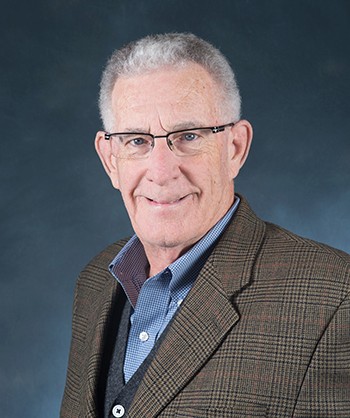
Thomas N. Seyfried
Professor and biologist
8
APPEARANCES
8
PODCASTS
Sep 22, 2026


Shadi NabhanHOST
If somebody goes on keto diet, we should expect that epilepsy will get better at least.

Thomas SeyfriedGUEST
Now, the funny thing about we have a group of Johns Hopkins colleagues that want keto to be used as a first and foremost treatment for epilepsy.
Thomas SeyfriedGUEST
And then you can bring in low doses of anti-epileptic drugs to work with the diet.
Thomas SeyfriedGUEST
I was a representative of the American Epilepsy Society for the pharmaceutical institutions, and they don't want any part of that.
27 MINS LATER
Shadi NabhanHOST
many of the things that we know today we never knew actually 10 years ago until the human genome project and the sequencing that we did and we looked at the you know we had now do next-generation sequencing thing so the technology has shifted that allows us today to detect certain things that weren't able to detect long time ago but I don't think you buy into that


Thomas SeyfriedGUEST
So now that organelle still has in the matrix the old machinery of fermentation.
Thomas SeyfriedGUEST
So when the cristae are damaged and the structure and proteins are damaged, they still can get energy.
Thomas SeyfriedGUEST
And that energy, why do they call most cancers glutamine-addicted? because that organelle is not, and let me point out, and you mentioned this about Sydney Winehouse, they take in oxygen and throw out ATP, but the ATP is coming from a fermentation, not from oxidative phosphorylation in the most part.
Thomas SeyfriedGUEST
So you're getting, you say, oh, mitochondria are really effective and powerful in cancer.
24 MINS LATER


Karl SterlingHOST
And that's, to me, I don't want to have you run with it on that one because can you describe to us what that means, this whole metabolic dysfunction in relation to cancer?
Thomas SeyfriedGUEST
Well, I think you have to first look at what the National Cancer Institute, NCI, calls cancer.
Thomas SeyfriedGUEST
And essentially, all cancer centers throughout the United States and the world, for that matter, they refer to cancer as a genetic disease.
Thomas SeyfriedGUEST
And what does that mean? It means that mutations in the nucleus lead to cells dividing out of control, which is essentially what cancer is.
Thomas SeyfriedGUEST
So, and on the National Cancer Institute website, they say cancer is a hundred different diseases, all differing in genetic properties.
Thomas SeyfriedGUEST
Background mutations and all these kinds of things, making it an extremely complicated disorder.
14 MINS LATER

Casey RuffHOST
Tell me a little about how we even know that something is cancer or not, and what, what potential harms that could have.
Thomas SeyfriedGUEST
Well, I think, you know, it's been well pu- so there's dozens of papers in the, in the scientific literature showing that needle biopsy can increase risk for spreading cancer around the body.
Thomas SeyfriedGUEST
Um, but you, you know, why do you, why are we doing that? Um, and a lot of it is doing for histological, uh, diagnosis, looking at the number of proliferating cells, and then of course they take the tissue and they do gene expression profiles to tell you what kind of, you know, uh, uh, uh, what kind of gene mutations you might have in the tissue.
Thomas SeyfriedGUEST
If you can kill the tumor cell without knowing what's, what the gene mutations are, what difference does it make what the gene mutations are? Largely irrelevant.
Thomas SeyfriedGUEST
Um, so i- if we look at it, it, so you stick the tumor with a needle and you create an inflammation in and around the tumor, which then brings in cells of our immune system called macrophages.
11 MINS LATER
Casey RuffHOST
Second part is, is fasting beneficial only because it puts most people in a very ketogenic state?


Thomas SeyfriedGUEST
... of, of, of, of, of, of women, and yet our genetics are almost identical to the chimpanzee.
Thomas SeyfriedGUEST
Uh, because the chimp is eating and living in a, in a diet and lifestyle, uh, uh, compatible, uh, with how they evolved originally fro- uh, as, as a species.
Thomas SeyfriedGUEST
So I, I was, I tell people I was at the, um, the San Diego Zoo a couple of months ago, which is one of the famous zoos in the United States.
Thomas SeyfriedGUEST
And they, and they had these bonobos and gorillas and all these kinds of things.
Thomas SeyfriedGUEST
And I asked the vet, I, I said, "Do you guys feed these things like they, in the wild?" "Oh, yeah, we're un- constantly under surveillance." I says, "What if you go down to Dunkin' Donuts and get a whole bunch of jelly-filleds, uh, would you, would these guys eat these?" "Oh," he said, "they'd pound them down.


Brad SmithHOST
I, you know, I, I think when the l- the last two discussions we've had have been so, uh, overwhelmingly amazing, but I think one thing that I missed in my, uh, lack of journalist experience, 'cause I have none and I'm not one, but was just asking you the simple, uh, idea, which is when your body gets into ketosis, why is the ketone so important, and what specifically does it do?
Thomas SeyfriedGUEST
Yeah, well, that's why, uh, my late friend and colleague, Dr. Richard Veech, um, who was the leader of the n- uh, NIH metabolic branch of the, uh, of, of the federal government, called it a super fuel, h- he and George Cahill, who ran the Joslin Diabetes Center.
Thomas SeyfriedGUEST
Uh, as you said, when you fast, you don't eat for several days, you use up the glycogen in the, in the liver and some in the kidney, and then now you have to turn to an alternative energy.
Thomas SeyfriedGUEST
And, uh, we evolved as a species, uh, to store energy in the form of fat and, and, and that fat, when we stop eating, gets mobilized.
7 MINS LATER

FidiasHOST
Give us a bit longer explanation.
Thomas SeyfriedGUEST
Listen, what we're doing is we're evaluating metabolic therapies for cancer.
Thomas SeyfriedGUEST
You have to realize that our work and the work of others has clearly shown that cancer is not a genetic disease.
Thomas SeyfriedGUEST
That changes the whole dynamics of how you view the disease and how you treat it.
Thomas SeyfriedGUEST
So what we did in our 40 years of research on cancer is we went back and we realized that the German scientist Otto Warburg was essentially correct on the origin of cancer as a mitochondrial metabolic problem.
Thomas SeyfriedGUEST
The problem at that time is he had no electron microscopic analysis of mitochondria structure.
10 MINS LATER
FidiasHOST
What other ways you can get it except water only fasting?


Thomas SeyfriedGUEST
Uh, we are still paleolithic man and, uh, our biology has allowed us to store energy efficiently, uh, because of times of famine.
Thomas SeyfriedGUEST
We are now in a new environment where we have massive amounts of highly processed carbohydrates, inactivity, emotional stress.
Thomas SeyfriedGUEST
You, you pile all those together with availabili-- uh, the exposure to carcinogens and whatever, and you chronically damage this organelle.
47 MINS LATER