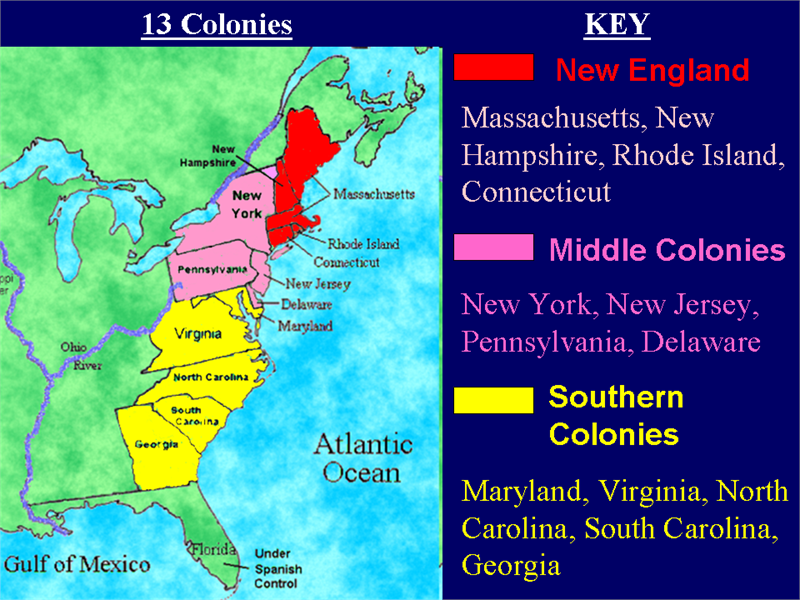
Thirteen Colonies
RegionWikipedia
62
MENTIONS
27
EPISODES
21
PODCASTS
Search complete. 62 mentions across 27 episodes found for "Thirteen Colonies".
Sep 26, 2026

John Van StanNARRATOR
This devotion was confirmed on the count's part, cemented by blood, for his two brothers, Valence and Isidore, had lost their lives in defending the king and queen from the revolutionists.
John Van StanNARRATOR
Andrea had a brother, Philip, who also loved the queen, but he had been offended by her amour with Charny, and being touched by an American republican fever while fighting with Lafayette for the liberation of the Thirteen Colonies, he had quitted the court of France.
John Van StanNARRATOR
On his way, he had wounded Gilbert, whom he learned to be his sister's wronger, as well as having stolen away her infant son.
John Van StanNARRATOR
But although the wound would have been mortal under other treatment, it had been healed by the wondrous medicaments of Joseph Balsamo, alias Count Cagliostro, the celebrated head of the Invisibles, a branch of the Orient Freemasons dedicated to overthrow the monarchy and set up a republic after the United States model in France, if not in Europe.

Tim WhitakerHOST
Billy Graham, Franklin Graham, Joanne Will Graham.
Tim WhitakerHOST
They're doing a 13 colonies tour.
Tim WhitakerHOST
Yeah, they're coming to New Jersey and Philly.
Tim WhitakerHOST
Oh, they were just here yesterday.

Roger MilleenNARRATOR
CHAPTER II.
Roger MilleenNARRATOR
LOYALISM IN THE THIRTEEN COLONIES It was a remark of John Fiske that the American Revolution was merely a phase of English party politics in the eighteenth century, in this view there is undoubtedly an element of truth the revolution was a struggle with the british empire in which were aligned on one side the american whigs supported by the english whigs and on the other side the english tories supported by the american tories The leaders of the Whig Party in England, Charles James Fox, Edmund Burke, Colonel Berry, the great Chatham himself, all championed the cause of the American revolutionists in the English Parliament.
Roger MilleenNARRATOR
There were many cases of Whig officers in the English Army who refused to serve against the rebels in America.
Roger MilleenNARRATOR
general richard montgomery who led the revolutionists in their attack on quebec in seventeen seventy five and seventy six furnishes the case of an english officer who having resigned his commission came to america and on the outbreak of the rebellion took service in the rebel forces on the other hand there were thousands of american tories who took service under the king's banner and some of the severest defeats which the rebel forces suffered were encountered at their hands it would be a mistake however to identify too closely the parties in england with the parties in america the old tory party in england was very different from the so-called tory party in america the term tory in america was as a matter of fact an epithet of derision applied by the revolutionists to all who opposed them the opponents of the revolutionists called themselves not tories but loyalists or friends of government there were it is true among the loyalists not a few who held language that smacked of toryism among the loyalist pamphleteers there were those who preached the doctrine of passive obedience and non-resistance thus the rev jonathan boucher a clergyman of virginia wrote Having then, my brethren, thus long been tossed to and fro in a wearisome circle of uncertain traditions, or in speculations and projects still more uncertain concerning government, what better can you do than, following the Apostle's advice, to submit yourselves to every ordinance of man for the Lord's sake? whether it be to the king as supreme, or unto governors as unto them that are sent by him for the punishment of evildoers, and for the praise of them that do well.
13 MINS LATER
Roger MilleenNARRATOR
ALEXANDER HAMILTON, FOR INSTANCE, DESERTED FROM THE TORIES TO THE WIGS.
Roger MilleenNARRATOR
BENEDICT ARNOLD DESERTED FROM THE WIGS TO THE TORIES.
Roger MilleenNARRATOR
THE LOYALISTS THEMSELVES ALWAYS MAINTAINED THAT THEY CONSTITUTED AN ACTUAL MAJORITY IN THE THIRTEEN COLONIES.
Roger MilleenNARRATOR
IN 1779 THEY PROFESSED TO HAVE MORE TROOPS IN THE FIELD THAN THE CONTINENTAL CONGRESS.

Bobby CapucciHOST
In Saints and Revolutionaries, Essays in American History, one oh three, one oh eight, David Hall, nineteen eighty-four.
Bobby CapucciHOST
Catherine Pryor, Penal Measures in the American Colonies, An Overview, American Journal of Legal History, twenty-eight, three thirty, nineteen eighty-two.
Bobby CapucciHOST
Hugh F. Rankin, Criminal Trial Proceedings, seventy-eight, seventy-nine, nineteen sixty-five.
Bobby CapucciHOST
Richard Stark, Office and Authority of the Justice of the Peace, one fourteen, one fifteen, seventeen seventy-four.

Bobby CapucciHOST
In Saints and Revolutionaries, Essays in American History, 103, 108, David Hall, 1984.
Bobby CapucciHOST
Catherine Pryor, Penal Measures in the American Colonies, An Overview, American Journal of Legal History, 28, 330, 1982.
Bobby CapucciHOST
Hugh F. Rankin, Criminal Trial Proceedings, 78, 79, 1965.
Bobby CapucciHOST
Richard Stark, Office and Authority of the Justice of the Peace, 114, 115, 1774.

Sarah M.S. PearsallGUEST
So, um, it's been a, a wonderful adventure to, to witness this 250th anniversary, and part of what I wanted to do was to really, um, help people in the US and elsewhere to think about the range of people and places that are actually involved in the American Revolution, which was, of course, a very significant national event, but also a really significant global event.
Sarah M.S. PearsallGUEST
And the way that I do that is to take readers-- every chapter of the book starts outside the Thirteen Colonies, and then works its way back to the main sort of m-more familiar narrative of the American Revolution, the Stamp Tax, and the found- the Declaration of Independence, and all of those things.
Sarah M.S. PearsallGUEST
Um, but by think, you know, coming at it from this different angle, I think we get a different sense of the, especially the ideals in the Declaration of Independence, including the really famous ones like life, liberty, and the pursuit of happiness, but also some maybe less considered ones about respect and honor and equality and other ideals that are in that document.
McGraw MilhavenHOST
All of it runs through the British Empire.

Roger MeleneNARRATOR
End of chapter 1 Recording by Roger Melene Chapter 2 of The United Empire Loyalists by W. Stuart Wallace This LibriVox recording is in the public domain.
Roger MeleneNARRATOR
Recording by Roger Melene Chapter 2 Loyalism in the Thirteen Colonies It was a remark of John Fiske that the American Revolution was merely a phase of English party politics in the 18th century.
Roger MeleneNARRATOR
In this view there is undoubtedly an element of truth.
Roger MeleneNARRATOR
The Revolution was a struggle with the British Empire in which were aligned on one side the American Whigs supported by the English Whigs, and on the other side the English Tories supported by the American Tories.
15 MINS LATER
Roger MeleneNARRATOR
"I have been struck," wrote Lorenzo Sabine, "in the course of my investigations with the absence of fixed principles, not only among people in the common walks of life, but in many of the prominent personages of the day.
Roger MeleneNARRATOR
Alexander Hamilton, for instance, deserted from the Tories to the Whigs.
Roger MeleneNARRATOR
Benedict Arnold deserted from the Whigs to the Tories." The Loyalists themselves always maintained that they constituted an actual majority in the Thirteen Colonies.
Roger MeleneNARRATOR
In seventeen seventy-nine, they professed to have more troops in the field than the Continental Congress.

JasonHOST
We came out to the park today.
JasonHOST
There's a group of us that, uh, decided to do a POTA, but the point of today's video, or activation I should say, was to actually chase the 13 Colonies.
JasonHOST
13 Colonies event is something that happens every year from July 1 to July 7.
JasonHOST
The original 13 colonies set up special event stations with different operators around working side band, FT8, CW, satellites, the whole nine yards.
JasonHOST
And, uh, they're all either Kilo 2 Alpha through Kilo 2 Mike, for 13 of them.
JasonHOST
I try to work these every year, and sometimes I get all of them and sometimes I don't.
JasonHOST
So I've been wanting to do this for like, I wanted to do this last year for this exact event.
JasonHOST
My wife and I were on vacation that week, so I didn't get a chance to do it.

Michael TroyHOST
When the Continental Congress voted to declare themselves independent from Britain, they thought it appropriate to write a declaration to that effect.
Michael TroyHOST
Now, the Declaration could have been one or two sentences, something like, We the Thirteen Colonies of North America hereby declare ourselves to be independent of the British King and British rule.
Michael TroyHOST
Thank you for your attention to this matter.
Michael TroyHOST
The Continental Congress, however, thought it would be a good occasion to spell out the exact reasons for declaring independence, and the primary author of the document, Thomas Jefferson, based that argument on generally understood Enlightenment principles, that were popular not only among Americans, but many Europeans as well.

Roger MelinNARRATOR
Chapter two.
Roger MelinNARRATOR
Loyalism in the Thirteen Colonies.
Roger MelinNARRATOR
It was a remark of John Fiske that the American Revolution was merely a phase of English party politics in the eighteenth century.
Roger MelinNARRATOR
In this view there is undoubtedly an element of truth.
2 HRS 5 MINS LATER
Roger MelinNARRATOR
A strangely ill-worded and ungrammatical petition to have the Assembly dissolved was presented to the Governor by the Lower Cove people, but Governor Carleton refused to interfere, and the Upper Cove candidates kept their seats.
Roger MelinNARRATOR
The incident created a great deal of indignation in St. John, and Ward Chipman and Jonathan Bliss were not able for many years to obtain a majority in that riding.
Roger MelinNARRATOR
It is evident from these early records that, while there were members of the oldest and most famous families in British America among the Loyalists of the Thirteen Colonies, the majority of those who came to Nova Scotia, New Brunswick, and especially to Upper Canada, were people of very humble origin.
Roger MelinNARRATOR
Of the settlers in Nova Scotia, Governor Parr expressed his regret that there is not a sufficient proportion of men of education and abilities among the present adventurers.
17 more episodes mention Thirteen Colonies.
Create an account to see the whole feed, search across every transcript, and follow the entities you care about.