Theresienstadt Ghetto
Concentration camp in the Czech RepublicWikipedia
33
MENTIONS
17
EPISODES
15
PODCASTS
Search complete. 33 mentions across 17 episodes found for "Theresienstadt Ghetto".
Sep 9, 2026

SophieHOST
They banned Schoenberg and Weill and targeted Jewish composers.
SophieHOST
Ross tells the heartbreaking story of Viktor Ullmann, who kept composing in the Theresienstadt camp before being sent to Auschwitz.
SophieHOST
The Nazis weren't Philistines.
SophieHOST
They were music lovers with a twisted, politicized idea of what music should be.

speaker_1NARRATOR
First, Heydrich ordered all of them to wear the yellow Star of David.
speaker_1NARRATOR
Then he established a huge ghetto in the town of Theresienstadt.
speaker_1NARRATOR
It housed more than 140,000 Jews in squalor.
speaker_1NARRATOR
At the beginning of October 1941, Heydrich and his old friend Adolf Eichmann chaired a conference on the Czech-Jewish problem.

speaker_1NARRATOR
The Second World War began on the 1st of September 1939, when Nazi Germany invaded Poland.
speaker_1NARRATOR
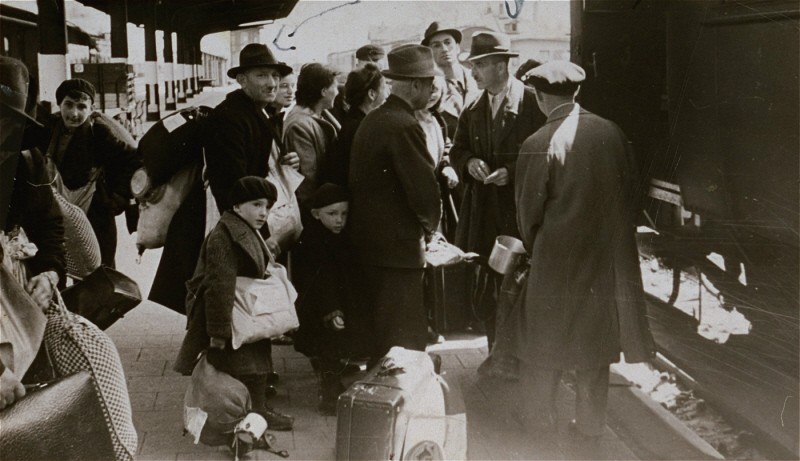
After 1941, Jews were rounded up, first into local collection points, later on to trains bound for the nearby fortress of Theresienstadt, and from there to extermination camps further east.
speaker_1NARRATOR
In Auschwitz, Krebs behaved as if he was a king and supervised the arrests of Czech patriots, trade union men, and also priests.
speaker_1NARRATOR
He championed the twin policy of carrot and stick, higher bread rations for obedient citizens, strict quotas, forced labor and violence for those who remained loyal to the Czechoslovak Republic, and in opposition to the occupiers.

Gabriela Di LaccioSOUNDBITE_SPEAKER
And I wanna leave you all with one woman's story.
Gabriela Di LaccioSOUNDBITE_SPEAKER
Ilse Weber was a poet, a singer, who was imprisoned in the ghetto of Theresienstadt during the Second World War with her family.
Gabriela Di LaccioSOUNDBITE_SPEAKER
As she was there, she didn't write symphonies, but she wrote songs to entertain the elderly and the children.
Gabriela Di LaccioSOUNDBITE_SPEAKER
That's the power of music, and that was the gift of one woman.

Scott BrickNARRATOR
Her destination was not Liverpool Street.
Scott BrickNARRATOR
It was Theresienstadt.
Scott BrickNARRATOR
Between the time Airbnb went public in late 2020 and the day a mob was sent to storm the Capitol building in early January 2021, a friend sent us a board game called Airbnbopoly, a riff on the old favorite Monopoly.
Scott BrickNARRATOR
The familiar railway stations had been replaced with some of the world's busiest airports, neighborhoods and streets had been substituted with countries, and the priciest city locations with castles and igloos.

speaker_5HOST
Viktor E. Frankl's Manners Search for Meaning, published in 1946.
speaker_5HOST
Frankl was a brilliant Austrian psychiatrist who survived Auschwitz, Theresienstadt, and Dachau, though his pregnant wife, his parents, and his brother were all murdered by the Nazis.
speaker_6HOST
This book is structurally unique.
speaker_6HOST
It is essentially two entirely different books bound together by a single thesis.

Tim WilsonPANELIST
Well, that was a lie.
Tim WilsonPANELIST
In fact, Theresienstadt was a transit point to gas chambers and crematoriums.
Tim WilsonPANELIST
But as Bob talked about the Holocaust, he actually quoted a line attributed to the philosopher Edmund Burke, And that line, that quote is this, all that's needed for evil to triumph is for good people to do nothing.
Tim WilsonPANELIST
In 1947, after the end of the war, Bob arrived in New Zealand, a place he described to me as paradise.
speaker_0NARRATOR
One of them is Dita Polakhova.
speaker_0NARRATOR
After spending years under the Nazi occupation and one year in the Theresienstadt ghetto, Dieter and her parents were sent to the Auschwitz concentration camp in December 1943.
speaker_0NARRATOR
Between the 26th of October 1942 and the 28th of October 1944, the Germans deported nearly 47,000 Jews from Theresienstadt to Auschwitz in 27 transports.
speaker_0NARRATOR
While at Riesenstadt life was worth something, at Auschwitz this was no longer the case.
speaker_0NARRATOR
When Dieter's transport arrived in Auschwitz, it was at nighttime.
speaker_0NARRATOR
From that moment, Dieter was not called by her name anymore.
speaker_0NARRATOR
She became only a number.
speaker_0NARRATOR
73305 They were placed into B2B family camp, called Theresienstadt Family Camp Auschwitz, established on the 8th of September 1943 for the Jews from the ghetto in Theresien.
speaker_0NARRATOR
Uncle Ludwig's widow, Aunt Manja, who was not a Jew, did not obey the law forbidding non-Jews to have contact with Jews, and kept helping Dieter and her parents, bringing food and other necessities.
speaker_0NARRATOR
In November 1941, Reinhard Heydrich, the Nazi architect of the Holocaust, established the Theresienstadt Ghetto, which was located in the fortress town of Theresien, in the protectorate of Bohemia and Moravia.
speaker_0NARRATOR
The first transport of Czech Jews arrived in the same month.
speaker_0NARRATOR
At that time, Dieter's father was employed as a clerk in one of the departments of the Jewish Community Center.
speaker_0NARRATOR
Another department had the task, ordered by the Nazis, to make up lists of people to be deported.
speaker_0NARRATOR
Thanks to Dieter's father's job, their own deportation was delayed for a few months.
speaker_0NARRATOR
However, Dieter's grandparents were deported to Theresienstadt in July 1942.
speaker_0NARRATOR
Dieter, along with her parents, followed them in November the same year.

Binyomin AdlerHOST
And, and what makes it worse is that you, you just don't know what's happening.
Binyomin AdlerHOST
In, in Auschwitz, in Madonhak, in Matthausen, in, in Theresienstadt, in all the, uh, camps in, in Russia, in Poland, the Yidden didn't know what was going on.
Binyomin AdlerHOST
For most of the war, Klal Yisrael had no idea what the Germans were up to, what their plan was.
Binyomin AdlerHOST
And we look at even recent history.
7 more episodes mention Theresienstadt Ghetto.
Create an account to see the whole feed, search across every transcript, and follow the entities you care about.