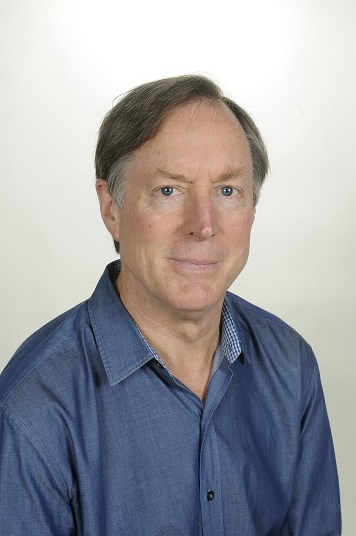
Theodore Porter
Historian of scienceWikipedia
5
MENTIONS
4
EPISODES
4
PODCASTS
Search complete. 5 mentions across 4 episodes found for "Theodore Porter".
Sep 15, 2026

C. Thi NguyenGUEST
And the more I've looked, especially at the historical record on this, the more I've been convinced this is not a story about user interface design.
C. Thi NguyenGUEST
One of the books that really shook me up about this is Theodore Porter's Trust in Numbers.
C. Thi NguyenGUEST
So he's a historian that studies quantification culture.
C. Thi NguyenGUEST
He gives an argument and the argument he gives is about the difference between quantitative and qualitative forms of reasoning.

C. Thi NguyenGUEST
We count easily together.
C. Thi NguyenGUEST
So I've been saying that phrase a lot, but I think Theodore Porter gives one of the most refined accounts here.
C. Thi NguyenGUEST
So what he says is that quantitative and qualitative information are good at different things.
C. Thi NguyenGUEST
They're different tools.

C. Thi NguyenGUEST
In the worst case, the world presents you with something, and it's, it's an institutional metric, and an institutional metric has certain design features.
C. Thi NguyenGUEST
So a lot of my book, uh, draws on the work of, uh, Theodore Porter and Lorraine Daston, who are two historians, who I think really explain what's going on in institutional metrics.
C. Thi NguyenGUEST
Porter's way of putting it is that metrics are designed to be comprehensible across contexts, that qualitative justification, justification in written language, is complex and open-ended and dynamic, but it requires a lot of shared background context, and so it doesn't travel well and it doesn't aggregate easily.
C. Thi NguyenGUEST
And so to make a institutional metric, we strip away all the nuance, we cut out all the sensitivity, and we cut out everything that requires high context, and we create a context-invariant nugget that can travel easily, like letter grades, right? Very little information, very easy to travel.

C.T. NguyenGUEST
So I went looking for a reason, and I found one.
C.T. NguyenGUEST
And I think one of my favorite explanations comes from a historian called Theodore Porter, who has this book called Trust in Numbers, in which he asks the question, why is it that politicians and bureaucrats reach compulsively for quantitative justification, even when they know that the metrics are bad, even when they know the rankings aren't tracking, which is really important.
C.T. NguyenGUEST
And he has this answer that I felt like was like the matrix-like unveiling of the modern world for my eyes.
C.T. NguyenGUEST
His answer is, he ended up saying like, look, there's two kinds of ways of knowing about the world.
Phil AgnewHOST
Are students less open-minded? Are they more creative? Are they better thinkers? Are they happier? We don't know.
Phil AgnewHOST
And we partly don't know because we've allowed metrics, in this case grades, to dominate our worldview.
C.T. NguyenGUEST
This is, I think, the core lesson from Theodore Porter that truly took my mind apart and the thing that terrifies me the most, which is that quantitative information is socially powerful precisely because it's been made to be portable, because it's been made to be easily comprehended.
C.T. NguyenGUEST
And we made it that way by removing nuance and expertise.