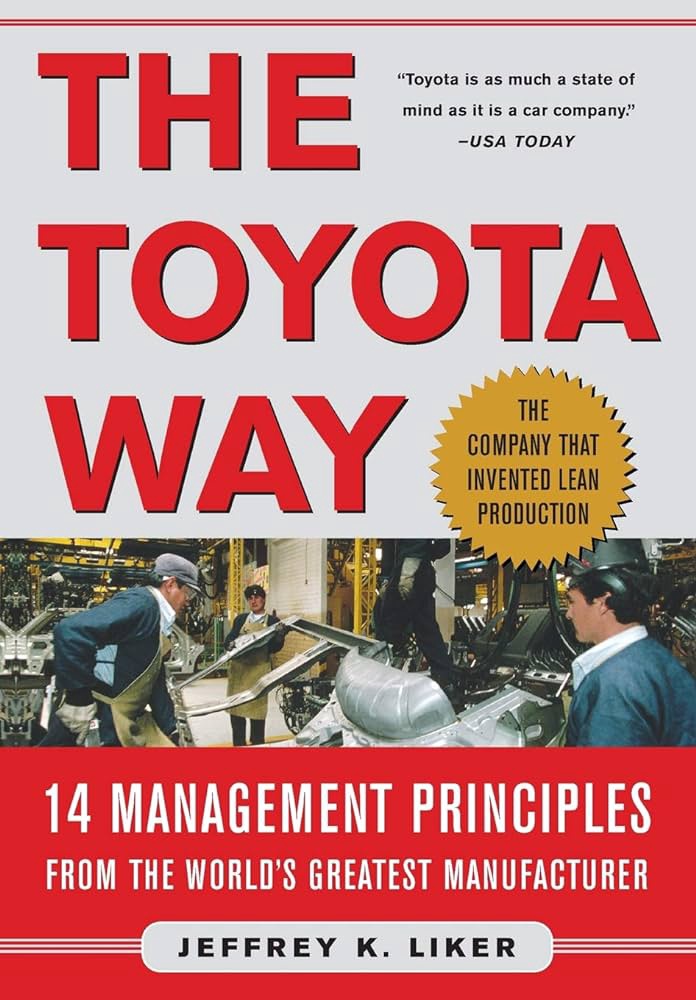
The Toyota Way
51
MENTIONS
12
EPISODES
10
PODCASTS
Search complete. 51 mentions across 12 episodes found for "The Toyota Way".
Nov 18, 2026

Mark GrabanHOST
Our guest today is a familiar voice here.
Mark GrabanHOST
It's Dr. Jeffrey Liker, Professor Emeritus at the University of Michigan, President of Leiker Lean Advisors and author of of The Toyota Way, which has sold almost a million copies in 26 different languages.
Mark GrabanHOST
He's written nine other books about Toyota.
Mark GrabanHOST
He's won a dozen Shingo Research Prizes.
Mark GrabanHOST
I see some of those over your head.
Mark GrabanHOST
Jeff, first off, welcome to the show.
Mark GrabanHOST
Do I have the book count right? There's so many
Jeffrey LikerGUEST
now.

Kamar JonesGUEST
but it made it click for me, and this is getting to Lean.
Kamar JonesGUEST
Not Six Sigma, but Lean is the Toyota way.
Kamar JonesGUEST
It's a very good book to read that, and it talks about how Toyota... came to powerhouse that they are now and it's just practical common sense that's all lean is really is a lot of common sense and practicality not a lot of quantitative stuff like like six sigma uh but that book if you want to go into that space would be a good read to do and finish it read it and finish it and things will click a little a lot more as to how you approach certain problems That one popped in my mind when you said that.
Amir KhwajaHOST
Fantastic.

Adam WakelingHOST
Steve Bragg, founder, Empress FX.
Steve BraggSOUNDBITE_SPEAKER
For manufacturing, I went through a big, and I still love like the Toyota way, like lean manufacturing.
Steve BraggSOUNDBITE_SPEAKER
That really helped clean up our production.
Steve BraggSOUNDBITE_SPEAKER
Like we could still, before this, we could still produce pedals, but there was just like so many headaches and fires.
Steve BraggSOUNDBITE_SPEAKER
I feel like it's kind of like a siren song.
Steve BraggSOUNDBITE_SPEAKER
You know, you feel like the next one is going to help you.
Steve BraggSOUNDBITE_SPEAKER
I think the one that helped me out the most was really like the Toyota Way.
Adam WakelingHOST
Jamie Stillman, founder of Earthquaker Devices.

Carlos M. Llanes Jr.GUEST
And for that reason, that synergistic, like true gain share, pain share relationship affords us the ability to do some cool things that you wouldn't necessarily do with a transactional relationship.
Paul-Bernard JaroslawskiHOST
Yeah, there's a great book called The Toyota Way.
Paul-Bernard JaroslawskiHOST
I read most of it last year, and it talks a lot about the way Toyota thinks about building their business, the processes, the values they have.
Paul-Bernard JaroslawskiHOST
And I think a lot of the values that you have are similar to the values of Toyota.
Mark GrabanHOST
He is a senior partner at Honsha, a founding partner at Milwaukee, and a former Toyota team member.
Mark GrabanHOST
Daryl joined Toyota's Kentucky plant in Georgetown back in 1999 as a management development specialist coming from a background in teaching, and he became the project lead for teaching the Toyota Way 2001 to the plant's president, vice presidents, and department heads.
Mark GrabanHOST
He is the co-author, and this is going to be a big part of our focus here today, co-author with former Toyota leader Hiro Yoshiki of the new book titled Courage, Humility, Kaizen, The Three Disciplines of Toyota Leadership.
Mark GrabanHOST
So Daryl, welcome to the podcast.
Darril WilburnGUEST
It's part of that story.
Darril WilburnGUEST
But Hiro and I met when we were doing one part of that effort.
Darril WilburnGUEST
And it was the Toyota Way 2001, which is Toyota's internal effort.
Darril WilburnGUEST
to understand who they were, kind of capture what they call the DNA of Toyota.

Steve GundGUEST
So I'm glad to see the Wall Street Journal starting to look at smaller companies, family-led companies, and looking for positive stories on leadership from companies that take care of their people well.
Steve GundGUEST
So if you'd like to learn more, here are a few books.
Steve GundGUEST
I mentioned Michael Pirson's book, Humanistic Management, earlier.
Steve GundGUEST
Here are a few more.
Steve GundGUEST
I mentioned Simon Sinek's book, Start With Why.
Steve GundGUEST
I mentioned the Shingo Model of Operational Excellence.
Steve GundGUEST
So these are all books that I recommend.
Steve GundGUEST
I encourage you to continue to read because your university education will only take you so far in life.

Rich SteinmeierGUEST
We have processes and we have different leverage points that we use, but we also distribute decision making as low as possible.
Rich SteinmeierGUEST
And so I'm actually right now rereading the Toyota way.
Rich SteinmeierGUEST
because that is about excellence and continuous improvement and empowerment.
Rich SteinmeierGUEST
I love the idea of the and-on cord, which is anybody is empowered to stop the line.

Brad CairnsGUEST
I stopped at a bookstore, which probably doesn't even exist anymore.
Brad CairnsGUEST
And I bought a CD and the CD was the Toyota way.
Brad CairnsGUEST
And I, I didn't know what to expect.
Dominic RubinoHOST
By the way, anybody who's listened to that, that's a snoozer.
Dominic RubinoHOST
Don't get me wrong.
Dominic RubinoHOST
The content's incredible, but the delivery is sleepy time.
Brad CairnsGUEST
Anytime I want to put someone to sleep in the car, pop in the Toyota way, they're out.
Brad CairnsGUEST
I'm like stoked, but they're out.

Aaron StreetonGUEST
The genius for lean isn't the Toyota production system.
Aaron StreetonGUEST
It's the Toyota way.
Aaron StreetonGUEST
And if you read the 12 guiding principles, that's the principles of the culture of Toyota that makes lean work.
Aaron StreetonGUEST
And if you look at the tactics of the Toyota production system, they don't always apply to every organization.

EyvonneHOST
One of the things we're also seeing is, like, writing faster code, as an example, doesn't necessarily mean you release faster because you've got this whole pipeline process.
EyvonneHOST
And what we talked about back in the DevOps days or go all the way back to, like, Goldratt and the Goal and the Toyota Way and all those concepts is if you increase work in progress, but then you have a backlog that happens further down the chain, you actually slow production.
EyvonneHOST
And so if you're im- improving the, the, um, the speed of production at one area along the workflow, but you're not making holistic changes across the board, you could actually make things worse.
EyvonneHOST
So it's, it's, it's, it's worse than just paying more.
2 more episodes mention The Toyota Way.
Create an account to see the whole feed, search across every transcript, and follow the entities you care about.