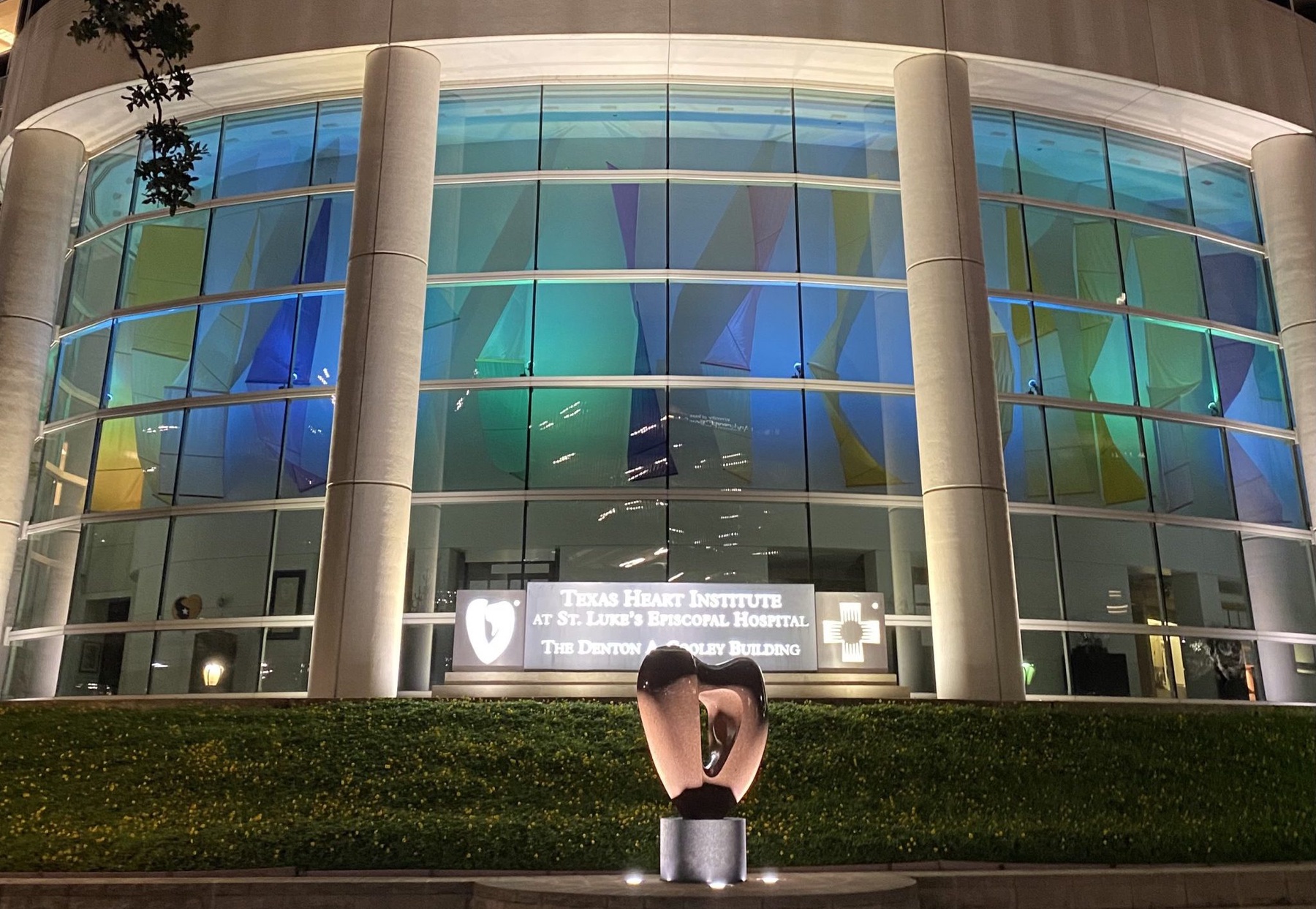
The Texas Heart Institute
Nonprofit organizationWikipedia
8
MENTIONS
5
EPISODES
5
PODCASTS
Search complete. 8 mentions across 5 episodes found for "The Texas Heart Institute".
Nov 1, 2026

William S. StoneySOUNDBITE_SPEAKER
He's a native Texan.
William S. StoneySOUNDBITE_SPEAKER
He's the founder and director of the Texas Heart Institute.
William S. StoneySOUNDBITE_SPEAKER
He's published over 1,200 articles, four or five books or more.
William S. StoneySOUNDBITE_SPEAKER
He's the subject of at least two other books that I've read.
52 MINS LATER
Denton A. CooleySOUNDBITE_SPEAKER
Yes.
William S. StoneySOUNDBITE_SPEAKER
Well, the...
William S. StoneySOUNDBITE_SPEAKER
I wanted to ask you about numbers, because the Texas Heart Institute has the most numbers of anybody.
William S. StoneySOUNDBITE_SPEAKER
I want to be sure I know.

Venu MenonGUEST
So over the years, our paradigm for the management of these complications has changed in one way and the other.
Venu MenonGUEST
So the early studies from the late 1960s from Denton Cooley at Texas Heart replacing doing ventricular septal rupture, they clearly recognize it as innate complication of shock.
Venu MenonGUEST
But that was simply because I think the early patients were all dying, and this was a survival of the fittest, and those were the patients that they then operated on.
Venu MenonGUEST
And so that really brought up the issue of whether we should wait for patients to have this complication, because a lot of people were dying even before they had surgery.

Joanna NathanGUEST
Yeah, yeah.
Joanna NathanGUEST
So my first job kind of out of school was really, you know, in the hallowed halls of Texas Heart Institute, you know, where Denton Cooley and, you know, huge, huge names like that that are so important to, you know, the history of kind of cardiac medical technologies in particular were developed.
Joanna NathanGUEST
And I worked for an electrophysiologist by the He's a serial innovator and serial inventor and, you know, worked developing technologies in his lab and really fell in love with the concept of working on a medical device.
Joanna NathanGUEST
I think some of the reason I ended up in med device and not say biotech or or pharma or something else, you know, was I was impatient, you know, impatient to get to impact medicine.
Joanna NathanGUEST
Like the interesting thing about medical technology is you could build something today that could be in a patient in three to five years, you know.
Joanna NathanGUEST
And that piece really, really resonated with me.
Joanna NathanGUEST
So went to Texas Heart Institute, helped spin out a company called Saronis and the kind of interventional.
Joanna NathanGUEST
cardiology vascular space, ran product development there in my 20s, which I don't know if I had any business doing or not, but the company made it all the way through patients and so on and ultimately was acquired, which was great.

Joanna NathanGUEST
Yeah, yeah.
Joanna NathanGUEST
So my first job kind of out of school was really in the hallowed halls of Texas Heart Institute, where Denton Cooley and huge, huge names like that that are so important to the history of cardiac medical technologies in particular were developed.
Joanna NathanGUEST
And I worked for an electrophysiologist by the name of Mehdi Razavi, who was He's a serial innovator and serial inventor and, you know, worked developing technologies in his lab and really fell in love with the concept of working on a medical device.
Joanna NathanGUEST
I think some of the reason I ended up in med device and not say biotech or or pharma or something else, you know, was I was impatient, you know, impatient to get to impact medicine.
Joanna NathanGUEST
Like the interesting thing about medical technology is you could build something today that could be in a patient in three to five years, you know.
Joanna NathanGUEST
And that piece really, really resonated with me.
Joanna NathanGUEST
So went to Texas Heart Institute, helped spin out a company called Saronis and the kind of interventional.
Joanna NathanGUEST
cardiology vascular space, ran product development there in my 20s, which I don't know if I had any business doing or not, but the company made it all the way through patients and so on and ultimately was acquired, which was great.

Venu MenonGUEST
So over the years, our paradigm for the management of these complications has changed in one way and the other.
Venu MenonGUEST
So the early studies from the late 1960s from Denton Cooley at Texas Heart replacing, doing ventriculoseptal rupture, they clearly recognized it as a late complication of shock, but that was simply because I think the early patients were all dying, and this was a survival of the fittest, and those were the patients that they then operated on.
Venu MenonGUEST
And so that really brought up the issue of whether we should wait for patients to have this complication because a lot of people were dying even before they had surgery.
Venu MenonGUEST
And so prior guidelines really recommended immediate correction of a mechanical defect as soon as it was diagnosed.