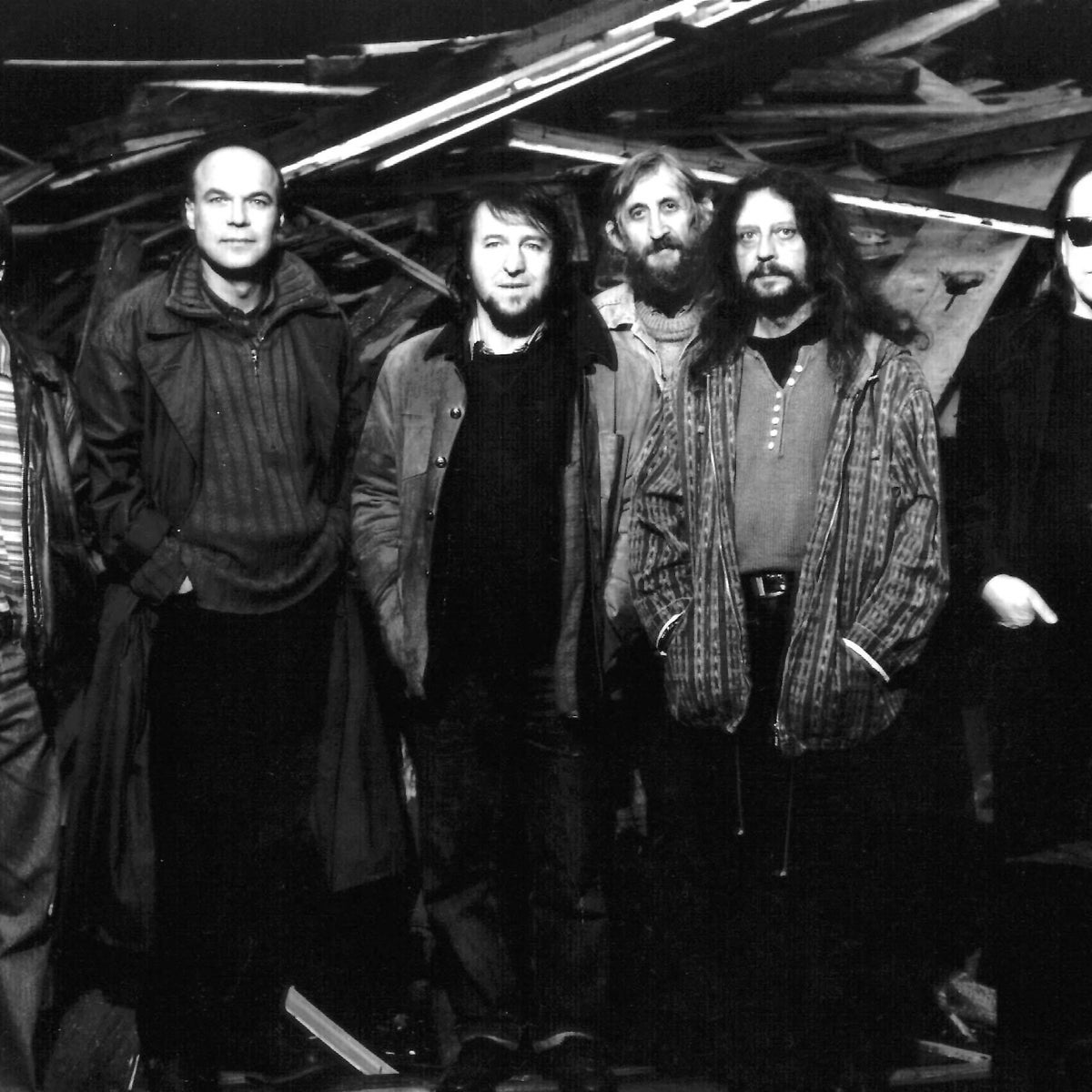
The Plastic People of the Universe

The Plastic People of the Universe

Rock bandWikipedia

Search complete. 8 mentions across 5 episodes found for "The Plastic People of the Universe".

Oct 25, 2026

Paul Rogat LoebGUEST
9:22
And they were doing things.
Paul Rogat LoebGUEST
9:26
I mean, I love the story of how the dissidents united around the defense of a rock band, Plastic People of the Universe, which the authorities just deemed their music not socially constructive.
Paul Rogat LoebGUEST
9:40
And at one point, they were organizing to get prisoners out of jail and got mocked even by people like Milan Kundera, who are certainly not favorable toward the regime.
Paul Rogat LoebGUEST
9:54
And when the prisoners got out, they said, well, they didn't actually free us, but the solidarity allowed us to keep going.
David VaughanSOUNDBITE_SPEAKER
12:47
And so he reflects on what this means, this excessive faith in technology, and also how you can keep your integrity in society without having to succumb to the rules of people who you profoundly disagree with.
Ian WilloughbyCORRESPONDENT
13:04
This book was inspired by his cooperation with the Placid People of the Universe, of course, the famous Czech underground band whose members and associates were jailed in 1976.
Ian WilloughbyCORRESPONDENT
13:14
But what form did Bondi's cooperation with the group take?
David VaughanSOUNDBITE_SPEAKER
13:18
Well, it's a wonderful story.
David VaughanSOUNDBITE_SPEAKER
13:19
I mean, he just started writing poems for them and they started putting his poems to music after he'd got to know the famous sort of key figure of the underground, Ivan Martin Yirov, known also as Magor or the Madman or the Lunatic.
David VaughanSOUNDBITE_SPEAKER
13:37
They actually met in a psychiatric hospital when they were both there.
David VaughanSOUNDBITE_SPEAKER
13:41
And then when they came home, he started writing poetry for them, for the band.
David VaughanSOUNDBITE_SPEAKER
13:45
And it was ideal because it's very concise.
Pete QuiñonesHOST
106:49
The spiritual and intellectual climate surrounding its appearance, however, was not the product of any immediate political event.
Pete QuiñonesHOST
106:57
That climate was created by the trial of some young musicians associated with a rock group called the Plastic People of the Universe.
Pete QuiñonesHOST
107:05
Their trial was not a confrontation of two differing political forces or conceptions, but two differing conceptions of life.
Pete QuiñonesHOST
107:14
On the one hand, there was the sterile puritanism of the post-totalitarian establishment and, on the other, unknown young people who wanted no more than to be able to live within the truth, to play the music they enjoyed, to sing songs that were relevant to their lives, and to live freely in dignity and partnership.

Unknown podcast

The Parallel Society vs Totalitarianism | How to Build a Free World

Oct 19 · 1 Mention

speaker_3NARRATOR
3:07
If it proves impossible legally to compel the ruling power to change the ways it governs us, and if for various reasons those who reject this power cannot or do not wish to overthrow it by force, then the creation of an independent or alternative or parallel society is the only dignified solution.
speaker_3NARRATOR
3:27
The basis for the Parallel Society was born in the mind of Ivan Jurus, a Czech poet and the artistic director of the rock band The Plastic People of the Universe.
speaker_3NARRATOR
3:37
After members of this band were arrested in 1976 for refusing to toe the government line, Jurus called on the community of Czech artists to create music labels, publishing houses, concert halls, art expositions, and other such infrastructure that existed independently of mainstream society and outside the grasp of the communist state.
speaker_3NARRATOR
3:57
Yirus hypothesized that if enough infrastructure were created, an independent society would spontaneously form and function as a pocket of creative freedom in a highly oppressed society.

Unknown podcast

The Great Lie - How to Enslave the World

Oct 16 · 3 Mentions

speaker_2NARRATOR
9:19
The attempt at political reform was not the cause of society's reawakening, but rather the final outcome of that reawakening.
speaker_2NARRATOR
9:28
As an example of how living within the truth can revitalize a society, Havel recounts the story of a rock band, the Plastic People of the Universe.
speaker_2NARRATOR
9:37
In communist Czechoslovakia, musicians were required to register with authorities and were banned from creating music deemed too provocative or threatening to the political system.
speaker_2NARRATOR
9:48
The plastic people of the universe refused to toe the line and following a concert in 1976 they were arrested and the ensuing trial gained enormous public interest.
speaker_2NARRATOR
9:59
The state media branded the band members as drug addicts, mentally ill, extremists and traitors to the country.
speaker_2NARRATOR
10:06
However, many of the citizens had grown tired of living with an ally, and they supported the young musicians.
speaker_2NARRATOR
10:12
And as Havel notes, in many respects the trial marked the beginning of the end of totalitarianism in Czechoslovakia.
speaker_2NARRATOR
10:19
Havel writes, The plastic people of the universe were unknown young people who wanted no more than to be able to live within the truth, to play the music they enjoyed, and to live freely in dignity and partnership.

We value your privacy

We use cookies to understand how you use our platform and to improve your experience. Click “Accept All” to consent, or “Decline non-essential” to opt out of non-essential cookies. Read our Privacy Policy.