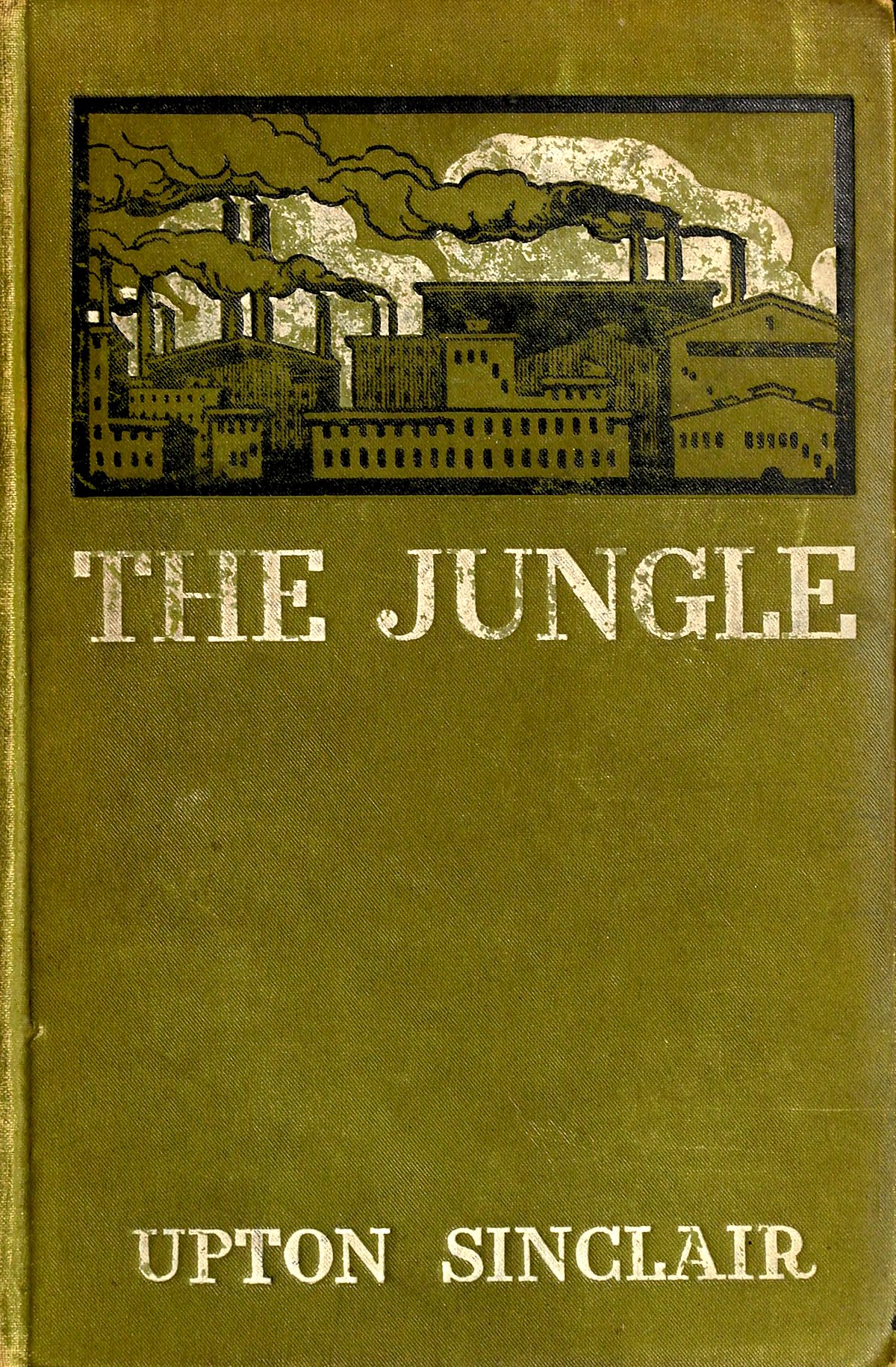
The Jungle
Novel by Upton SinclairWikipedia
68
MENTIONS
39
EPISODES
38
PODCASTS
Search complete. 68 mentions across 39 episodes found for "The Jungle".
Nov 4, 2026

David BrownHOST
Shipping cattle while they're alive ensures the meat won't spoil along the way, and cities are full of skilled workers to work in the packing houses.
David BrownHOST
But as Upton Sinclair exposed in his 1906 novel The Jungle, urban slaughterhouses were full of problems.
David BrownHOST
Sinclair's descriptions of unregulated, unsanitary stockyards were so foul, the Teddy Roosevelt administration was inspired to found the FDA.
David BrownHOST
Conditions in urban meatpacking plants have improved since then.

MariaHOST
there's two genre pools yeah there's the horror pool yeah yeah which is where tender is the flesh is yeah and there's this one in the erotica pool yeah and if the venn diagram and the monsters you put them in the middle that's where it is right there
EricaHOST
and that's Where the Jungle by Upton Sinclair sits too.
EricaHOST
It's like actual commentary about the meat industry as it was created and all of the societal and social implications of that during that time period.
EricaHOST
Is

James BarryGUEST
In the early 1900s or maybe late 1800s when we started getting the railroad systems in place, they centralized meat production right around Chicago area.
James BarryGUEST
The Jungle is a book that came from that period.
James BarryGUEST
It's when a lot of industrialized supply chains started, particularly around agriculture and the meat industry.
James BarryGUEST
And you should read The Jungle by Upton St. Clair, I think.
James BarryGUEST
It's a disgusting environment that they created.
James BarryGUEST
Milk, for example, that they sold as country farm milk was blue because it was coming from cows that were in four walls and not outside, things like that, and being fed crap.

Claudia HirtenfelderHOST
You would have walked past it, right? The extent you might have watched it as somehow an indicator of progress or cultural change.
Claudia HirtenfelderHOST
I mean, if you haven't read, to the listeners, if you haven't read Upton Sinclair's The Jungle, I think it's really well worth the read.
Claudia HirtenfelderHOST
It's kind of one of the most depressing books in the world.
Claudia HirtenfelderHOST
I mean, the change that that book brought.

Dave FlynnHOST
Once you see it, The Nickel Hamburger.
Dave FlynnHOST
In 1906, Upton Sinclair published The Jungle, a novel exposing the horrors of Chicago's meatpacking industry.
Dave FlynnHOST
This wasn't Sinclair's intention.
Dave FlynnHOST
He was telling the story of those men on the killing floor.
Dave FlynnHOST
They wanted to know it was clean, pure, safe.
Dave FlynnHOST
They had to trust that it was.
Dave FlynnHOST
As Chris Sacka says, good stories beat good spreadsheets, and The Jungle was a damn good story.
Dave FlynnHOST
It left a mark on everyone.

Peter WaitzmanHOST
Some early synthetic dyes contained dangerous chemicals that caused serious health problems.
Peter WaitzmanHOST
The turning point came in 1906 when muckraking journalist Upton Sinclair published The Jungle, exposing the horrific conditions in America's meatpacking industry.
Peter WaitzmanHOST
Public outrage led to the passage of the Pure Food and Drug Act, giving the government its first real authority to regulate food additives, including dyes.
Peter WaitzmanHOST
By 1931, 15 coal tar dyes had been approved for use in food.

Anna-Louise SussmanGUEST
So, you know, I think, again, a lot of these things that, you know, I mentioned like occupational job hazards used to be more thought of as a working class phenomenon.
Anna-Louise SussmanGUEST
Like if, you know, you were a meat packer in Upton Sinclair's The Jungle, you might fall in and get like shredded in with the hamburger, you know, or something like that, or a coal miner and you'd get black lung.
Anna-Louise SussmanGUEST
But I think you're also seeing the fact that, you know, a surgeon could also be a experiencing these physiological occupational health hazards is really disturbing.
Anna-Louise SussmanGUEST
I mean, sorry, it's always been disturbing, but we're seeing it trickle

Jason PadgettHOST
We believe in adapt, improvise, and overcome.
Jason PadgettHOST
You know, I read Upton Sinclair's The Jungle.
Jason PadgettHOST
I understand that industrial revolutions have downsides to them as well.
Jason PadgettHOST
I'm not sure that this industrial revolution is not going to be – way faster than anyone that we've ever had.

Doug RightHOST
But herein lies the countless love crafting horrors that are various pathogens, can contaminate our food
Sarah DavisHOST
and if you want to kind of look at some of the early part of that i recommend you have you read the jungle by upton sinclair yeah if you want to look at kind of as we're moving into this more mechanized world of of food production and what that looked like at the turn of the last century that's a really it's an amazing amazing read yeah yes
Doug RightHOST
yeah According to the Centers for Disease Control in the US, they actively monitor and report on foodborne outbreaks, with the top five most common trash contaminants being clavulobacter, E. coli, listeria, salmonella, and botulism.
Doug RightHOST
Mm-mm.
11 MINS LATER
Doug RightHOST
This isn't just US, this is everyone.
Sarah DavisHOST
And I also want to point out that the reason in the US that these organizations were formed was specifically because, and we've talked about this in past episodes before, giant lobbyists for food safety, you know, all the big organizations, big... big companies who knocked down something crazy like 150 bills in a 50-year period regarding food safety.
Sarah DavisHOST
And it actually wasn't until Upton Sinclair's The Jungle that people got mad enough that they started pushing through these legislations, which ultimately ended up in the creation of these protections for us.
Doug RightHOST
Exactly.

Kate StapletonHOST
I mean, maybe Chris is, is intimating that it's been with us forever, but Casey on the way here, we were talking about this article as we were driving towards Steubenville and Casey was, you know, Casey, did you feel like this is a new problem?
Casey StapletonHOST
Dude, this is the modern updated version of Upton Sinclair's The Jungle.
Casey StapletonHOST
It's just pulling back the curtain, exposing the chocolate industries.
Casey StapletonHOST
Like milk,
29 more episodes mention The Jungle.
Create an account to see the whole feed, search across every transcript, and follow the entities you care about.