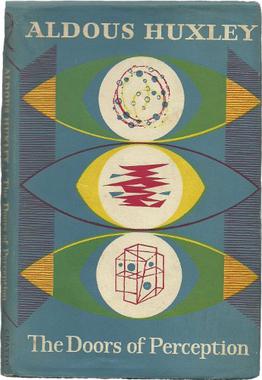
The Doors of Perception
Book by Aldous HuxleyWikipedia
19
MENTIONS
9
EPISODES
8
PODCASTS
Search complete. 19 mentions across 9 episodes found for "The Doors of Perception".
Sep 9, 2026

Doug ShararGUEST
Mm-hmm.
Gavin ButtsHOST
A, Aldous Huxley's The Doors of Perception.
Gavin ButtsHOST
B, Robert M. Pirsig's Zen and the Art of Motorcycle Maintenance.
Gavin ButtsHOST
C, the Quran, or D, Stephen Hawking's A Brief History of Time.
JakePANELIST
It comes from the peyote cactus.
JakePANELIST
It's the drug that Aldous Huxley wrote the book, Doors of Perception.
JakePANELIST
Did
AllyHOST
you already have a cactus guy?
KleinHOST
And what is mescaline supposed to make you do?
JakePANELIST
It is like a light mushroom or acid trip.
JakePANELIST
Again, it's the drug that Aldous Huxley wrote, Doors of Perception.
JakePANELIST
I

KleinHOST
[laughs]
JakePANELIST
It's the, uh, the drug that Aldous Huxley wrote the book Doors of Perception to.
AllyHOST
Did you already have a cactus guy?
KleinHOST
[laughs]
KleinHOST
And what is mescaline supposed to make you do?
JakePANELIST
Uh, it is like a, um, a light mushroom or acid trip.
JakePANELIST
Um, like again, it's the drug that Aldous Huxley wrote Doors of Perception to.
KleinHOST
Yeah, I heard the boring story the first time you told it.

Jordan PetersonGUEST
You know, and it's associated with genuine artistic and redemptive often focusing on something that's approximately the voice of the underclass, let's say, but a powerful voice, right? And it's interesting to see how many young white guys identify with that.
Chris WilliamsonHOST
Was it Aldous Huxley that wrote Doors of Perception?
Jordan PetersonGUEST
Yeah.
Chris WilliamsonHOST
Yeah, so this is kind of an equivalent of that, right? That you have a experience which many people struggle to articulate.

Anthony PeakeGUEST
And what happens is when you take certain substances, it disrupts the brain's ability to do that.
Anthony PeakeGUEST
Now, this is exactly, again, what a guy called C.D. Broad argued in the 1930s and famously Aldous Huxley in his 1954 book, The Doors of Perception.
Anthony PeakeGUEST
This is exactly what Huxley argued.
Anthony PeakeGUEST
And he had certain experiences with peyote.
Anthony PeakeGUEST
And this is exactly what Carl Hart Harrison and his associates have discovered.
Anthony PeakeGUEST
They found that the brain ceases to be able to communicate with itself, which means it no longer can function to stop the wider reality coming through.
Anthony PeakeGUEST
In other words, it's opening the doors of perception wider by inhibiting the brain's abilities to act as an attenuator.
Anthony PeakeGUEST
Now, I would argue that this is of great importance because I argue and other writers are arguing now as well that what happens when we start to die is the brain.

Don LattinGUEST
Aldous Huxley, you know, the famous writer.
Don LattinGUEST
Brave New World, The Doors of Perception, Island, one of his last books in the 1960s.
Daniel SimpsonHOST
Mm.
Don LattinGUEST
Who as a, who was a writer that I read a lot in high school and college and, and was kind of a fan.
5 MINS LATER
Don LattinGUEST
And then of course, you know, in the next decade in the '50s, uh, Huxley, uh, was one of the first major writers to experiment and write about psychedelics.
Daniel SimpsonHOST
Mm.
Don LattinGUEST
He had a mescaline trip, uh, in the spring of 1953, which he wrote about in a book called The Doors of Perception, which was very influential for people in my generation.
Don LattinGUEST
I'm talking about, you know, the baby boomers, right?

André DuqumHOST
That, yeah, the-- there's something very interesting about how with these nonverbal autistic children, where there's this physical degradation of one's, like, hardware, so to speak, that may give access or rise to this other field of awareness that we'd otherwise be too preoccupied being identified with in a sense.
André DuqumHOST
Like, there's in Aldous Huxley's Doors of Perception kind of giving the brain the analogy of a reduction valve, right? That we, like, titrate our conscious experience to not be sh- overwhelmed by the sheer amount of information actually available to us.
André DuqumHOST
And that would potentially explain some of these psi phenomena and capacities of savant children, um, where they gain access to abilities or information that they would, in, you know, other words, have no business in having.
André DuqumHOST
Um, it's, uh, yeah, it might-- it's an interesting perspective there.

Michael BocheyGUEST
So this was a little bit later in the 1950s.
Michael BocheyGUEST
You had Aldous Huxley wrote The Doors of Perception, and that was about his mescaline trip.
Michael BocheyGUEST
The way he found out about it was through a psychiatrist named Humphrey Osmond.
Michael BocheyGUEST
And Humphrey Osmond was really interested in mescaline and he was writing about it and talking about the ideas that he was having about using mescaline for, you know, connection, getting people to connect, to communicate differently and assist with therapy.
Michael BocheyGUEST
It's, uh, it's doesn't completely obliterate your ego and send you off into space.
Michael BocheyGUEST
It's a more gentle psychedelic.
Michael BocheyGUEST
So he was thinking, well, what's this for? And then about two hours in when it really kicked in, he just wrote several pages in the doors of perception about, um, how he could look at the folds in his trousers and just see all the beauty in the threads and how they were weaved together and all this detail that he didn't see about the world before.
Michael BocheyGUEST
And he came up with the term reducing valve.

Cynthia ChungGUEST
And, uh, he also had a lot of influence over the philosophies and writings of Aldous Huxley.
Cynthia ChungGUEST
For instance, Wells' Door in the Wall had a strong influence o- over Aldous' Doors of Perception, and there are many other references, which again, I've written about, people can find on, uh, my Substack page.
Cynthia ChungGUEST
Julian Huxley was the founder of transhumanism, which coincided with Pierre Teilhard de Chardin.
Cynthia ChungGUEST
It, it appears they were coming up with it separately, which is interesting.
1 HR 3 MINS LATER
Cynthia ChungGUEST
They, they clearly respect each other and, you know, they're ultimately on the same page.
Cynthia ChungGUEST
But they're both representative of, um, completely different, you would think, um, philosophies or things that they're into.
Cynthia ChungGUEST
Where Julian Huxley is more this kind of modern science, you know, um, rigor- rigorous bent, whereas Aldous Huxley, you know, went more into the parapsychology, more into the supernatural and, and, you know, this, all this hocus pocus, you know, type thing, and Doors of Perception, again, modeled off of H.G. Wells' Doors in the Wall.
Cynthia ChungGUEST
And, um, an interesting thing people should be aware of is that T.H. Huxley's close associate on Darwinism, Alfred Russel Wallace, was one of these people, the new breed, scientifically testing psychic powers, along with William Crookes, F.W.H Myers, and the renowned psychologist William James, which is also a big influence with Aldous Huxley, and he mentions it in his Brave New World, and I believe he mentions, he mentions him often enough.