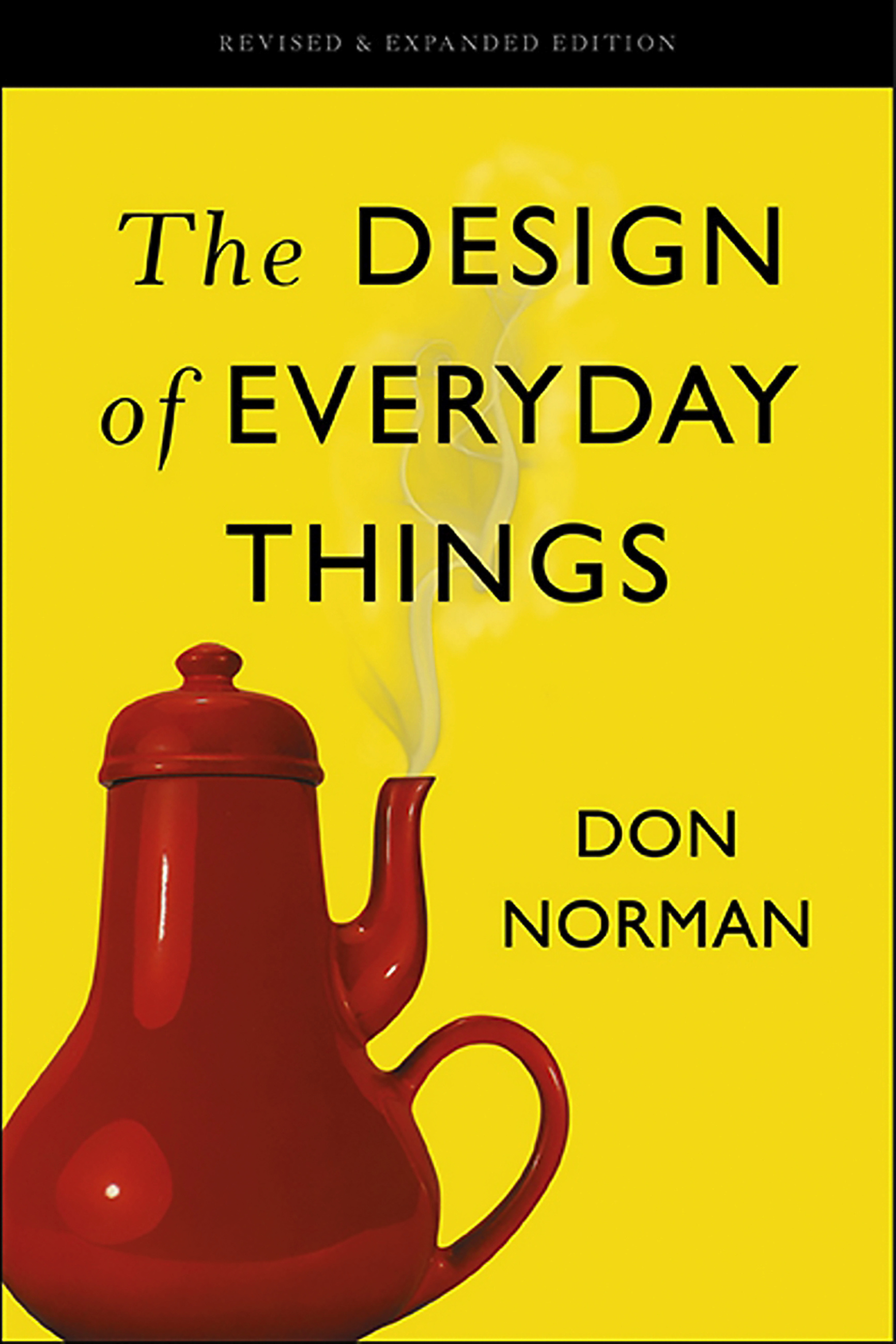
The Design of Everyday Things
Book by Don NormanWikipedia
12
MENTIONS
9
EPISODES
9
PODCASTS
Search complete. 12 mentions across 9 episodes found for "The Design of Everyday Things".
Nov 2, 2026

Ryan JordanHOST
Feedback is the information that helps us understand what's happening as we make the adjustment and whether we've achieved the intended result.
Ryan JordanHOST
so with the trekking pole we can see the sections moving and feel resistance as we tighten that adjustment mechanism but we still need to interpret what that tells us as we discussed earlier feeling that the mechanism has tightened does not necessarily mean that the pole sections are going to slip when we put weight on it In the book, The Design of Everyday Things, cognitive scientist and former Apple VP, Don Norman, explains how good product design should help people discover what actions are possible and understand the results of those actions.
Ryan JordanHOST
And that's relevant to all four of our tenants, perception and identification, understandability, operability, and feedback.
Ryan JordanHOST
The physical mechanism needs to work, but the overall design of the product should also actively be helping the user recognize what to do, perform the adjustment, and understand the result.

Arelys SosaGUEST
Like right now I'm into product development and like enjoying a lot about developing new things.
Arelys SosaGUEST
So one of my favorite books is called The Design of Everyday Things.
Arelys SosaGUEST
I think anyone developing things should read it.
Arelys SosaGUEST
It's called, it's by Don Norman.

Don NormanGUEST
Then this new discipline, and I'll take some credit for this new discipline, which we called human-centered design, said instead of focusing upon the appearance and the materials and the form of the devices you're designing, how about focusing on what people want to do with it? And so that was a revolution that happened in the 1980s.
Don NormanGUEST
And yes, the psychology of everyday things and then the design of everyday things, same book, different title, helped usher that in.
Don NormanGUEST
But nonetheless, it was still a tool of industry.
Don NormanGUEST
Okay, quick, come back to today.
8 MINS LATER
Dart LindsleyHOST
So they're going to be working on consumer goods, probably, that actually interface directly with a human being.
Dart LindsleyHOST
And there's another kind of designer who builds like turbines that go into dams.
Dart LindsleyHOST
And I think your work on the design of everyday things and emotional design is very much on the side of where humans actually interact with the design and making sure that that's right.
Dart LindsleyHOST
I think there's an incredibly important role for designers to play in humanity-centered design.

Robert GutscheraGUEST
Its original title was The Psychology of Everyday Things, but it's not a book about psychology.
Robert GutscheraGUEST
It's a book about design, so they changed the title to The Design of Everyday Things.
Robert GutscheraGUEST
It has a sequel, but everyone at very least should read the first one, this one.
Robert GutscheraGUEST
Just knowing the word affordance has value all by itself, and this is the book to learn it in.

Alex DanilowiczGUEST
Or just kind of consuming things that you enjoy aesthetically.
Alex DanilowiczGUEST
A great book to read is, like, The Design of Everyday Things.
Alex DanilowiczGUEST
Mm-hmm.
Alex DanilowiczGUEST
And again, always considering the human and the user.

Don NormanGUEST
So most people who are watching, I suspect, know this book.
Don NormanGUEST
Design of Everyday Things.
Don NormanGUEST
Well, the book is wrong.
Don NormanGUEST
Widely used, translated to about 20 languages or so, but it's wrong.
Don NormanGUEST
And so it's very important.
Don NormanGUEST
So these are the three I would start with.
Don NormanGUEST
You don't have to read Design of Everyday Things, but I would like you to read Design for a Better World.
Don NormanGUEST
And if you are going to be working on a sustainability area, then I highly recommend this book.

Jason NobleHOST
Really interesting.
Kaan DincerGUEST
It's-- Jason, those are great points, and on the human user experience, there's a great book, uh, The Psychology of Everyday Things.
Jason NobleHOST
Mm-hmm.
Kaan DincerGUEST
You know, even the simplest objects that you see around you, like there, there's a psychology to it.

Ali BechtelHOST
So why don't we design equipment in healthcare that prevents errors? Instead, we just keep telling the humans, "Don't make that mistake." Staying on this theme, we have a book recommendation for you.
Ali BechtelHOST
We hope that you will check out The Design of Everyday Things by Don Norman.
Ali BechtelHOST
Maybe this can be the first book for the APSF book club.
Ali BechtelHOST
For the third disruptive theme, we need to prevent harm with a proactive approach.