The Dark Energy Survey
Astronomical surveyWikipedia
11
MENTIONS
5
EPISODES
3
PODCASTS
Search complete. 11 mentions across 5 episodes found for "The Dark Energy Survey".
Sep 17, 2026

AnnaHOST
Remember Monday's lead? The Australian-led supernova compilation out of the University of Queensland with ANU and Swinburne.
AnnaHOST
2,884 type IA supernovae, Pantheon Plus, and the full Dark Energy Survey five-year sample rebuilt in one framework, and a 2.5 to 3.1 sigma preference for dark energy that changes over time rather than staying constant.
AveryHOST
Which was tantalizing and not conclusive.
AnnaHOST
Exactly that, and the reason it wasn't conclusive is the reason Roman exists.
AveryHOST
And for southern listeners, there's a thread running through all of this.
AnnaHOST
There is, and it's the one I keep coming back to.
AnnaHOST
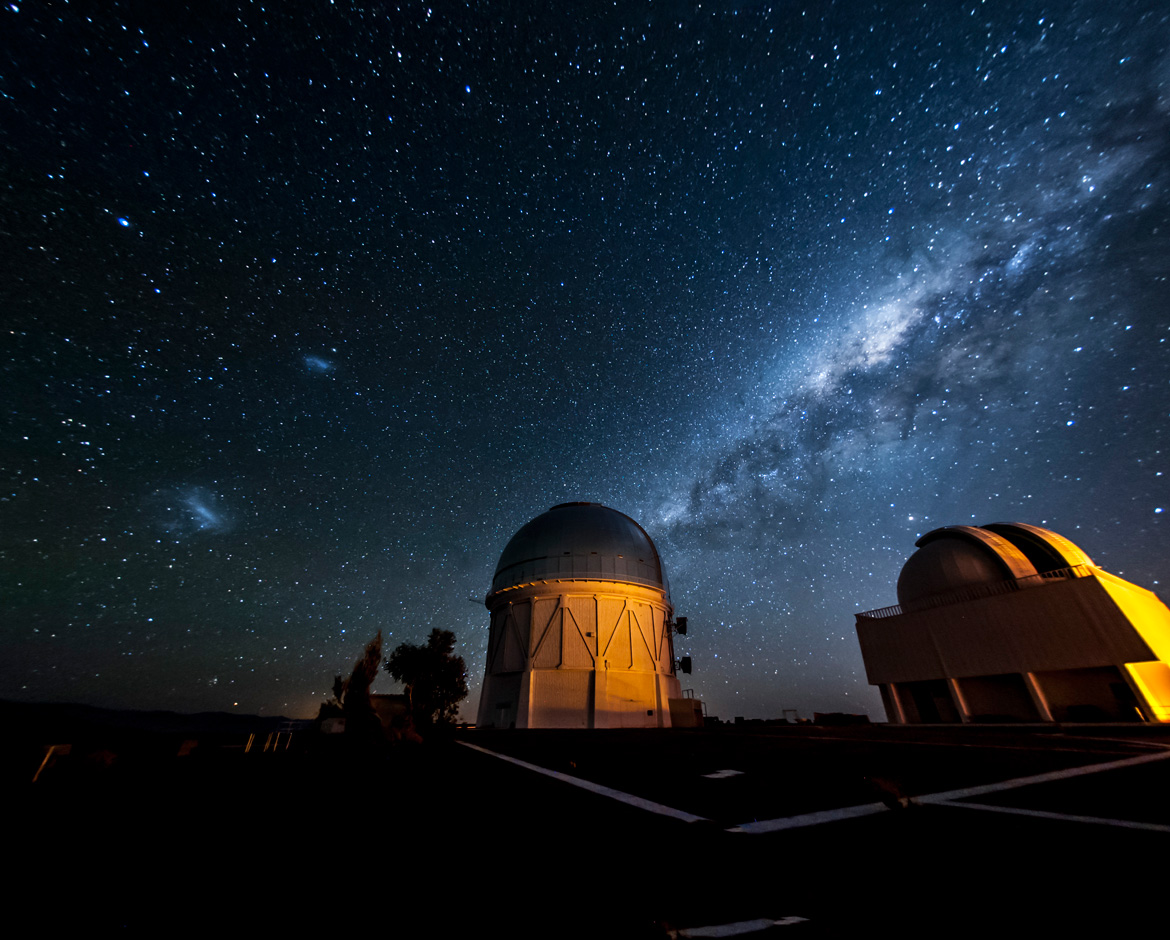
The Dark Energy Survey data in Monday's paper came off the Blanco four-meter telescope at Cerro Tololo in Chile.
AnnaHOST
The compilation was led out of Brisbane.

AnnaHOST
Because of what Roman was built to measure and because of what we led with on Monday.
AnnaHOST
Remember Monday's lead? The Australian-led supernova compilation out of the University of Queensland with ANU and Swinburne, 2,884 type IA supernovae, Pantheon Plus, and the full Dark Energy Survey five-year sample rebuilt in one framework, and a 2.5 to 3.1 sigma preference for dark energy that changes over time rather than staying constant.
AveryHOST
Which was tantalizing and not conclusive.
AnnaHOST
Exactly that.
AveryHOST
And for southern listeners, there's a thread running through all of this.
AnnaHOST
There is, and it's the one I keep coming back to.
AnnaHOST
The Dark Energy Survey data in Monday's paper came off the Blanco four-meter telescope at Cerro Tololo in Chile.
AnnaHOST
The compilation was led out of Brisbane.

speaker_5HOST
Yes, a very interesting pattern.
speaker_4HOST
This new massive data set actually builds upon the foundation of the 2024 Dark Energy Survey, right? And that prior survey was one of the first major red flags showing serious statistical hints that dark energy might be time-varying.
speaker_5HOST
It is important to note the nuance Davis provides there.
speaker_5HOST
The newer, larger compilation we are discussing sees the time variation pointing in a slightly different mathematical direction than the 2024 data.
AnnaHOST
Somebody had to do the unglamorous work, and that somebody is Ryan Camilleri, a PhD candidate at the University of Queensland's School of Mathematics and Physics, working with Professor Tamara Davis and a long list of collaborators across Australia, the United States, the United Kingdom, South Africa, Spain, and France.
AnnaHOST
What they've done is take Pantheon Plus, which is the big historical compilation of supernovae going back roughly 30 years, and combine it with the dark energy survey's full five-year sample, which added around 1,500 new high redshift supernovae of its own.
AnnaHOST
And rather than stapling the two together, they rebuilt both from the same starting assumptions in one framework with one set of calibrations
AveryHOST
Camilleri's own description of it is the cleanest summary I've read.
AnnaHOST
No, it isn't.
AnnaHOST
This is in publications of the Astronomical Society of Australia, Australia's own journal, led from the University of Queensland with the Australian National University and Swinburne on the author list and South African colleagues alongside.
AnnaHOST
And the dark energy survey data at the core of it came off the Blanco four-meter telescope at Cerro Tololo in Chile, a southern telescope looking at a southern sky.
AnnaHOST
From the Nobel-winning work at Mount Stromlo through to this, the question of what dark energy is has been a Southern Hemisphere argument for a very long time.
AnnaHOST
Somebody had to do the unglamorous work, and that somebody is Ryan Camilleri, a PhD candidate at the University of Queensland's School of Mathematics and Physics, working with Professor Tamara Davis and a long list of collaborators across Australia, the United States, the United Kingdom, South Africa, Spain, and France.
AnnaHOST
What they've done is take Pantheon Plus, which is the big historical compilation of supernovae going back roughly 30 years, and combine it with the dark energy survey's full five-year sample, which added around 1,500 new high redshift supernovae of its own.
AnnaHOST
And rather than stapling the two together, they rebuilt both from the same starting assumptions in one framework with one set of calibrations.
AveryHOST
Camilleri's own description of it is the cleanest summary I've read.
AnnaHOST
No, it isn't.
AnnaHOST
This is in publications of the Astronomical Society of Australia, Australia's own journal, led from the University of Queensland with the Australian National University and Swinburne on the author list, and South African colleagues alongside.
AnnaHOST
And the dark energy survey data at the core of it came off the Blanco four-meter telescope at Cerro Tololo in Chile, a southern telescope looking at a southern sky.
AnnaHOST
From the Nobel-winning work at Mount Stromlo through to this, the question of what dark energy is has been a Southern Hemisphere argument for a very long time.