Tetralogy of Fallot
DiseaseWikipedia
41
MENTIONS
11
EPISODES
9
PODCASTS
Search complete. 41 mentions across 11 episodes found for "Tetralogy of Fallot".
Oct 29, 2026

Maureen OsunaHOST
And if you really want to take it to the next level, leave a review and maybe you'll be the next person I give my listener shout out to when I say hi to my San fam.
Maureen OsunaHOST
Okay, let's move into the topic for today, which is Tetralogy of Fallot.
Maureen OsunaHOST
Okay.
Maureen OsunaHOST
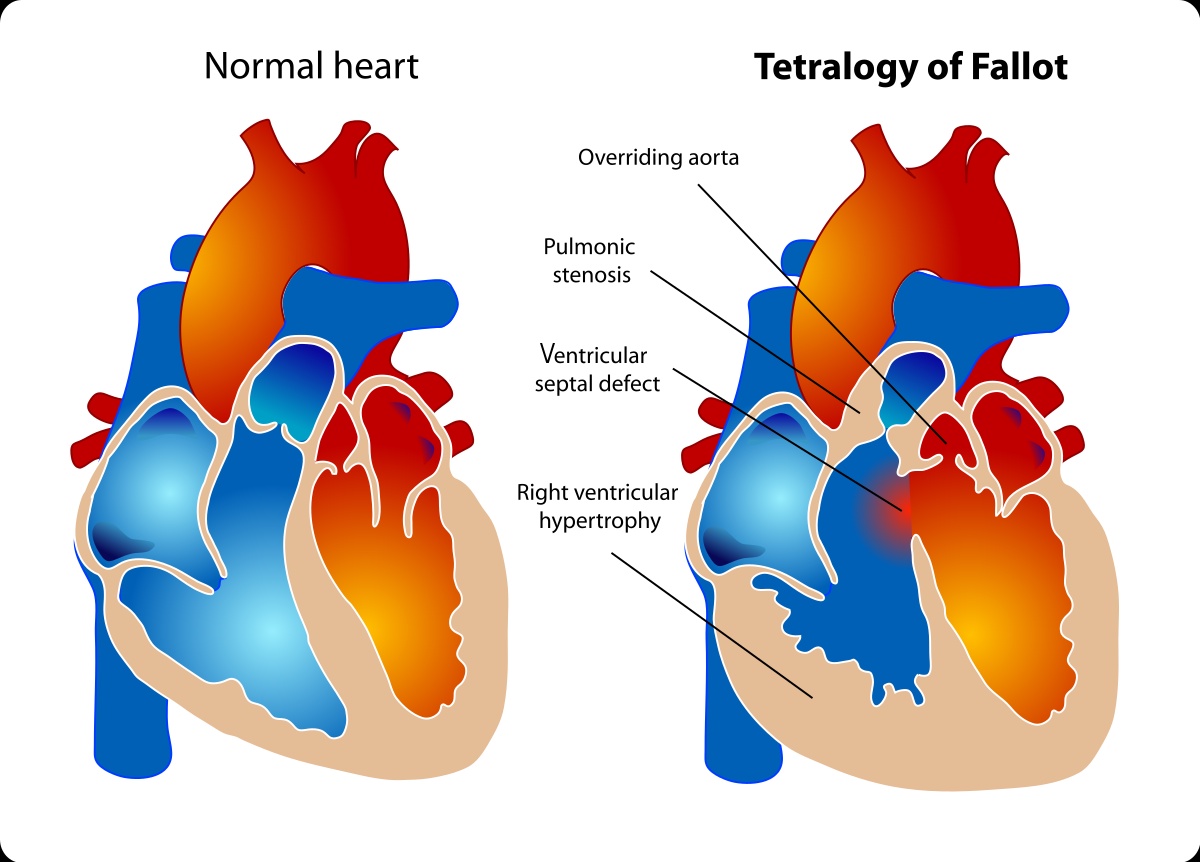
So this is a pediatric condition, and it is a cyanotic congenital heart disease condition that is characterized by four key defects.
5 MINS LATER
Maureen OsunaHOST
And I want you to be visualizing Two things while I talk through this.
Maureen OsunaHOST
I want you to be thinking about normal cardiac physiology and what should be happening, but layered on top of that, think about what is happening because of that big ventricular septal defect, okay? So...
Maureen OsunaHOST
When we have these four defects of Tetralogy of Fallot, they're going to allow oxygen-poor blood to be pumped out into systemic circulation, and this leads to a hypersionotic spell or a hypersionotic episode called a Tet spell, okay? I think everybody's got that.
Maureen OsunaHOST
So this occurs due to a reduction in pulmonary blood flow, meaning there's not as much blood being sent into the pulmonary vasculature.

Colin KaneGUEST
So, you know, the classic teaching is that you're not going to hear a VSD murmur at that age, but not all patients are classic.
Colin KaneGUEST
And so I think you can sometimes, you know, get a VSD murmur, especially if the VSD is associated with some sort of outflow tract obstructions, you know, such as a, you know, a Tet, you know, babies with Tetralogy of Fallot are going to have murmurs, you know, if there's some significant right ventricular outflow tract obstruction, and it's not the VSD you're necessarily hearing, but So those are the big ones that you had mentioned there.
Colin KaneGUEST
I think we had mentioned AS and PS, but mitral regurgitation and tricuspid regurgitation definitely can cause murmurs at that time frame, especially if there's been some resuscitation.
Colin KaneGUEST
I have found that if an infant came out and needed... need to be resuscitated, even compressions and things like that.
12 MINS LATER
Colin KaneGUEST
But yes, there are certainly other reasons.
Colin KaneGUEST
So not to go over all of them, but some of the more common ones would be first degree relative with congenital heart defect.
Colin KaneGUEST
So if mom had Tetralogy of Fallot or dad, you know, had a coarctation, that's a reason for a fetal echo.
Colin KaneGUEST
Certain autoimmune diseases, if the antibodies are the dangerous ones, we'll do an echo for that, looking not really for structural heart disease, but looking for conduction abnormalities, exposures to certain medications.

Doreen BestoloridesGUEST
I have a son who's 36 years old.
Doreen BestoloridesGUEST
His name is Danny and he has Down syndrome and was also born with congenital heart disease and his condition is called Tetralogy of Fallot.
Doreen BestoloridesGUEST
So he's got some complex medical issues.
Doreen BestoloridesGUEST
But back when I was in my 20s and getting married and wanting to start a family with my new husband, we wanted four children.
14 MINS LATER
Doreen BestoloridesGUEST
Why can't we keep them on the ventilator a couple of days and see how they do? And so I got interested in palliative care from that aspect.
Doreen BestoloridesGUEST
Also, when my son was two and a half, he had, like I said, he had congenital heart disease, so he needed a correction.
Doreen BestoloridesGUEST
of that Tetralogy of Fallot.
Doreen BestoloridesGUEST
And so he had heart surgery when he was two and a half.

Cheryl Paxton HughesHOST
We are talking, we're going to pick up where we left off with cardiac disorders of children, and we're going to talk about the conditions that, defects in the heart that increase pulmonary blood flow.
Cheryl Paxton HughesHOST
We went over our last podcast, we talked about Tetralogy of Fallot, and we also talked about co-arction of the aorta.
Cheryl Paxton HughesHOST
And those were both defects that increased blood flow.
Cheryl Paxton HughesHOST
Now we're talking about the ones that increased blood flow.
29 MINS LATER
Cheryl Paxton HughesHOST
Our patent ductus arteriosus is that continuous machine-like murmur that shows up often on NCLEX.
Cheryl Paxton HughesHOST
Then our coarctation of the aorta, we could expect to hear a soft to moderately loud systolic murmur.
Cheryl Paxton HughesHOST
And then for tetralogy of fallot, we're looking at a loud, harsh murmur, which if you think about tetralogy of fallot and the fact that there are There's a ventricle defect happening there, a septal defect in the ventricles, not necessarily in the atrial.
Cheryl Paxton HughesHOST
It's probably going to be a lot louder and harsher.
Cheryl Paxton HughesHOST
And those two conditions, these are the most concerning.
Cheryl Paxton HughesHOST
So the two conditions that fall under these are Tetralogy of Fallot and the coarctation of the aorta.
Cheryl Paxton HughesHOST
So those are going to be our two conditions we're going to focus on that have to deal with, again, we're talking about a decrease of blood flow going to out the lungs and then less oxygenated blood going through the body.
Cheryl Paxton HughesHOST
So tetralogy of flow, first of all, tetralogy, the word tetralogy, tetra is a acronym for four.
Cheryl Paxton HughesHOST
And these are all four defects that occur due to a single embryonic error during the first eight weeks of fetal development.
Cheryl Paxton HughesHOST
So these aren't necessarily like random heart issues that just come up.
Cheryl Paxton HughesHOST
There is kind of a rhyme or reason around why these four things all occur in Tetralogy of Fallot.
Cheryl Paxton HughesHOST
The mnemonic that's used to help remember what these four conditions are is PROV, P-R-O-V-E.

Robert Martijn KaulingGUEST
Yeah, we do.
Robert Martijn KaulingGUEST
Yeah, currently now we're analyzing the Fallot cohort and we try to publish this paper as soon as possible.
Robert PassHOST
More to come.
Robert PassHOST
More exciting work to come.

Christopher LabosHOST
A more normal person would have said to the peds resident, hey, I just saw this baby turn blue.
Christopher LabosHOST
And she even says to Burke later, this baby had a TED episode, and we'll explain what Tetralogy of Fallot is.
Christopher LabosHOST
But had you gone to the peds resident and said, hey, I saw this baby turn blue, they might have a cyanotic heart disease, peds resident probably would have been like, oh, okay, well, we'll order an ultrasound.
Christopher LabosHOST
That's a very, very easy test to do.
33 MINS LATER
Christopher LabosHOST
But we'll never know.
Christopher LabosHOST
There's a good chance it was.
Christopher LabosHOST
And should we end? Let's end with like one final medical thing, because the thing the baby had, that was actually the only real piece of medicine we can really dig or straight into is baby had Tetralogy of Fallot, which is actually the correct diagnosis.
Christopher LabosHOST
Meredith saw a baby turn blue because deoxygenated blood was going from the right side of the heart to the left side of the heart.

Zubin DamaniaHOST
Um, yeah, the Ford Infarct, the Nissan Nystagmus.
Vinay PrasadHOST
The Toyota Tetralogy.
Zubin DamaniaHOST
[laughs]
Vinay PrasadHOST
Tetralogy of Fallot.
Vinay PrasadHOST
The Tetralogy of Fallot.
Zubin DamaniaHOST
The Toyota Tetralogy.
Zubin DamaniaHOST
Wow, dude.
Zubin DamaniaHOST
That's pretty good.

Nimisha AithalHOST
So when you see a baby with truncus, you should also be thinking about the other features of DeGeorge syndrome, and they can be remembered by the acronym CATCH-22.
Nimisha AithalHOST
C for cardiac abnormalities, including chronotruncal defects, being truncus arteriosus, as well as Tetralogy of Fallot.
Nimisha AithalHOST
A for abnormal faces, they have a characteristic look about them.
Nimisha AithalHOST
T for thymic aplasia, and T cells sit in your thymus, so you need to worry about immunological problems.
15 MINS LATER
Nimisha AithalHOST
Essentially, infants with DeDordt syndrome and a poorly active or absent thymus have significant T-cell deficiency that may require specially selected blood products, including irradiated blood products.
Nimisha AithalHOST
Definitive repair is performed in the early neonatal period, often within the first few weeks of life, before irreversible pulmonary vascular disease develops.
Nimisha AithalHOST
This is in contrast with lesions such as an isolated VSD or Tetralogy of Fallot, which we try to get the kids a bit older.
Nimisha AithalHOST
They're a few months old at the time of repair.
1 more episode mentions Tetralogy of Fallot.
Create an account to see the whole feed, search across every transcript, and follow the entities you care about.