Tet methylcytosine dioxygenase 2
9
MENTIONS
5
EPISODES
5
PODCASTS
Search complete. 9 mentions across 5 episodes found for "Tet methylcytosine dioxygenase 2".
Oct 13, 2026

Hannah LevaviGUEST
So they exist in all of us in the normal state.
Hannah LevaviGUEST
But in patients who develop this background of clonal hematopoiesis, which we identify through chip mutations, the most common one in this disease is TET2.
Hannah LevaviGUEST
It often co-occurs with ASXL1 and other splicing site mutations and transcription factors.
Hannah LevaviGUEST
They develop these mutations, and then the plasmacytic dendritic cells harboring these mutations seem to relocate onto the skin.
Hannah LevaviGUEST
Yeah.
Hannah LevaviGUEST
So there are many papers showing the most common genetic mutations, molecular mutations that are seen in BPDCN.
Hannah LevaviGUEST
The ones that I mentioned already, the TET2 mutations, ASXL1, and things like SRSF2 are some of the more common ones.
Hannah LevaviGUEST
Back to the topic of AML and other leukemias, though, one thing to note about BPDCN is that this disease can actually co-occur with patients who have underlying other myeloid malignancies.

Ralph TurchianoHOST
Mutations in the epigenetic regulator genes that control which other genes are switched on or off.
Ralph TurchianoHOST
And there we go, the TET2.
Ralph TurchianoHOST
And then we break it down to that.
Ralph TurchianoHOST
Clinical translation.

Lance MartinHOST
About 90% of the age-shifted genes they tracked in those nerve cells returned toward youthful levels.
Lance MartinHOST
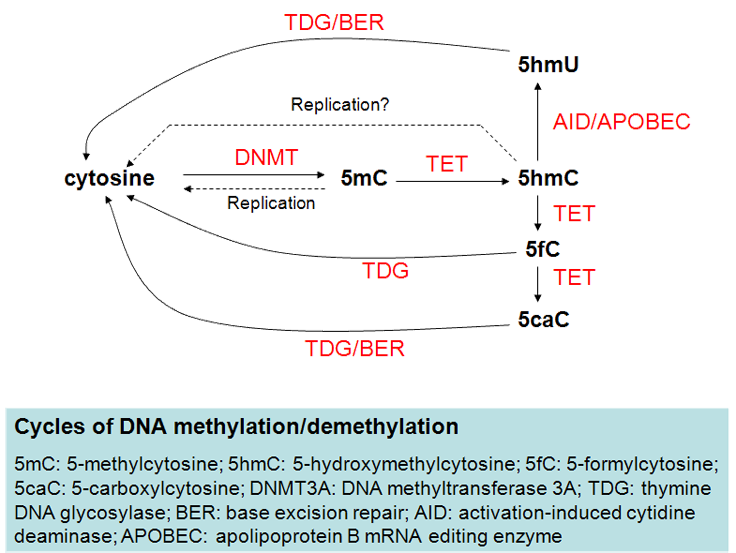
Two cleanup enzymes turned out to be the janitors, TET1 and TET2.
Lance MartinHOST
They stripped off some of those methylation marks.
Lance MartinHOST
When the team silenced TET1 or TET2, the magic mostly vanished.
Lance MartinHOST
They were recruiting a demolition and restore crew for the epigenome.
Lance MartinHOST
A later mouse study followed animals for a year.

speaker_1HOST
Definitely.
speaker_1HOST
The OSK factors recruit specific enzymes, primarily TET1 and TET2.
speaker_1HOST
These enzymes actively hunt down and chemically cleave the aberrant methyl tags off the DNA.
speaker_1HOST
If you genetically knock out TET1 and TET2, the reprogramming fails entirely.
DavidHOST
So the cell sheds the static, regains its youthful structure, but crucially retains just enough memory to know it's a retinal cell.
speaker_1HOST
It is a breathtaking biochemical tightrope walk.

Yuan ZhaoHOST
Somatic mutations are also incorporated into the model.
Yuan ZhaoHOST
The review discusses clonal hematopoiesis of indeterminate potential in which age-acquired mutations in genes such as DNMT3A, TET2, and ASXL1 promote clonal expansion.
Yuan ZhaoHOST
Rather than dismissing these processes, the framework treats them as potentially important accelerating cofactors alongside largely mutation-independent DDR dysregulation.
Yuan ZhaoHOST
To organize these mechanisms, the review identifies 16 candidate tumor suppressor negative regulator axes across three evidence tiers.