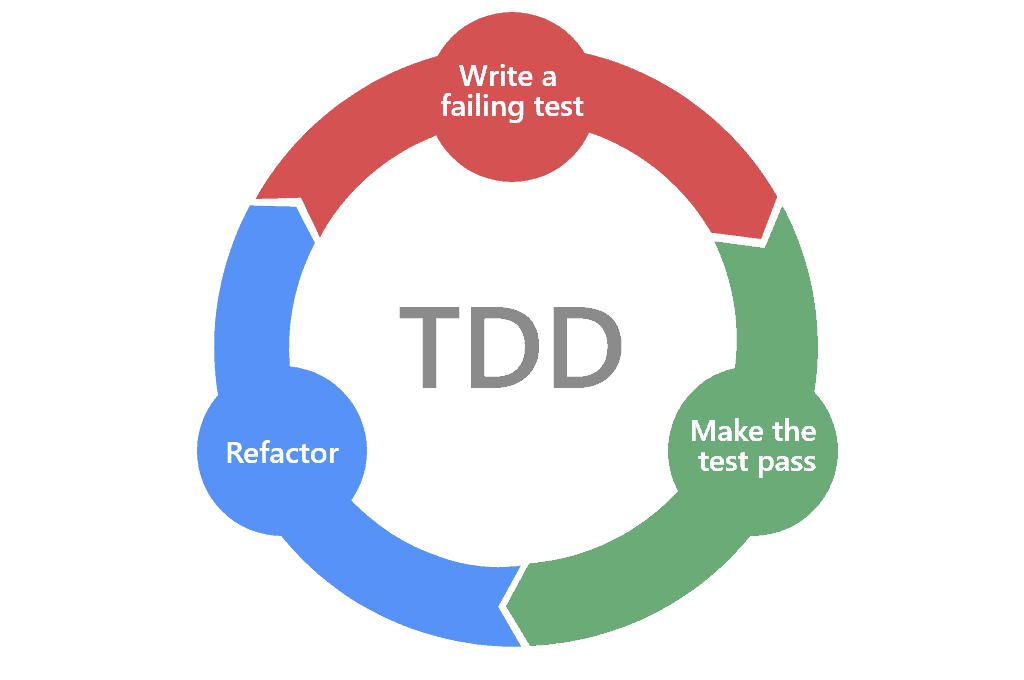
Test-driven development
68
MENTIONS
22
EPISODES
20
PODCASTS
Search complete. 68 mentions across 22 episodes found for "Test-driven development".
Oct 27, 2026

Matt DavisGUEST
Like, technology is great, as most things when we do transformation and work with clients on transformation, especially enterprise clients.
Matt DavisGUEST
The first... sort of uh pulse that we do with a client they go whoa there's a lot of bugs and we're like well if you just produced five to six times more code in one week than you traditionally would with a traditional team and you're getting four times the bugs you're actually getting less bugs but it feels like more bugs because of the time period right so what we found is actually leveraging the framework One, we're instilling TDD, so test-driven development, methodically in all of our development efforts, which if you guys know anything about test-driven development, that's the first thing that humans don't like to do, especially engineers.
Matt DavisGUEST
So the agents do it because they're programmed to do it and that they're instructed to do it.
Matt DavisGUEST
So it's religiously done.

Artificial IntelligenceNARRATOR
Net C Sharp best practice using timers in .NET.
Artificial IntelligenceNARRATOR
Net, C Sharp, C Sharp, Dependency Injection, D, Inversion of Control, IOC, Test Driven Development, TDD, Unit Testing 285.
Artificial IntelligenceNARRATOR
The dating game.
Artificial IntelligenceNARRATOR
Finding your perfect DevOps match.

KyleHOST
Help me think about that.
Ian JohnsonGUEST
Yeah, so in terms of the factory, I mean, it does have its own tests, but we have, for our card work, we have a TDD loop.
Ian JohnsonGUEST
So we do write tests first.
Ian JohnsonGUEST
So starting at that level, the model writes the tests, not us, and it writes the test first.

Raimonds SimanovskisGUEST
And, and so, so therefore, I'm trying to use what's currently available, and so how I can use that, and, and so be just flexible.
Raimonds SimanovskisGUEST
And even when listening to some industry classics like Kent Beck recently, so creator of Extreme Programming, Smalltalk, big Pra- best practices, TDD, and many other things.
Raimonds SimanovskisGUEST
And so he's saying that currently nobody knows.
Raimonds SimanovskisGUEST
So, so there will be some new approaches how we work and, and so those so who are telling that they know, okay, so they maybe are earning money, are being some sort of leaders in the conferences and getting paid for that.

Ezekiel IferiaHOST
I'm your host, Ezekiel Efтериа, and today we are joined by Jessica Patel, a ba- a backend engineering leader with 17 years of experience building systems where reliability isn't just technical goal, it's a responsibility.
Ezekiel IferiaHOST
Her work helps millions of people access housing, and she's a strong advocate of test-driven development, automation, and building engineering cultures that ship faster without sacrificing stability.
Ezekiel IferiaHOST
So Jessica, I am truly excited to welcome you to the show.
Ezekiel IferiaHOST
Thank you very much for joining us here today.
6 MINS LATER
Ezekiel IferiaHOST
All right.
Ezekiel IferiaHOST
Thank you for clarifying that with us, Jessica.
Ezekiel IferiaHOST
So you are a strong advocate of test-driven, uh, or TDD, uh, test-driven development.
Ezekiel IferiaHOST
So, uh, for a developer who, you know, who has never tried it, what is the simplest way to actually explain what TDD actually feels like when you are in a flow?

Carl SverreGUEST
You end up really fitting tightly.
Carl SverreGUEST
Now, with Antithesis, if you do the exact same thing, instead of TDD, you do ADD, [laughs] I guess.
Carl SverreGUEST
And with Antithesis-driven development, I suppose, you end up with this interesting thing where you can't possibly over-fit because Antithesis is, is designed to find counter examples to whatever you give it.
Carl SverreGUEST
So if you, you know, make the code behave to pass the test, there's nothing really to over-fit to.
5 MINS LATER
Carl SverreGUEST
You want your verification to be a, be a net of saying, "For all possible paths, do they all match my specification?" Right? And the Antithesis sort of story to this is that your specification should derive properties and invariants of the code that you want.
Carl SverreGUEST
You should encode those into the workload that is running in Antithesis, which then acts as a net that says, "For all possible paths through your simulation, we always reach a valid property outcome.
Carl SverreGUEST
We never see a counterexample." And by doing this, as we go back to, like, the sort of TDD thing, like, your agent ends up focusing just on building the code that can, like, exist within that net in a safe way.
Sean FalconerHOST
Well, Carl, as we start to get close on time here, is there anything else you'd like to share?

HackerNoon AINARRATOR
The task you are orchestrating.
HackerNoon AINARRATOR
Four, basic software engineering principles, SOLID, TDD, DRY, KISS.
HackerNoon AINARRATOR
DDD is a plus.
HackerNoon AINARRATOR
And the real depth, practice, and experience.

Michael DowdenHOST
The constraints were, were not there to allow that.
Michael DowdenHOST
One of those things from my perspective is to really do TDD well, right? It was extremely hard when doing it manually, and you've talked a little bit about using AI to support TDD.
Michael DowdenHOST
So how are you doing that? Because using AI to help with testing and verification and, and making sure that we're building the right thing feels like a good use if we can do it in a, in a way that's reliable and sustainable.
Michael DowdenHOST
So I'm really interested in your thoughts on, on how to do that.

Gabriela MoreiraGUEST
Y- I think it's very different.
Gabriela MoreiraGUEST
Like, when you join a new project and people have written the test before, I still have much more trust in those than in the tests that AI writes now, right? Uh, because people have wrote them, and there must have been a reason for them to write it, right? So they either were, like, implementing a new feature and maybe they did TDD, test-driven development, and they introduced the fe- the test to capture the feature they were implementing.
Gabriela MoreiraGUEST
Or even better, they faced a problem in production or, or while testing and added a regression test.
Gabriela MoreiraGUEST
I love regression tests.

Michael StiefelHOST
So the question is, if you're going to have those tests, A, how are you gonna describe them precisely? Because if the AI is generate the tests, 'cause only a separate AI is going to generate the tests, but if you have the tests, how are you going to describe them precisely enough? Because when you...
Michael StiefelHOST
Let's say you're doing TDD and you wanna write your tests first.
Michael StiefelHOST
I mean, it's one thing for me to write a test and looking through requirements document or the conversation with the customer or wh- or the program manager, however it came about, and write a test.
Michael StiefelHOST
But for the AI to take that written statement, you know, do we need a language to do this? Is this something that still be, should be done by humans if the AI is generating the code? I mean, I, y- you see what I'm struggling with, and if you have-
Joy EbertzGUEST
So I think they have to go away, and we have to find a way for them to go away.
Joy EbertzGUEST
So once you get rid of that, I think it gets replaced with tests and requirements and, like, some of the stuff you're talking about, and I think it comes back more to how fast can we think through the problems and, like, define the behaviors we wanna see and how well can we define the system as a whole.
Michael StiefelHOST
Because if you remember, the extreme TDD people went and said they actually define the system as they wrote the tests-
Joy EbertzGUEST
Mm-hmm
12 more episodes mention Test-driven development.
Create an account to see the whole feed, search across every transcript, and follow the entities you care about.