Terrorism Risk Insurance Act of 2002
9
MENTIONS
7
EPISODES
6
PODCASTS
Search complete. 9 mentions across 7 episodes found for "Terrorism Risk Insurance Act of 2002".
Sep 23, 2026

speaker_1NARRATOR
Senate Bill 1514 would place land in Washington into trust for the Quinault Indian Nation, and Senate Bill 2735 and House Resolution 2302 address federal land for the Shingle Springs Band of Miwok Indians.
speaker_1NARRATOR
Senate Bill 4395 would reauthorize the Terrorism Risk Insurance Act of 2002, affecting the insurance industry and those relying on terrorism risk coverage.
speaker_1NARRATOR
The Senate also passed several measures.
speaker_1NARRATOR
Senate Resolution 870 recognized Hispanic Heritage Month and the contributions of Latinos in the United States, while Senate Resolution 871 supported National Purple Heart Recognition Day.

Gary SterkoffHOST
That was from NBC News.
Gary SterkoffHOST
Insurance Journal writing that federal legislation to extend the Terrorism Risk Insurance Act will head to the full Senate after unanimously getting a nod from the Senate Banking Committee.
Gary SterkoffHOST
On September 17th, voted 24 to 0 to advance the Terrorism Risk Insurance Program Reauthorization Act of 2026.
Gary SterkoffHOST
U.S. House representatives in June overwhelmingly passed legislation to extend the public-private partnership started when insurance for terrorism risk disappeared following 9-11.
Tim ScottSOUNDBITE_SPEAKER
After September the 11th, terrorism insurance for apartment buildings, high rises, convention centers, hotels, and other places where people work and gather became difficult to find and expensive to buy.
Tim ScottSOUNDBITE_SPEAKER
That uncertainty threatened businesses, construction projects, sporting events, and the jobs that support American families.
Tim ScottSOUNDBITE_SPEAKER
In 2002, Congress responded with the Terrorism Risk Insurance Act, or TRIA.
Tim ScottSOUNDBITE_SPEAKER
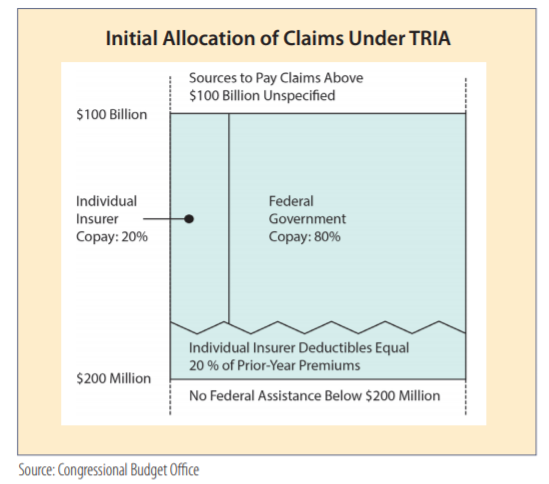
TRIA created a partnership between private insurers and the federal government.

Jimi GrandeHOST
How do you insure against an act of terrorism? Ultimately, the answer became the Terrorism Risk Insurance Program.
Jimi GrandeHOST
Congress created the program through the Terrorism Risk Insurance Act of 2002, which was signed into law by then President George W. Bush.
Jimi GrandeHOST
Since then, the program has been reauthorized four times, each time in part thanks to a strong push from NAMI and our members.
Jimi GrandeHOST
Now it's set to expire again next year, and its reauthorization is a top priority for NAMI.

Brendan PedersenGUEST
It's a little bit difficult for me to see in the abstract, but there's some runway there.
Brendan PedersenGUEST
In other cases, I think we have some reauthorizations that are gonna be coming up, like the Terrorism Risk Insurance Program needs to be reauthorized, and I'm sure there's some reforms that the two halves will have to try to find agreement on.
Brendan PedersenGUEST
But they could also just be short-term authorized and the ball kicked forward.
Brendan PedersenGUEST
So I think all things equal, no, I would not expect a whole lot of legislative activity.

Justin SmulisonHOST
We will be joined by former RIMS president Janice Ochinkowski.
Justin SmulisonHOST
She will discuss how her time on the RIMS board and as RIMS president helped ensure the passage of TRIA, the Terrorism Risk Insurance Act, in the aftermath of the 9-11 terror attacks.
Justin SmulisonHOST
We will do things a little differently in this episode.
Justin SmulisonHOST
There will be plugs later on, and we will learn about Janice's fascinating career.
Gary LaBrancheGUEST
This RIMScast podcast provides the opportunity to reflect on the lives lost and the lasting impact of this tragedy on survivors, families, friends, first responders, and everyone who witnessed that horrific day and has borne its burden over the past 25 years.
Gary LaBrancheGUEST
But the events of 9-11 also revealed the best in human nature, such as the warm, welcoming affection shown by Canadians when U.S.-bound flights were diverted to Gander, Montreal, Vancouver, Halifax, and other locations.
Gary LaBrancheGUEST
In the aftermath of 9-11, as we learn in this podcast, RIMS played a leading role in crafting and passing the Terrorism Risk Insurance Act, TRIA, which established an insurance backstop in the event of a future large-scale terrorist attack on America.
Gary LaBrancheGUEST
RIMS is working right now on bipartisan legislation in both the U.S. House and Senate to reauthorize TRIA.

Patrick BoyleHOST
That's how the Bush administration held Iraqi oil revenues after 2003, when the country was being rebuilt.
Patrick BoyleHOST
But in 2002, Congress passed Section 201 of the Terrorism Risk Insurance Act, or TRIA, which is what lawyers call a notwithstanding provision.
Patrick BoyleHOST
The statute opens by saying that notwithstanding any other provision of law, anyone holding an unsatisfied court judgment against a terrorist party can seize that party's blocked assets in the United States, including, and this is the part that matters, the blocked assets of any agency or instrumentality of that party.
Patrick BoyleHOST
A notwithstanding provision is Congress writing a law and adding in advance that it beats whatever else you were about to cite.
Justin SmulisonHOST
And I'm also glad on a slightly more personal note that you brought up TRIA.
Justin SmulisonHOST
I'm glad you brought up the Terrorism Risk Insurance Act because next week's guest is former RIMS President Janice Ochenkowski, who was instrumental in helping Congress understand the importance of TRIA in its earliest stages.
Justin SmulisonHOST
And next week, we're going to commemorate the 25th anniversary of the September 11th terrorist attacks here on RIMScast with her.
Justin SmulisonHOST
That tragedy continues to play a role in our lives.