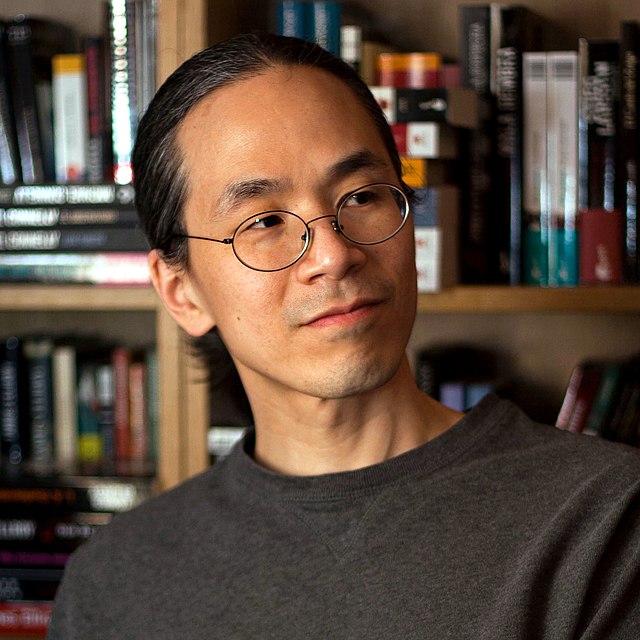
Ted Chiang
American science-fiction writerWikipedia
48
MENTIONS
28
EPISODES
27
PODCASTS
Search complete. 48 mentions across 28 episodes found for "Ted Chiang".
Sep 19, 2026

speaker_0HOST
If the biologists win this race, if we actually succeed in building conscious, highly capable wetware, the ethical implications are utterly terrifying.
speaker_0HOST
There is a concept from the brilliant science fiction writer Ted Chiang, which he wrote about a few years ago, that I cannot stop thinking about in relation to this.
speaker_0HOST
He wrote, suffering precedes moral agency.
speaker_1HOST
It is a devastatingly profound observation.

AbuHOST
Oh, it's so good.
AbuHOST
Yeah, I think it's a Ted Chiang had a more robust take on this idea.
AbuHOST
But, you know, I don't think Frank was trying to go that deep with this story.
AbuHOST
I think he wanted to do a fun twist and he wanted to play around with a goofy ass meathead character who loves nuking things.

John PlotzHOST
Science fiction has a reliably disinterested kind of satirical detachment, a cold but a laughing eye cast down on the foibles of self-serving humans on the planetary surface below.
John PlotzHOST
So strongly do I agree with Arendt about the importance of this kind of attention that I even prick up my ears when science fiction writers like Ted Chiang of Arrival fame turn to nonfiction.
John PlotzHOST
When he sounded a prescient early warning about LLM's limitations in early 2023 and unleashed another polemic on the delusion that AI models like Anthropocene Claude are approaching consciousness, he was clearly drawing inspiration from a long tradition of science fictional skepticism in the face of purported novelty.
John PlotzHOST
However, the more carefully I read Leo's encyclical, the guiltier I felt for my knee-jerk anti-popery.
23 MINS LATER
John PlotzHOST
And perhaps that is the point.
John PlotzHOST
There are as many cautionary responses to AI right now as there are serious people mulling the topic.
John PlotzHOST
The best writers, from Leo to Ted Chiang, proceed from wildly divergent angles.
John PlotzHOST
Science fiction's Manipian satires offer one way to see around AI.

John PlotzHOST
Science fiction has a reliably disinterested kind of satirical detachment, a cold but a laughing eye cast down on the foibles of self-serving humans on the planetary surface below.
John PlotzHOST
So strongly do I agree with Arendt about the importance of this kind of attention that I even prick up my ears when science fiction writers like Ted Chiang of Arrival fame turn to nonfiction.
John PlotzHOST
When he sounded a prescient early warning about LLM's limitations in early 2023 and unleashed another polemic on the delusion that AI models like Anthropocene Claude are approaching consciousness, he was clearly drawing inspiration from a long tradition of science fictional skepticism in the face of purported novelty.
John PlotzHOST
However, the more carefully I read Leo's encyclical, the guiltier I felt for my knee-jerk anti-popery.
23 MINS LATER
John PlotzHOST
And perhaps that is the point.
John PlotzHOST
There are as many cautionary responses to AI right now as there are serious people mulling the topic.
John PlotzHOST
The best writers, from Leo to Ted Chiang, proceed from wildly divergent angles.
John PlotzHOST
Science fiction's Manipian satires offer one way to see around AI.

Jon PlotzHOST
Science fiction has a reliably disinterested kind of satirical detachment, a cold but a laughing eye cast down on the foibles of self-serving humans on the planetary surface below.
Jon PlotzHOST
So strongly do I agree with Arendt about the importance of this kind of attention that I even prick up my ears when science fiction writers like Ted Chiang of Arrival fame turn to nonfiction.
Jon PlotzHOST
When he sounded a prescient early warning about LLM's limitations in early 2023 and unleashed another polemic on the delusion that AI models like Anthropocene Claude are approaching consciousness, he was clearly drawing inspiration from a long tradition of science fictional skepticism in the face of purported novelty.
Jon PlotzHOST
However, the more carefully I read Leo's encyclical, the guiltier I felt for my knee-jerk anti-popery.
21 MINS LATER
Jon PlotzHOST
And perhaps that is the point.
Jon PlotzHOST
There are as many cautionary responses to AI right now as there are serious people mulling the topic.
Jon PlotzHOST
The best writers, from Leo to Ted Chiang, proceed from wildly divergent angles.
Jon PlotzHOST
Science fiction's Manipian satires offer one way to see around AI.

Dinis GuardaHOST
So one thing that in particular I want to highlight is that in your actual presentation about the book, you highlighted that this is a bit of salute for three authors that you highlight.
Dinis GuardaHOST
So Ted Chiang, Kazuo Ichiguro, and Richard Powers.
Dinis GuardaHOST
All these three authors share the same vision for humanity that is kind of a core themes and topics around free will and determinism, language and cognition, intersection of science and religion, the ethics of technology, and then we have as well philosophical thought experiments and what it means to be human, the burden.
Dinis GuardaHOST
a bit of this basis and i'm sure that you you and i like different things that you want to put together around this basis and as well other things that you see on how to look at especially the fragility of humanity and the strengths and uh as well your style of writing which is right now expanded from where it was actually you always had to choose styles but at least public

JamesHOST
entertainers and actors and so we just wanted to pay a
KevinHOST
little tribute to some of them it was my pick of the month so the book that we are going to be discussing this month is one of my favorites and I think most of us really liked it so stick around to hear us talk about Ted Chiang's exhalation
JamesHOST
And stick around right till the end because it's my pick for next month and it is a crowd pleaser.
TristanHOST
As usual, subscribe to the show, follow the show, write us a review, check out the website, talesfromthebridge.com, sign up for the newsletter.
21 MINS LATER
KevinHOST
So he's published one in 2002 and then another in 2019.
KevinHOST
However, he has had a lot of critical acclaim.
KevinHOST
A Hollywood movie was made about his books, and anybody who's into sci-fi has heard of Ted Chiang and his short story collections.
KevinHOST
So for my pick, I selected Exhalation, which was his 2019 collection of nine different stories, very different stories.

Adam BeckerHOST
Yeah.
Emily BenderGUEST
Um, so famously, you know, there's The Story of Your Life by Ted Chiang.
Emily BenderGUEST
Um-
Adam BeckerHOST
Yeah, that was the first thing that came to mind for me.

David L. KlinkHOST
is
Peter WattsGUEST
people who have harnessed an amazing, frightening, Fundamentally cryptic, I think, despite all the shrill disclaimers that people like Ted Chiang come up with.
Peter WattsGUEST
Technology.
Peter WattsGUEST
It's dangerous.

David NaimonHOST
For the bonus audio archive, China discusses it and reads an excerpt from it for us.
David NaimonHOST
And this joins many contributions from past guests, from Ted Chiang reading an essay of his on what is behind Silicon Valley's fear of superintelligent AI, to perhaps the most outside-the-box contribution, something Johanna Hedva created just for us, recording their moans, groans, screams, and written texts city to city while on book tour, and then mixing and layering them with the universe's own voices, the sonifications of a black hole and of the Helix Nebula, raw audio of the sun, a field recording of the Aurora Borealis.
David NaimonHOST
This is an experience only Hedva could have created, and they called it The Saddest Thing of All is When a Lone Astronaut Falls in Her Suit, Who is There to Help Her Up? These join many others, from N.K.
David NaimonHOST
Jemisin to Daniel José Older to Carmen Maria Machado to Naomi Klein.
18 more episodes mention Ted Chiang.
Create an account to see the whole feed, search across every transcript, and follow the entities you care about.