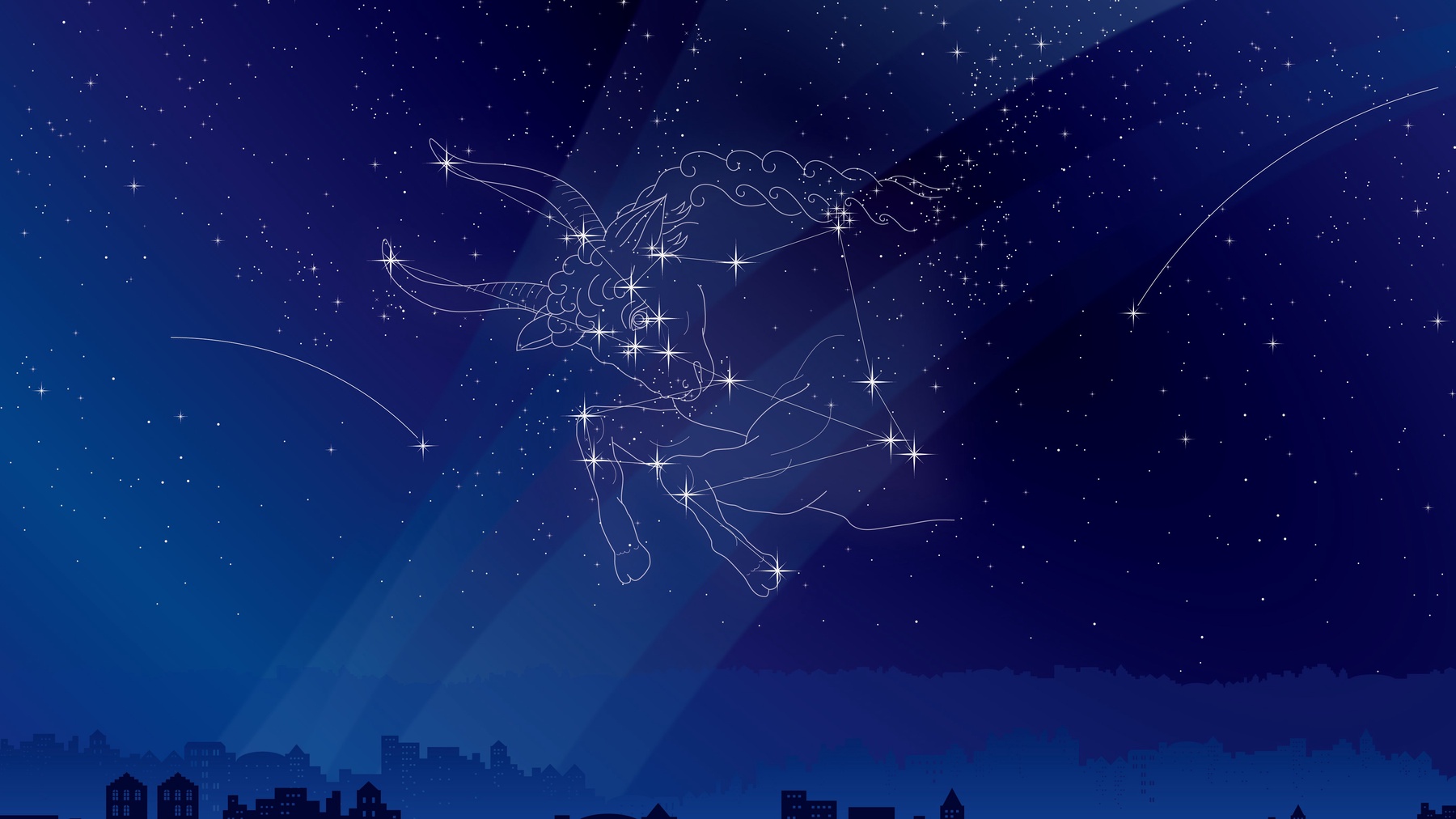
Taurus
ConstellationWikipedia
98
MENTIONS
15
EPISODES
11
PODCASTS
Search complete. 98 mentions across 15 episodes found for "Taurus".
Oct 8, 2026

Micah DankGUEST
You see the many faces of the, the lion right here.
Micah DankGUEST
And the horse is Sagittarius in astronom- in astrology, the bull is Taurus, and the lion is Leo.
Micah DankGUEST
So these students or these kids that went back, they were like, "Oh, we recognize this, so what are we gonna do?" So they called people, and they eventually called the scientists, and the scientists came to the cave, [clears throat] and they went, went to the back of the cave and they saw this.
Micah DankGUEST
And the first thing that they did was they carbon dated it.
10 MINS LATER
Micah DankGUEST
The Muslims claim that Ishmael was to be sacrificed by Abram, and the Jews claim that it was Isaac who was to be sacrificed.
Micah DankGUEST
Now, beyond this, God demanded a blood sacrifice, but stops it at the end.
Micah DankGUEST
Through Abraham's faith, God allows the sacrifice to be transferred to animals, specifically rams, bulls, goats, or in astrology, that's Aries the ram, Taurus the bull, and Capricorn's the goat.
Micah DankGUEST
Aside from that, Genesis 8:21, "And the Lord was pleased with the aroma of the sacrifice from Noah.

Stuart GaryHOST
They're actually produced as the Earth's orbit takes it through the debris trail left behind by the comet 21P/Giacobini-Zinner, which takes about 6.6 Earth years to make a single revolution of the sun.
Stuart GaryHOST
The Taurids meteor shower takes place on October 10th, and as their name suggests, they appear to radiate out from the constellation Taurus the Bull.
Stuart GaryHOST
Their meteors are composed of larger than average pebbles and dust grains and are thought to be generated by debris left behind by the comet 2P/Encke.
Stuart GaryHOST
Although it's thought that both the Taurids and Encke could be the remains of an earlier comet which disintegrated over the past 20,000 to 30,000 years, breaking into several pieces and releasing material both by normal cometary activity and possibly also by gravitational tidal interactions with the Earth and other planets.
Jonathan NallyGUEST
The northern part of the sky, apologies to our northern listeners, Northern Hemisphere listeners, but down here in the south, the bits that we can see at this time of year, it's pretty dull there as well.
Jonathan NallyGUEST
If we were much further north of the equator, there would be plenty of things to see.
Jonathan NallyGUEST
But if you like staying up late or getting up really early, the skies after midnight in October are really great 'cause the other half of the Milky Way is rising in the east, bringing with it the fabulous constellations of Orion and Taurus and Gemini and Canis Major and Puppis and other ones.
Jonathan NallyGUEST
To me, these are the constellations of summer.

Stuart GaryHOST
And while Alpha Centauri is the third brightest star in the night sky, outshone only by Sirius and Canopus, Beta Centauri is only about the 10th brightest.
Stuart GaryHOST
Looking to the southeast and you'll see the bright blue-white star Alpha Eridani, or Achernar, which represents the southern tip of Eridanus, one of the largest and longest constellations in the sky.
Stuart GaryHOST
Achernar is located about 139 light years away.
Stuart GaryHOST
It's actually a binary star system comprising two stars, Alpha Eridani A and Alpha Eridani B. Alpha Eridani A is a hot young spectral type B blue star.
11 MINS LATER
Jonathan NallyGUEST
But as the night goes on, by midnight, that half of the Milky Way will have set below the horizon, the western horizon, as the Earth continues to turn.
Jonathan NallyGUEST
Now, overhead the sky's actually, the sky seems pretty reasonably empty this time of year.
Jonathan NallyGUEST
There are some big constellations up there, but they're, they don't, they don't seem pretty exciting.
Jonathan NallyGUEST
They're a bit dull.
Micah DankGUEST
And the horse is Sagittarius in astronom- in astrology.
Micah DankGUEST
The bull is Taurus, and the lion is Leo.
Micah DankGUEST
So these students or these kids that went back, they were like, "Oh, we recognize this.
Micah DankGUEST
So what are we gonna do?" So they called people, and they eventually called the scientists.
11 MINS LATER
Micah DankGUEST
The Muslims claim that Ishmael was to be sacrificed by Abram, and the Jews claim that it was Isaac who was to be sacrificed.
Micah DankGUEST
Now, beyond this, God demanded a blood sacrifice but stops it at the end.
Micah DankGUEST
Through Abraham's faith, God allows the sacrifice to be transferred to animals, specifically rams, bulls, goats, or in astrology, that's Aries the ram, Taurus the bull, and Capricorn's the goat.
Micah DankGUEST
Aside from that, Genesis 8:21, "And the Lord was pleased with the aroma of the sacrifice from Noah.

Ardy Sixkiller ClarkeGUEST
So he goes to school and he finds an old astronomy book, he said, and was able to locate that constellation.
Ardy Sixkiller ClarkeGUEST
So, and his teacher helped him and he said they found out it was the Taurus constellation.
Ardy Sixkiller ClarkeGUEST
that
BetsyHOST
just that they were an exploratory group

Moiya McTierHOST
And in front of the bull, like if you follow the line of its snout, you see three or four dots arranged in a line kind of on the other side of a crack or a break in the cave.
Moiya McTierHOST
That bull is Taurus.
Moiya McTierHOST
That little smattering of stars above its shoulder is the Pleiades star cluster.
Moiya McTierHOST
And those three or four dots k- kind of across from the bull's snout are Orion's Belt, the three stars in the Orion constellation.
Connie GibbsHOST
[laughs]
Moiya McTierHOST
[laughs]
Connie GibbsHOST
As I am a Taurus and you have Orion, uh, tattooed on you.
Moiya McTierHOST
Yes, this is us.

Steven ForrestHOST
Gradually it shifts from constellation to constellation.
Steven ForrestHOST
Four or five millennia ago, on the day of the northern vernal equinox, the Sun rose into the constellation Taurus.
Steven ForrestHOST
after some centuries it began to rise into the constellation aries having retrograded eventually into the constellation pisces you'll notice i keep emphasizing the word constellation because constellations are different from signs That, as we will see, is really the key to understanding the conflict around when the various ages begin and end.
Steven ForrestHOST
Now, unlike astronomers, we astrologers define the first degree of Aries as the position of the sun on the ecliptic on the day of the northern vernal equinox.
Steven ForrestHOST
Now, in the text version of this presentation, There's a map that will probably be a helpful visual aid if you want to really follow this, but I'll do my best to put it into plain language.
Steven ForrestHOST
On the left side of this diagram that I'm describing, see the position of the Sun on the northern vernal equinox around 4,500 years ago.
Steven ForrestHOST
And as you see this, it's like, what do you think? Did it fall on Taurus or Aries? Again, there are no boundaries in the sky.
Steven ForrestHOST
seems to lean more Taurus.

Elizabeth GarciaHOST
Towards the second half of October, the planet Uranus will be in the southern night sky, but you'll need a good pair of binoculars or a telescope to see it.
Elizabeth GarciaHOST
If you are equipped with the right tools, you can find Uranus in the constellation of Taurus between the star Ain and the Pleiades.
Elizabeth GarciaHOST
Ain is the star right above the bright star Aldebaran in the V part of the Taurus constellation.
Elizabeth GarciaHOST
Try finding the ice giant this month, space lovers.
Elizabeth GarciaHOST
It's pretty bright this month since it's close to opposition.

Mark BreenHOST
Saturn eases through the faint stars of Pisces this year and next.
Mark BreenHOST
In 2028, Saturn makes a brief visit to Aries and then spends three years in Taurus.
Mark BreenHOST
Tomorrow, why Saturn gets an extra boost in brightness this weekend on Night Sky.
Mark BreenHOST
Night Sky is a production of Vermont Public and the Fairbanks Museum and Planetarium.

Pete LawrenceHOST
Okay, well, Uranus is, uh, there as well, and Uranus is now able to reach peak altitude under true darkness for the entire month.
Pete LawrenceHOST
It's currently a magnitude +5.6, so theoretically it is naked-eye visible, and it's located in Taurus, between the Pleiades and the star Ain, uh, or Ain, however you want to pronounce it, which is-
Paul AbelHOST
[laughs]
Pete LawrenceHOST
...
5 more episodes mention Taurus.
Create an account to see the whole feed, search across every transcript, and follow the entities you care about.