Taurids
Meteor showerWikipedia
13
MENTIONS
6
EPISODES
6
PODCASTS
Search complete. 13 mentions across 6 episodes found for "Taurids".
Sep 1, 2026

Lia LeendertzHOST
With the new moon's velvety dark skies on the 11th of September, it's an excellent time to gaze up at one of the longest active meteor showers of the year.
Lia LeendertzHOST
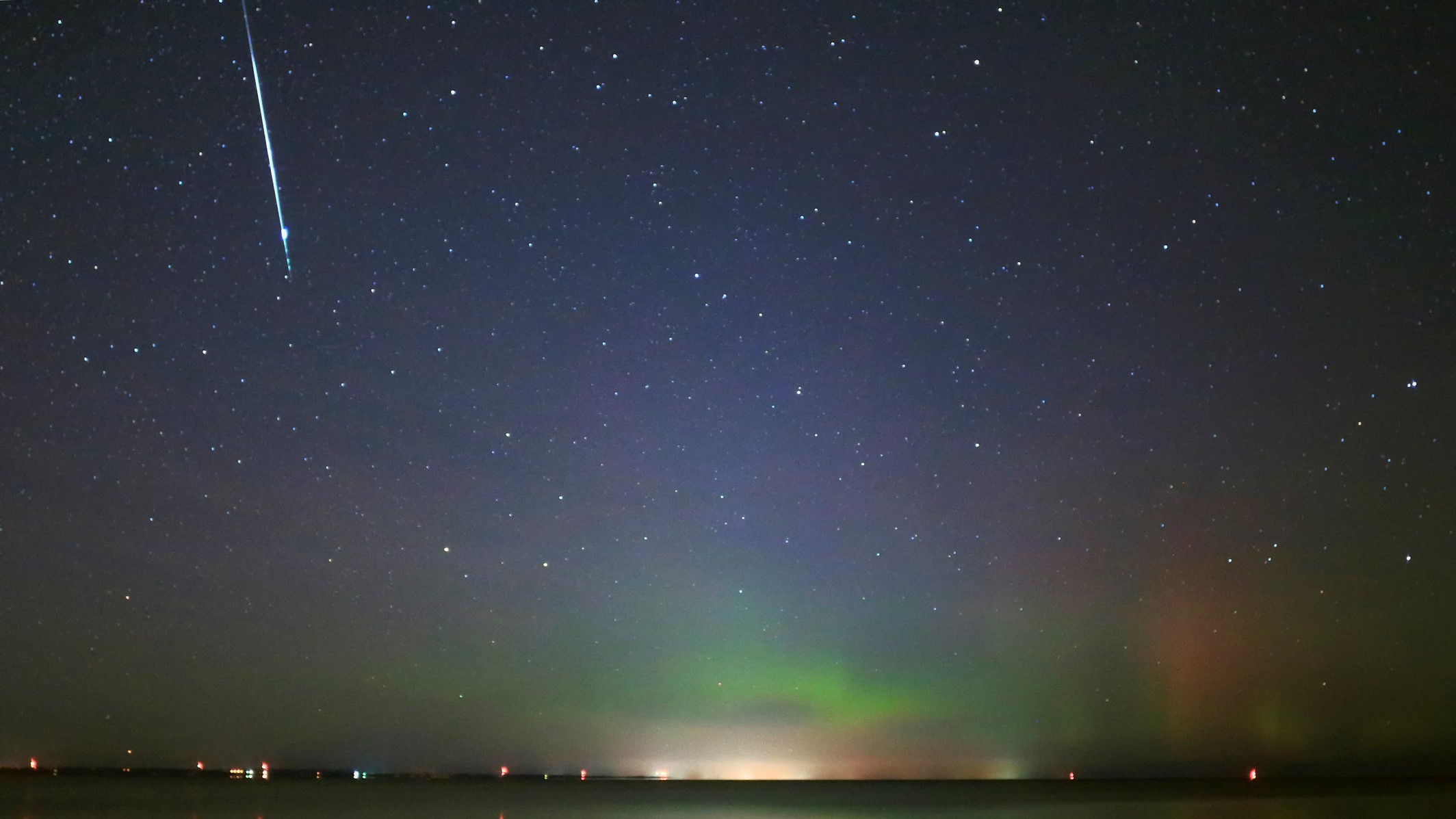
The southern Taurids can be spotted in the northeastern sky between the Seven Sisters constellation and Taurus.
Lia LeendertzHOST
Created when Earth passes through the large dust and gas streams left behind by the comet Enka, these fireballs may be sporadic and low in number, but the ones you see will be very bright.
Lia LeendertzHOST
Later in the month, the 23rd of September brings the autumn equinox, when the lengths of day and night are nearly equal around the world.

Chris CottrellGUEST
And I think there's enough evidence.
Chris CottrellGUEST
I think there's there's plenty of evidence out there to suggest that, you know, the Earth crossed paths with a very active section of the Taurid meteor stream.
Chris CottrellGUEST
And, you know, it may not have been one big impact, which would have been required to create these Carolina Bays.
Chris CottrellGUEST
But, you know, it was probably a really active shooting star event where we had bolides blowing up, kind of like the Chelyabinsk event and Tunguska.

Jesse MichelsHOST
The ultra-terrestrial hypothesis is so interesting, this idea that there was maybe a cataclysm.
Jesse MichelsHOST
I mean, maybe something caused the Ice Age, and that's what those two guys think, is that maybe there was a comet, um, airburst in the Taurid meteor stream, uh, which occurs twice a year every year.
Tim GallaudetGUEST
Mm.
Jesse MichelsHOST
Uh, and this occurred, uh, literally, actually, if you look at when, um, you know, the, the legend of Atlantis was told, it was, like, 600 BC, and it was, like, 9,000 r- years earlier-

Jonti HornerGUEST
Um, we've found quite a few of these over the years now in various circumstances.
Jonti HornerGUEST
My favorite really is the Taurid stream of debris.
Jonti HornerGUEST
We get the Taurid meteor shower every year from about September to December.
Jonti HornerGUEST
We've got the Northern and Southern Taurids.
Jonti HornerGUEST
We also get a daytime meteor shower in June called the Beta Taurids.
Jonti HornerGUEST
Result is we spend about four months of every 12 passing through this enormous broad swath of debris, where on any given night when the meteor shower's active, even at its peak, you'll only see four or five meteors an hour.
Jonti HornerGUEST
The debris is very spread out.
Andrew DunkleyHOST
Hmm.

speaker_1NARRATOR
These sounds are loud, unmistakable, and sometimes powerful enough to shake buildings.
speaker_1NARRATOR
The Taurid Complex: a hidden danger.
speaker_1NARRATOR
Most meteor showers pose no danger to Earth.
speaker_1NARRATOR
The particles are tiny, burning up harmlessly in the upper atmosphere.
speaker_1NARRATOR
But one stream deserves special attention.
speaker_1NARRATOR
The Taurid Complex is a broad, diffuse stream of debris that Earth encounters twice a year, in late June and again in November.
speaker_1NARRATOR
Unlike most streams, which are dominated by dust, the Taurids contain larger objects, including boulders and possibly even small asteroids.
speaker_1NARRATOR
The parent body of the Taurids is Comet Encke, a short-period comet with an orbital period of just over three years.