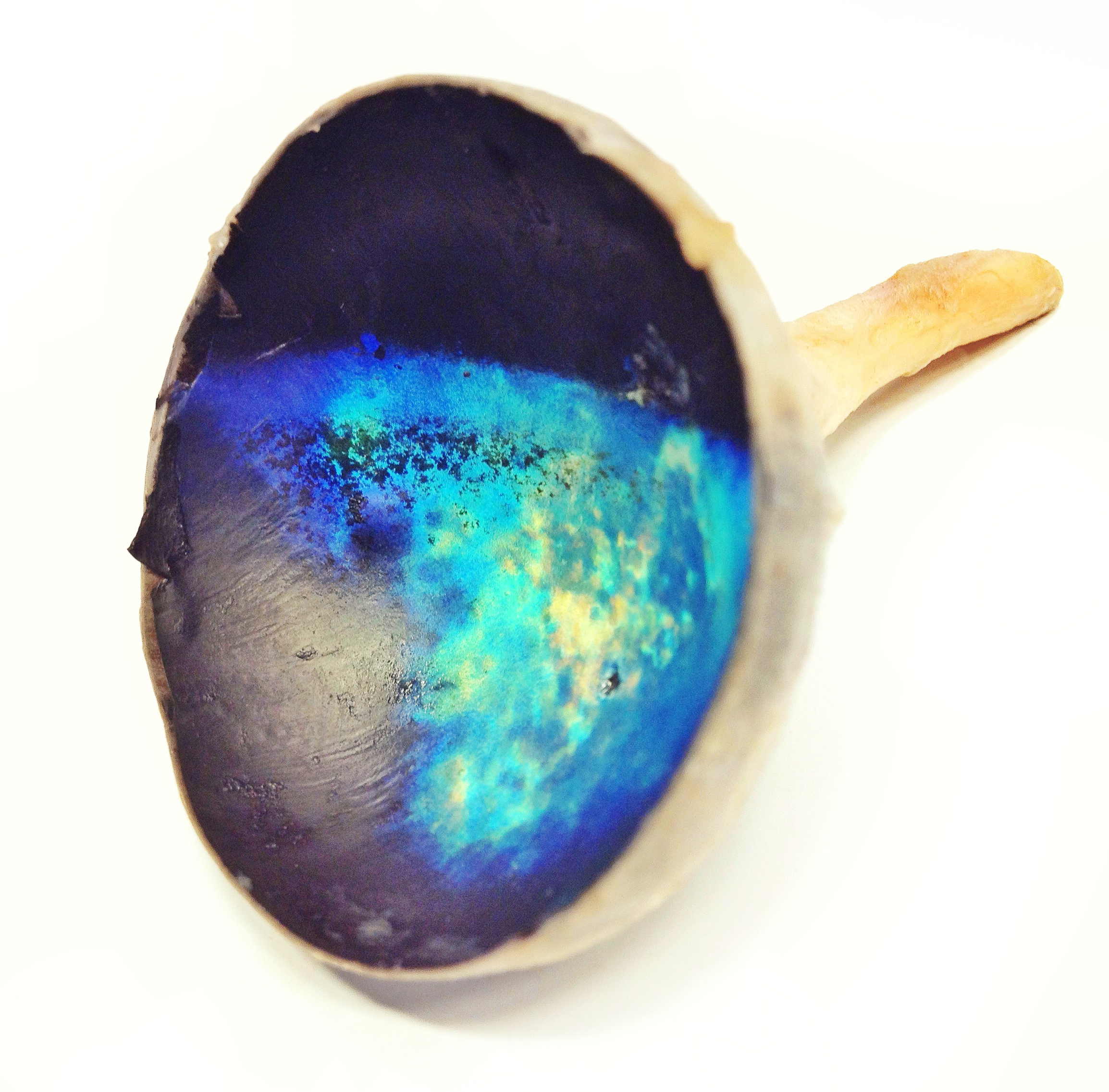
Tapetum lucidum
21
MENTIONS
10
EPISODES
10
PODCASTS
Search complete. 21 mentions across 10 episodes found for "Tapetum lucidum".
Nov 20, 2026

Gray BearGUEST
But when I got home, I was reviewing it and, uh, uh, sent it to the guys and I said, hey, look, this is the video of when Virgil and Evan captured the Bigfoot thermal.
Gray BearGUEST
David immediately reviewed the footage and noticed that there was eye shine within a couple of seconds in the direction that Virgil was pointing his camera.
Gray BearGUEST
To me, that was like, oh my gosh.
Gray BearGUEST
It was right there, but it was so dark.
Gray BearGUEST
The night vision camera can only go so far, but it picked up that eye shine.
Gray BearGUEST
That was real cool.
Jeremiah ByronHOST
That's fascinating stuff.
Jeremiah ByronHOST
So

speaker_4NARRATOR
The slit-shaped pupil allows the fox to control the amount of light entering its eye with extreme precision, which is useful for an animal that is active at dawn, dusk and through the night, when light levels change constantly.
speaker_4NARRATOR
Behind the retina sits a reflective layer called the tapetum lucidum, which bounces light back through the eye a second time effectively doubling the available light and letting the fox see in conditions a human would call total darkness This is why a fox's eyes glow brightly when caught in headlights or a flashlight beam, and the sight of two small bright points staring back from a hedge at night is unmistakable.
speaker_4NARRATOR
The colour of that eyeshine is typically a bright greenish-white.
speaker_4NARRATOR
warmer than a cat's and slightly different from a deer's or a raccoon's foxes can see well in light conditions that would leave a human essentially blind picking out shapes and movement where we would see only shadow Their colour vision is limited compared to ours, since they see the world in muted tones, with good sensitivity to blues and yellows but poor distinction between reds and greens, which means a red fox is well camouflaged against autumn leaves to most of the animals it hunts.

Raewyn GrantHOST
Animals can also change how much light gets into their eyes with other adaptations, like pupils, the hole in the center of some eyes that grows and shrinks to let more or less light in.
Raewyn GrantHOST
or with tapetum lucidum, a layer of reflective tissue at the very back of the eye that bounces light so it passes the retina twice, giving the photoreceptors a second chance to catch the light.
Raewyn GrantHOST
So if we're working in a low-light environment, we'd want wide-open eyes with a tapetum lucidum to maximize light sensitivity.
Raewyn GrantHOST
The last property of vision we'll talk about to distinguish animal eyes is what types of light they see.
Raewyn GrantHOST
First, there's the wavelength, which is based on how much energy the light has.

Ryan GecknerHOST
And this is this idea that Bigfoot exhibit what's called eyeshine.
Ryan GecknerHOST
So if you don't know what eyeshine is, it's basically the phenomena of light reflecting off something called the tapetum lucidum, which is in many animals.
Ryan GecknerHOST
And it is something that's inside the eye.
Chris DalyHOST
Think about deer.
Chris DalyHOST
You can, but you can also... you can point to the fact that our fossil record is very, very incomplete.
Chris DalyHOST
And we're constantly, like weekly, finding new things and new species.
Chris DalyHOST
And, you know, so could there be another line that evolved a certain way that maintained the tapetum lucidum? Maybe.
Chris DalyHOST
You can make those arguments, but we don't, the argument's a lot clearer to say, probably not.

Kyle WoodHOST
Inside each eye, a horse has a horizontal rectangular pupil that reduces glare from the sun while keeping the ground and horizon in focus at the same time.
Kyle WoodHOST
The back of the eye also has a reflective layer of tissue called a tapetum lucidum which bounces incoming light through the retina a second time to give horses stronger night vision.
Kyle WoodHOST
While horses spot movement and dim light much better than we can, they can't see as wide of a range of colors.
Kyle WoodHOST
They have dichromatic vision, meaning they only have two types of color-detecting cones in their retinas, whereas most people have three types of cones, and some even have four.

Matt NelsonHOST
Dogs have rod photo receptors that help them detect light.
Matt NelsonHOST
They also have a reflective layer called the tapetum lucidum.
Matt NelsonHOST
They also have a reflective layer called the tapetum lucidum.
Matt NelsonHOST
Their eyes are particularly sensitive to movement in dim environments.
Jess RonaHOST
I had tapetum lucidum.
Jess RonaHOST
Cleared up, got some cream for it.
Jess RonaHOST
Do you want me to go?

Isla HodgsonHOST
But the main kind of feature that they have is these cat-like eyes that have, like I was talking about at the top of the episode, the same thing that cats do.
Isla HodgsonHOST
So like, you know, when you see a cat and it looks at you in the light and its eyes kind of reflect back at you, it's because it has something called the tapetum lucidum, which is a mirrored lens.
Isla HodgsonHOST
So it's a layer of tiny crystals behind the retina which acts as a kind of mirror so it reflects light back into the eye and that improves vision in low light conditions so such as we have in the deep sea it's basically looking through sharks of the world and that's one of my favorite things to do is to find the ones with the weirdest names and then go and check them out so i'm just going to read some of them out so we have In very much in theme of this episode, we have Ghost Cat Shark and the White Ghost Cat Shark, both of which are almost completely white in colour.
Isla HodgsonHOST
And then they have these cat-like eyes.

George HrabHOST
which is never a bad thing.
George HrabHOST
Like a true creature of the night, the great-eared nightjar has a layer of tissue on the back of its eye called a tapetum lucidum, which reflects visible light back through its retina to give it self-superior night vision.
George HrabHOST
How cool is that? Also found, the same thing that's in the eyes of cats and crocodiles and fruit bats and breakfast cereals.
George HrabHOST
It's a marvelous kind of evolutionary thing, the tapetum lucidum.
George HrabHOST
A motley pattern of gray, black, and brown and chestnut that run through the great eared nightjar's plumage help to keep it camouflaged on the forest floor where it incubates a single egg at a time.
George HrabHOST
It's a weird it's a weird thing that this guy likes to this.

speaker_5HOST
Now, the detail of the glowing eyes is a classic marker in cryptozoological encounters.
speaker_5HOST
It's often attributed to the tapetum lucidum, you know, the reflective layer in the eyes of nocturnal animals.
speaker_5HOST
But it's the morphology of the creature that sets this apart.
speaker_3HOST
Right, because it's not down on all fours.

Nathan AustinHOST
True.
Katie AustinHOST
Their retinal structure and tapetum, tapetum lucidum, lucidum? Help many dogs see better in low light conditions.
Kat GreaneyHOST
I find it kind of creepy when you catch your dog's eyes just right in the middle of the night and their eyes are glowing at you.
Kat GreaneyHOST
Or cat's eyes in the backyard.