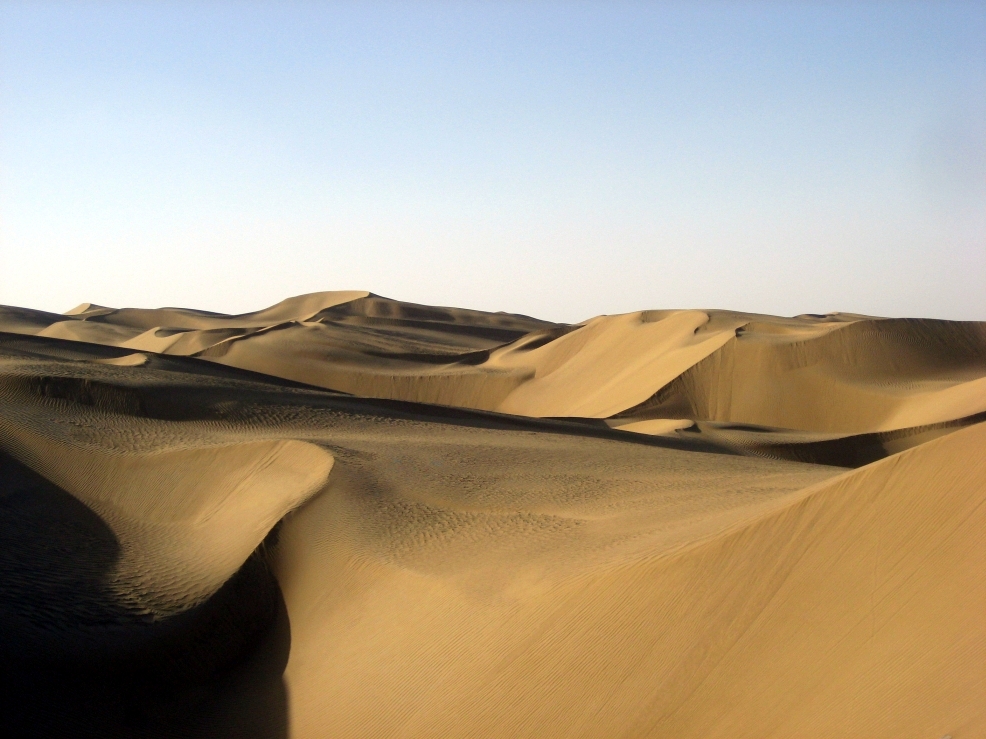
Taklamakan Desert
Desert in ChinaWikipedia
20
MENTIONS
19
EPISODES
13
PODCASTS
Search complete. 20 mentions across 19 episodes found for "Taklamakan Desert".
Oct 19, 2026

Maya MartinGUEST
Holy cow.
Maya MartinGUEST
In that northwest region and in the desert, the Taklamakan Desert itself, we found 250.
Andrew LewinHOST
Is this good for the communities around it? Like there's Tibetan communities, there's other communities around that.
Andrew LewinHOST
Like, is it affecting them in a positive way in terms of jobs or in a negative way in terms of like environmental disasters because of pollution?

Maya MartinGUEST
Holy cow.
Maya MartinGUEST
In that northwest region and in the desert, the Taklamakan Desert itself, we found 250.
Andrew LewinHOST
Is this good for the communities around it? Like there's Tibetan communities, there's other communities around that.
Andrew LewinHOST
Like, is it affecting them in a positive way in terms of jobs or in a negative way in terms of like environmental disasters because of pollution?

Chris StewartHOST
The term autonomous is likewise a cynically erroneous turn of phrase.
Chris StewartHOST
Even region is not strictly the case, as we've already seen it's at least two regions, Tarim and Dzungaria, three regions if you also want to separate out the Taklamakan Desert as a third separate region unto itself.
Chris StewartHOST
More correctly, the region consists of hundreds to thousands of microbiomes largely or completely disconnected from one another, except through whatever intercourse the shifting seasons might bring, be that in warfare or tradecraft.
Chris StewartHOST
Let's start by once again painting a picture of the region we're talking about, the Central Eurasian Steppes.
8 MINS LATER
Chris StewartHOST
As a gateway to the steppe far beyond the great walls, Turfan was a valuable security resource for expanding Chinese dynasties.
Chris StewartHOST
End quote.
Chris StewartHOST
Beyond the sandstorms of the deadly Taklamakan Desert, however, Chinese protection could not be guaranteed at even the best of times.
Chris StewartHOST
These oasis settlements, therefore, had little choice but to enter into far more tenuous and tumultuous relationships with the ever-shifting panoply of steppe warlords and would-be Khans, typically serving for this sort of hegemon lord as as close to an approximation for imperial tax collection terminus and administration center as the city itself could manage, and as the warlord was interested in such minutiae.
Chris StewartHOST
But that sort of abstraction can distract from just how immense it really is.
Chris StewartHOST
After the Sahara, the second largest shifting sands desert in the world is the Taklamakan Desert, neatly contained within and indeed virtually bisecting this one region.
Chris StewartHOST
It stands to reason, then, that it's not truly one region at all, but instead a fusion of two very distinct zones diverging from the dizzying heights of the Tianshan Range, the very mountains of heaven.
Chris StewartHOST
South of these peaks is eastern Turkestan, a region, as Fletcher terms it, "...belonging to the world of the sown." while north of the Tianshans is what had once been Zhengaria, one of the last bastions of the once-endless open-step grasslands.
Chris StewartHOST
If the Djungar North was grassland and horsemen, the Tarim was virtually its opposite.
Chris StewartHOST
A ring of ancient oasis cities strung around the rim of a killing desert, the Taklamakan.
Chris StewartHOST
Cities like Kashgar, Yarkand, Khotan, Aksu, Kucha, and Turfan.
Chris StewartHOST
Settled, walled, Turkic speaking, and Muslim.
Chris StewartHOST
His followers abandoned him, surrendering to Sewang Rabdan or the Emperor rather than face starvation." It was, for all intents and purposes, a death march.
Chris StewartHOST
In the meantime, the Kangxi Emperor's star only continued to rise, and with it came yet new followers— This would notably include the Huihui King Abdulishite of Yarkand in far southeastern Xinjiang, on the far side of the brutal vastness of the Taklamakan Desert.
Chris StewartHOST
He now personally visited the Kangxi Emperor at his center of power in Beijing.
Chris StewartHOST
More than a decade prior, in 1682, Kangxi had taken Abdul Shitte's father into his custody at Ili, and was now, the emperor assured the king, only too happy to return the beloved family patriarch to such an esteemed ally.
Chris StewartHOST
And the really interesting little side bit of this is that the nature of this campaign is the Qing army getting further and further away from its own territory, sort of like an amoeba reaching out a tendril as far as it can to catch prey.
Chris StewartHOST
But the traders and soldiers making their way further and further out across Gansu along with the army over the Gobi into Xinjiang and to the edges of the Taklamakan Desert, well, they're gonna wanna get back.
Chris StewartHOST
Actually, so is everyone, come to think of it.
Chris StewartHOST
And so all along the way at these little way stations or small forts that are called magazine posts, they're apparently considered safe enough that at each of these, they leave behind a portion of the provisions they'd been carrying with them for use on the return journey.
Chris StewartHOST
The fate of the Tumad people of the Taiga Forest indeed showed that the Great Khan was back, and that he'd lost none of his potency while down south.
Chris StewartHOST
In practice, however, it was little more than a brief distraction from the issues and problems already reaching a rolling boil to the south among the oases and shifting sands of the Taklamakan, and the Uyghur subjects who had made that region their home.
Chris StewartHOST
The Uyghurs themselves had proven to be model subjects to the Khanate.
Chris StewartHOST
The Uyghurs, who had widely adopted the Muslim faith by this point, and for several centuries, were so devout and steadfast in their devotion to Chinggis Khan and his Mongol nation, that they had attracted the attention of several other groups of Muslim peoples along the foothills of the Tian Shan Mountains, across Kyrgyzstan, Kazakhstan, and Xinjiang, China.
Chris StewartHOST
Treasure Genghis had only seen rarely, and most of his followers might not have even heard of: forged metals, fine textiles, silks, gadgets, and endless food, women, and slaves.
Chris StewartHOST
Genghis' Mongol nation received its first major influx of such southern delights from the Uyghur tradesmen that made their way from the borders of the Taklamakan Desert far to the southwest.
Chris StewartHOST
The Uyghurs had, since the 1130s, been a vassal people of the Qara Khitan, a remnant of the old Khitan Liao dynasty founded by Yelü Dashi, who had fled to the west evading the Jurchen conquest of Manchuria in the 1120s.
Chris StewartHOST
The name Qara Khitan is most commonly understood as meaning the Black Khitans, which both fits with their dynastic color as well as their favored classical element, metal.

Herman PoppleberryHOST
South of the Yangtze, it turns hilly and mountainous.
Herman PoppleberryHOST
The west and north are basins, the Gobi, the Taklamakan plateaus, and the Tibetan Plateau, which is high and cold and frankly not great for feeding anyone.
Herman PoppleberryHOST
And the eighteen thousand kilometers of coastline is what fed the export machine that built the coastal core.
CornHOST
Hang on, let me push on that.
9 more episodes mention Taklamakan Desert.
Create an account to see the whole feed, search across every transcript, and follow the entities you care about.