T helper 17 cell
46
MENTIONS
20
EPISODES
17
PODCASTS
Search complete. 46 mentions across 20 episodes found for "T helper 17 cell".
Sep 13, 2026

speaker_1HOST
without the immunomodulatory effects of lactobacillus and its metabolites.
speaker_1HOST
A specific subset of naive T cells differentiates into what we call Th17 helper cells.
speaker_0HOST
T17 cells? Are those the bad guys?
speaker_1HOST
Well, Th17 cells are highly pro-inflammatory.
speaker_1HOST
In a healthy state, they exist in small numbers and are designed to fight off severe extracellular bacterial and fungal infections at mucosal barriers.
speaker_0HOST
So they're supposed to trigger intense localized inflammation to fight a real infection.
22 MINS LATER
speaker_0HOST
Beetroot juice harnesses oral bacteria to flood the system with nitric oxide and reverse arterial stiffness.
speaker_1HOST
And a dietary pattern like DHH provides the exact complex micronutrient matrix required to support a healthy gut microbiome, keeping those lactobacillus populations happy.

Myriah HincheyGUEST
And so if we have, you know, improperly functioning B cells, the body will actually struggle to produce antibodies to fight the infection.
Myriah HincheyGUEST
If we have dominance in TH1 or TH2 or TH17 or decreased T regulatory cells, that again could lead to autoimmunity or the immune system almost being like blind to the infection and not being able to reach it, especially with Borrelia intracellularly.
Myriah HincheyGUEST
So, you know, there's a lot that goes into it from a cytokine standpoint.
Myriah HincheyGUEST
but also we can't forget about nutrients and making sure that we have all of the nutrients needed to make all of our immune cells.

Muyiwa AwoniyiGUEST
They shape the mucosal immune tone.
Muyiwa AwoniyiGUEST
For instance, iso-allylithocoic and iso-deoxycholic derivatives in particular tune the balance between Th17 and regulatory T cells.
Muyiwa AwoniyiGUEST
And clinically, PSCIBD behaves like a microbially driven disease.
Muyiwa AwoniyiGUEST
supported by increased incidence of recurrent pouchitis, which is antibiotic responsive, and a small open-label oral vancomycin study done across the pond by Palak Trivedi in King's College showed improved colonic activity, but alongside coordinated shifts in microbial and metabolomic signatures.

Daniel J. GuerraHOST
So cells have a lifespan, as we were talking about in earlier lectures.
Daniel J. GuerraHOST
So now you see acid sphingomyelinase generating ceramide controlling cell death, that is this particular type, apoptosis, can also be used via titrating its activity to control terminal differentiation, re-differentiation of cells like Tregs and Th17, inflammation associated with the immune cells and their response, and indeed senescence.
Daniel J. GuerraHOST
So senescence, remember, where the cell no longer divides at all.
Daniel J. GuerraHOST
So again, we talked about the neutral sphingomyelitis, now we're at the acidic.

Christopher BunickGUEST
When it comes to chronic hand eczema, certainly the atopic dermatitis component has this strong Th2 immune signal.
Christopher BunickGUEST
But when it comes to irritant contact dermatitis, for example, it has more of a Th1 or Th17 immune polarization.
Christopher BunickGUEST
And then when it comes to other types of chronic hand eczema, like allergic contact dermatitis, it's even more nuanced because it depends on the allergen.
Christopher BunickGUEST
So, for example, something like a metal, like nickel, may be more of a Th1, Th17 driver, but something like poison ivy might be more of a Th2 or Th22 driver.
Christopher BunickGUEST
And this is, again, speaks to what I said in the earlier question, that there is a heterogeneity and not only in the clinical morphology, but in the immune drivers of that morphology.
Christopher BunickGUEST
And this is why treating chronic hand eczema has historically been rather challenging because there are these different immune drivers, depending on what type or types of chronic hand eczema a patient has.

Kent HoltorfGUEST
Now, immunity is very complex, but a good way to look at it from a clinician's point, and again, it's also used in, you know, standard textbooks, is look at the TH1 and the TH2 ratio.
Kent HoltorfGUEST
Now, on the TH1 side, you could add Tregs, and on the TH2 side, add TH17.
Kent HoltorfGUEST
So TH1 gets stuff inside the cell, TH2 gets stuff outside the cell, and then Tregs, you know, keep the cells from over-activating, and the TH17 is more of the autoimmunity one.
Kent HoltorfGUEST
Now, you'll look at textbooks and you'll look at diseases, and they'll say, "Oh, Hashimoto's is a TH1 dominant illness," and where Graves' is a TH2.
Kent HoltorfGUEST
And I'm like, "Well, why do they respond to the same treatment?" And the issue has been that they couldn't differentiate TH1 with TH17.
Kent HoltorfGUEST
So it's actually a TH17 dominant, which is on that other side, and not a TH1.
Kent HoltorfGUEST
So people...
Kent HoltorfGUEST
And also these tests that do cytokines, they can lead you astray because it's like looking at high cytokines, so it shows you're dominant there, but it's like looking at, like, FSH and saying, "Oh, you must be high estrogen or high testosterone," when it's actually the opposite.

Vincent RacanielloHOST
Thank you.
Vincent RacanielloHOST
So you found Th1 cytokines, which you expected, but you also found Th17 and Th9, and I'm wondering if that was unexpected and whether you think that is going to play a role in protection.
Mumtaz BalkhiGUEST
Yes, absolutely.
Mumtaz BalkhiGUEST
So in the bourbon studies, they have found the IL-17, but IL-9 was – a new feature that we found out, and it has already been shown to lead to the, has anti-helminthic activities, can mediate anti-helminthic activities.

Jason GoldsmithHOST
So then they saw that when it's knocked out, TBET went up as the next step.
Jason GoldsmithHOST
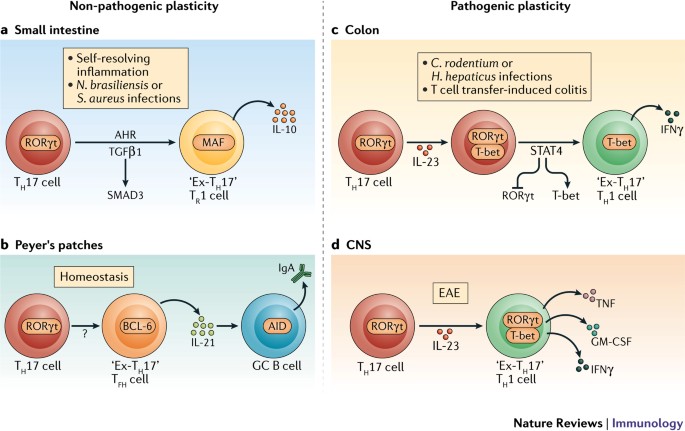
And this TBET then led to, through a series of studies, much more active, you know, T cells, particular TH17 cells, which are known to be pathogenic in colitis models, right? And so you have this coding RNA.
Jason GoldsmithHOST
When it goes away, TBET goes up, and that leads to pathogenic T cells.
Jason GoldsmithHOST
And it's down, and it's FOXP3, makes you have more of this, you know, is kind of the hint of what's going on here, right? So...

Eric OsanskyHOST
And so what I'd like to do next is discuss the different mushrooms that I mentioned in the article, my 2022 article.
Eric OsanskyHOST
And the reason why I focused on those specific mushrooms is because some of them are well-known, like lion's mane, but then others, like reishi and cordyceps, And not just reishi and cordyceps, especially cordyceps as far as the effects that it has on the immune system, that Treg, Th17 balance.
Eric OsanskyHOST
Yeah, there's others that I'm not going to discuss here, but let's start with reishi.
Eric OsanskyHOST
So reishi, probably the most extensively studied medicinal mushroom.
6 MINS LATER
Eric OsanskyHOST
So good source of polysaccharides is pretty much all mushrooms are.
Eric OsanskyHOST
Antioxidant activity.
Eric OsanskyHOST
Again, there are a couple of studies showing that it could potentially regulate Treg, Th17 balance, which is great.
Eric OsanskyHOST
Supports the gut microbiota.

Taylor DohertyGUEST
talking about produce type 2 cytokines, including initially IL-5 and 13, but also IL-4, and sometimes people throw an IL-9 there, but that might be its own subset.
Taylor DohertyGUEST
IL-C3s produce IL-17 as the quintessential cytokine from that population, and they're akin to Th17 cells.
Taylor DohertyGUEST
So no one, as far as I know, have called them ILC17s, but just to make everything more confusing, we have to have these different numbers.
Taylor DohertyGUEST
And ILC1s are also grouped with natural killer cells as well, because they are innate lymphoid cells that produce high levels of interferon gamma.
22 MINS LATER
Taylor DohertyGUEST
And interestingly, not surprisingly, these alarmans don't only have type 2 effects.
Taylor DohertyGUEST
And so this is in part why...
Taylor DohertyGUEST
there is some efficacy for tezopelomab in non-type 2 asthma as well, because there can be sort of this pro-neutrophilic or IL-C3, Th17 side that these alarmins can also promote.
Taylor DohertyGUEST
And so we know our patients are complex, and there's a lot of mixed granulocytic, mixed endotype disease, And so the 33 story is tough because there can be homeostatic roles for 33.
10 more episodes mention T helper 17 cell.
Create an account to see the whole feed, search across every transcript, and follow the entities you care about.