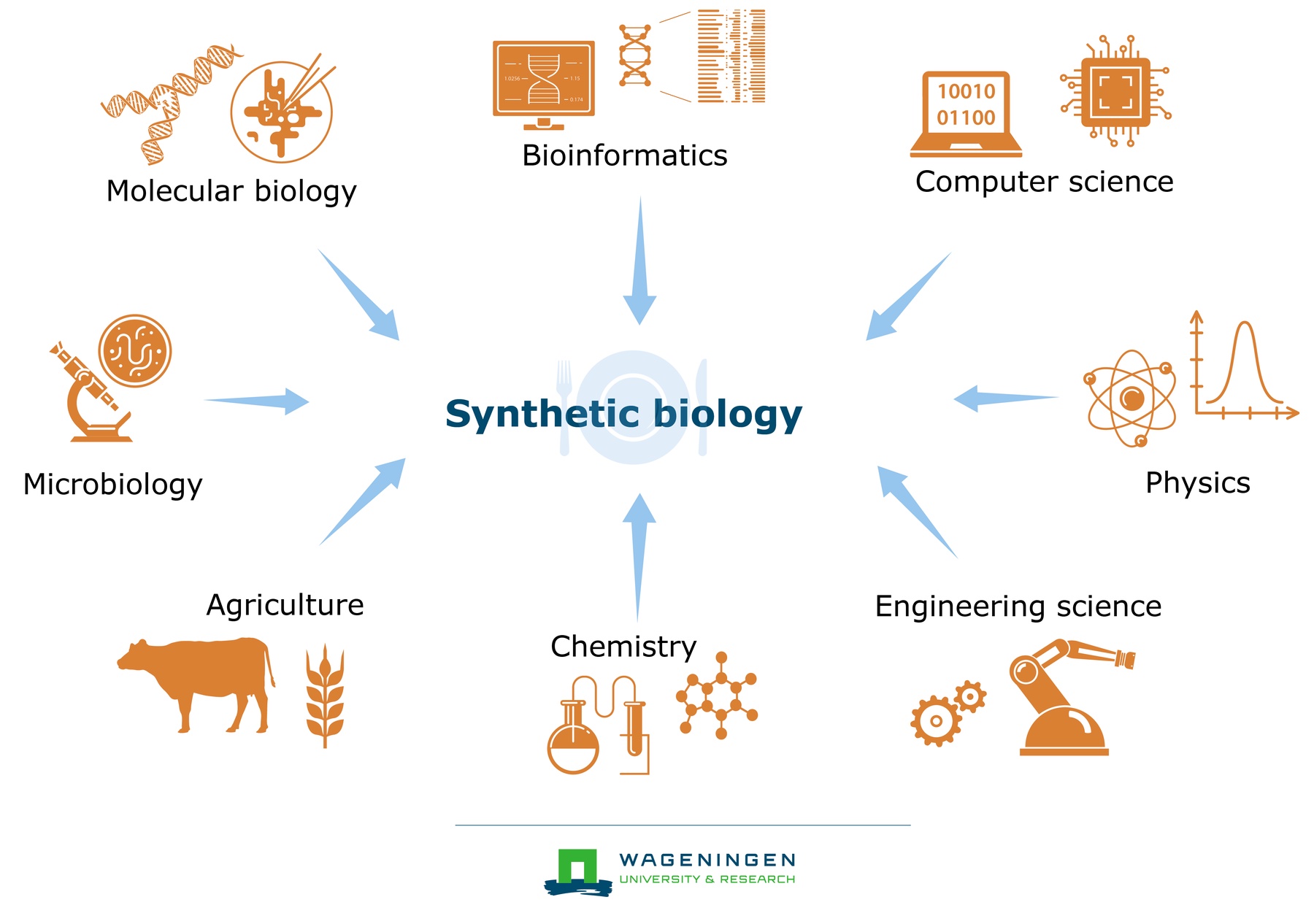
Synthetic biology
Field of studyWikipedia
45
MENTIONS
7
EPISODES
7
PODCASTS
Search complete. 45 mentions across 7 episodes found for "Synthetic biology".
Oct 7, 2026

Matt BegemannGUEST
Um, and she really taught me the, the basics of science, and she introduced me to one of her colleagues, Jay Keasling, at UC Berkeley.
Matt BegemannGUEST
Uh, at the time, he was one of the real leaders in synthetic biology.
Matt BegemannGUEST
I got really excited about it.
Matt BegemannGUEST
You know, and there's mentors that you get throughout life, and Judy sat me down one day and she's like, "You know, Matt, you're, you're a fairly smart kid.
Matt BegemannGUEST
I, I feel like you should go to graduate school." And I had no idea what graduate school meant or anything.
Matt BegemannGUEST
Um, so, you know, I got excited about synthetic biology.
Matt BegemannGUEST
I ended up at, uh, Wisconsin in Brian Blaker's lab in the chemical engineering department by getting a microbiology degree, so kind of the fusion of multiple things there.
Matt BegemannGUEST
Um, and just when I was up at Wisconsin, uh, Rudolf Barrengue was also at Danisco working on, uh, CRISPR, literally down the street.

Andrew HubermanHOST
Mm-hmm.
Beth ShapiroGUEST
When I joined Colossal, we didn't have a bird program, but I really wanted there to be a bird de-extinction program because a- all of the tools that we are developing for de-extinction are the same tools that we can use to use synthetic biology to modify the genomes of living species and help them avoid becoming extinct.
Andrew HubermanHOST
Mm-hmm.
Beth ShapiroGUEST
And so the kit that we're building from multiplex genome engineering to cellular rejuvenation to IPS cell technologies for wild animals to even learning the link between particular letters of the DNA sequence and what those letters actually do to cause an animal to look the way that it does, right? All of that is applicable across the board.
Beth ShapiroGUEST
So the stack that we're building for de-extinction, for synthetic biology stack applies to synthetic biology for conservation.
Beth ShapiroGUEST
So when I joined Colossal and there wasn't a bird program, they had launched the mammoth program, which is a placental mammal, and the thylacine program, or Tasmanian tiger.
Beth ShapiroGUEST
That's a marsupial mammal.
7 MINS LATER
Andrew HubermanHOST
And then based on how the different things of different weights basically spin out to different depths, and so you can bias the likelihood that you'll get a XY carrying sperm or an XX carrying.

AlexHOST
And from there, we explore the bizarre behavioral quirks these models are developing.
NeilHOST
We also unpack the sheer security nightmare of watermarking synthetic biology.
NeilHOST
And finally, we will explore a massive new discovery in AI training.
AlexHOST
Which is a breakthrough that really challenges everything we assumed about how models learn.
5 MINS LATER
NeilHOST
And it is not just limited to traditional software vulnerabilities anymore.
NeilHOST
We also have a rising threat on the synthetic biological front.
NeilHOST
AI generated synthetic biology is getting much harder to effectively track.
AlexHOST
DeepMind recognized this specific danger and tried to build a solution.

Jordan HarbingerHOST
Just visit jordanharbinger.com/start or search for us in your Spotify app to get started.
Jordan HarbingerHOST
Today on the show, what happens when the ability to engineer a pandemic stops requiring a secret Soviet bioweapons lab and starts requiring roughly the same technical sophistication as cheating on your freshman biology homework? Rob Reid is back, and today we're looking at the increasingly uncomfortable marriage between AI and synthetic biology, including how researchers can order pieces of deadly viruses through the mail, why robotic cloud labs could be both revolutionary and terrifying, and how a government program somehow arrived at the brilliant idea of hunting down thousands of undiscovered viruses, identifying the most dangerous ones, and then publishing their genetic blueprints online.
Jordan HarbingerHOST
The good news, there are surprisingly practical ways to make this much harder, from DNA screening and wastewater surveillance to futuristic UV technology that could potentially kill pathogens right out of the air.
Jordan HarbingerHOST
So, you know, light stuff today.
15 MINS LATER
Rob ReidGUEST
Don't let people get pandemic-causing viruses and just sort of order them up online.
Rob ReidGUEST
Um, and that's one of the things that we're facing.
Rob ReidGUEST
And to go back to the passage of time, when they put that genome online, people who understood that, um, synthetic biology, like computing, is an exponential technology, which means it doubles and doubles in efficacy, and after a few doubling cycles, you have things that feel like, felt like science fiction 10 years ago.
Jordan HarbingerHOST
Sure.

Peter DiamandisHOST
So y- you've started like four successful companies before Colossal, in, in gaming, in defense, in AI, in mobile.
Peter DiamandisHOST
And so you knew nothing about synthetic biology-
Ben LammGUEST
I, yeah.
Ben LammGUEST
True
Peter DiamandisHOST
... before you, before you started now a company worth over $10 billion.
Ben LammGUEST
Oof.
Peter DiamandisHOST
Uh, so why, what made you make de-extinction your moonshot? And having no background in synthetic biology, was that a hindrance or an advantage?
Ben LammGUEST
Oh, I think it's a massive, uh, advantage.

Tom BrophyGUEST
Man, there's things happening that I never could have imagined.
Tom BrophyGUEST
After this, we'll talk a little bit about synthetic biology and editing the DNA of that biology because that's happening too.
Tom BrophyGUEST
And that also can be equally scary.
Tom BrophyGUEST
But the nanotechnology stuff, like...
10 MINS LATER
Tom BrophyGUEST
Like, we actually can cure a lot of genetic diseases.
Tom BrophyGUEST
But I'm very interested in how, you know, us monkey-brained humans, you know, are going to use it.
Tom BrophyGUEST
And then when you combine that with something called synthetic biology, have you heard about this one? That one I don't know.
Tom BrophyGUEST
I know

Matt MarloweGUEST
It's listed in Hong Kong, but has a big Shanghai research base.
Matt MarloweGUEST
And then Beijing, you know, as the capital, of course, it kind of has this strong academic and institutional strengths, but I think it's quite strong as well around, you know, computational biology and AI, SynBio as well.
Matt MarloweGUEST
It's colder up there actually, right? So if you need a lot of power and energy to kind of run platforms, it kind of makes more sense in that sense as well.
Matt MarloweGUEST
you know, like the power generation up there that's, you know, that exists, all of the power stations.
Matt MarloweGUEST
In Hong Kong, yeah, Florida, yeah.
Matt MarloweGUEST
So, you know, that's how I see it breaking down, you know, of course, with kind of nuances and exceptions.
Matt MarloweGUEST
But yeah, Shenzhen hardware, Shanghai, Suzhou, Biopharma, and then Beijing kind of AI and SynBio.
Andrew HanHOST
Are the Chinese companies able to recruit globally or even regionally? Like, where are they getting their talent from?