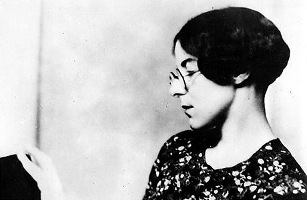
Sylvia Townsend Warner
English novelist and poetWikipedia
13
MENTIONS
8
EPISODES
8
PODCASTS
Search complete. 13 mentions across 8 episodes found for "Sylvia Townsend Warner".
Oct 5, 2026

speaker_3HOST
The ultimate rebellion in literature, public refusal and the aging witch.
speaker_3HOST
Let's look at a fascinating, slightly older book, Lolly Willowes by Sylvia Townsend Warner, which was written back in 1926.
speaker_2HOST
This book is so quietly radical.
speaker_2HOST
Laura Willowes is a woman who spends decades just being the useful unmarried maiden aunt in London.

PeterHOST
yeah, it's really, yeah, it's fun.
MattHOST
So that's, I want to bring up Sylvia Townsend Warner and her stack of books.
MattHOST
And she's really, she's really fun.
MattHOST
She's not like down the road.

Dan DuttonGUEST
So it points out that at least she was aware of or knew of, um, knew o- of some kind of traditions which were prevalent in Scotland in the 1600s.
Dan DuttonGUEST
And, and in fact, in this book, uh, the, the author who, ah, she's meticulous.
Dan DuttonGUEST
It's a huge book, and she uncovers every stone, um, in it.
Dan DuttonGUEST
She points out that there are numbers of sermons from that point of time where the, the, and letters from priests where they, uh, talk about how in Scotland it was completely pagan.
29 MINS LATER
Dan DuttonGUEST
Taking everything that I could get my hand...
Dan DuttonGUEST
Using every herbal thing that I knew of, and begging people [laughs] for, for what they had or what they could do.
Dan DuttonGUEST
So, uh, it was, in one way, it's, um, it reminded me of one of my f- f- favorite fairy stories, um, by a favorite author, Sylvia Townsend Warner, who wrote this wonderful book called Kingdoms of Elfin when she was in her 80s.
Dan DuttonGUEST
And she knew her, she knew her British fairy lore as well as anybody, m- maybe besides Katherine Briggs.

Colm TóibínGUEST
Hi, Deborah.
Deborah TreismanHOST
So, uh, the last couple of times that you were on the Fiction Podcast, you chose stories by Sylvia Townsend Warner and Mary Lavin.
Deborah TreismanHOST
What made you go for Tobias Wolff this time?
Colm TóibínGUEST
Maybe it's the same thing, the idea that something very plain, um, something that doesn't, you know, have gorgeous writing in it or have any sort of obvious efforts towards transcendence, um-
58 MINS LATER
Deborah TreismanHOST
Colm Tóibín, a winner of the International Dublin Literary Award, the Folio Prize, and the Dayton Literary Peace Prize, among others, is a fiction writer, essayist, playwright, and poet.
Deborah TreismanHOST
He's published more than a dozen books of fiction, including the novels Brooklyn and The Magician, and the story collections The Empty Family and The News from Dublin.
Deborah TreismanHOST
You can download more than 230 previous episodes of The New Yorker Fiction Podcast, including episodes in which Colm Tóibín discusses work by Sylvia Townsend Warner and Mary Lavin, or subscribe to the podcast for free in Apple Podcasts.
Deborah TreismanHOST
On The Writer's Voice podcast, you can hear short stories from the magazine read by their authors.

John BurtonHOST
I mean, I'm getting into theory here, but it's not my field, but am I on the right tracks here?
Anne FernaldGUEST
It's so interesting, right? Because you make me think of Sylvia Townsend Warner, who was a communist and remained a communist even after some of Stalin's worst excesses had been exposed.
Anne FernaldGUEST
But she also writes, after her lover Valentine Ackland dies, how... much a creature of habit she is.
Anne FernaldGUEST
And she writes in a beautiful, I mean, it's one of the most moving letters I know, beautiful letter to William Maxwell, who was our editor at the New Yorker, about now I take the blue cup off the hook in the kitchen.
John BurtonHOST
As would
Anne FernaldGUEST
I, as would I, yes.
John BurtonHOST
Okay, well, you've classed her, Sylvia Townsend Warner, in another group of people that you're looking, well, a group of two here, which is explorers.
John BurtonHOST
You label her an explorer.

Jo CheethamGUEST
here.
Jo CheethamGUEST
Have you read Lolly Willows by Sylvia Townsend Warner? No, I have not.
Jo CheethamGUEST
To be honest, I know
Susie GreenHOST
nothing about it.

Bill NighyHOST
I hope you enjoy it.
Bill NighyHOST
[upbeat music] And now it's time for the book of the episode or book of the week, and the book I've chosen is by Sylvia Townsend Warner, and it's called Lolly Willowes.
Bill NighyHOST
And, um, it was written in 1926, and I really like it, and I like all her books, and all her books are very different.
Bill NighyHOST
And they're not what they look like.

Emma NewmanHOST
Because despite the great technological advances that have made this grand journey possible, space travel can still take a while and everyone can benefit from a good recommendation.
Adrian TchaikovskyHOST
For this episode, we are talking about the book Lolly Willows by Sylvia Townsend Warner, which is your recommendation to me.
Emma NewmanHOST
It is.
Adrian TchaikovskyHOST
So I have to show that I've done my homework.