Surviving Sepsis Campaign
17
MENTIONS
6
EPISODES
5
PODCASTS
Search complete. 17 mentions across 6 episodes found for "Surviving Sepsis Campaign".
Sep 16, 2026

Karen ChoongHOST
How do we make this a more global issue? We are doing this at an institutional level in terms of educating families and patients what PIX-P is, but at a global level.
Karen ChoongHOST
And I'm thinking about, you know, the surviving sepsis campaign.
Karen ChoongHOST
You know, there are a lot more patients who are critically ill who suffer from this than, you know, those who have sepsis.
Karen ChoongHOST
How do we get there? How do we educate about this globally?
Joseph ManningGUEST
So that once we start to generate the evidence base, that will help expedite and understand, you know, what does PICS-P look like in that context and thinking about wider social determinants of health that may be very different to the high resource contexts.
Joseph ManningGUEST
So I think that's really important and we really need to continue to move as a global collective in generating a universal evidence base as opposed to just one that's polarised to one end or the other.
Joseph ManningGUEST
I think the other thing is around how do we integrate this as an agenda on other things? And so, you know, as you know, because you were the methodologist that led the section for the Surviving Sepsis Campaign book, it's about how do we integrate this within society? other guidelines which were global and which are extensively used um so i think i think that's a way in which we can get pixp onto um the you know profile rays and onto the agenda and into people's understanding psyche and hopefully that will then proliferate down into education training and practice but i don't think it's a single you know We'll do this.
Joseph ManningGUEST
And then it becomes embedded that we have to sort of divide and conquer with PIXP.

speaker_0HOST
What about the evidence? Well, there's been a whole bunch of studies and guidelines on norepinephrine.
speaker_0HOST
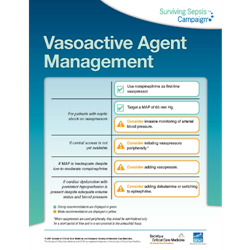
The Surviving Sepsis Campaign, which is one of the guidelines we look to for septic shock data, recommends norepinephrine as a first-line vasopressor in septic shock.
speaker_0HOST
This is fairly universal.
speaker_0HOST
We are not personally aware of any guidelines that suggest something other than norepinephrine as a first-line vasopressor in septic shock.

Brian MurphyHOST
He has done research in all areas of severe sepsis, from molecular and cellular mechanisms to translational and quality improvement studies.
Brian MurphyHOST
uh currently chair of the board of directors for the sepsis alliance and an author of the 2016 2021 2025 reviews and updates of the surviving sepsis campaign did i get all that right dr simpson correct
Steven SimpsonGUEST
that's all correct
Brian MurphyHOST
all right well thank you for coming on the show And we are joined today by a familiar face to those in CDI and coding circles, James Kennedy, MD, CCS.
7 MINS LATER
Brian MurphyHOST
And obviously, you want to do that for many reasons, including mortality and survival, but that But then there is a spectrum of how it's diagnosed.
Brian MurphyHOST
And we have now we have the evolution into sepsis three and the requiring associated organ dysfunction, which will used to be severe sepsis and still is severe sepsis and some of the step one and step two.
Brian MurphyHOST
So can you talk about that and where you kind of currently stand with this definition? And I'm jumping ahead a little bit here, but I know this was part of the Surviving Sepsis Campaign guideline, which is just out with your name associated with that project.
Brian MurphyHOST
It has right in the first line that sepsis is a life-threatening acute organ dysfunction to infection.

Haley DeChantGUEST
did publish their trial design just to gain commentary on whether or not it would be feasible to evaluate a restrictive versus liberal fluid management approach in emergency department patients.
Haley DeChantGUEST
And then moving forward into 2022 and 2023, those are two trials I would like to briefly touch on a bit further that ultimately led up to our recent guideline update, the Surviving Sepsis Campaign.
speaker_1MODERATOR
So in 2022,
Haley DeChantGUEST
there was the classic trial.
Haley DeChantGUEST
This also did not find, or the investigators also did not find, that there was a difference when it came to mortality between these two groups.
Haley DeChantGUEST
And they particularly looked at the time before discharge home by day 90.
Haley DeChantGUEST
So with all that being said, looking at those few different trials I mentioned up until the recent publication of the surviving sepsis campaign update earlier this year, we do know a few different things.
Haley DeChantGUEST
So the timing of fluid resuscitation, we can all agree upon.
speaker_1HOST
What about the evidence? Well, there's been a whole bunch of studies and guidelines on norepinephrine.
speaker_1HOST
The Surviving Sepsis Campaign, which is one of the guidelines we look to for septic shock data, recommends norepinephrine as a first-line vasopressor in septic shock.
speaker_1HOST
This is fairly universal.
speaker_1HOST
We are not personally aware of any guidelines that suggest something other than norepinephrine as a first-line vasopressor in septic shock.
15 MINS LATER
speaker_1HOST
Bradycardia with hypotension might be a nice drug, but remember this is at those low doses, right? Because you just want that beta-1 effect somewhere on that 0.01 to 0.05 micrograms per kilogram per minute.
speaker_1HOST
And then sometimes post-cardiopulmonary bypass, it's used because it has that inotropic with that beta-1 effect and that vasoconstrictive alpha-1 effect as a vasopressor.
speaker_1HOST
What evidence and guidelines do we have on epinephrine? Well, the Surviving Sepsis Campaign recommends epinephrine as a second or third line agent for septic shock after you've already started norepinephrine and vasopressin.
speaker_1HOST
It can cause tachycardia, tachydysrhythmias, elevated lactate levels, all reasons that it is not first line in the eyes of the striving sepsis campaign.

Brad SobolewskiHOST
That hypothesis has been supported by physiologic data by some adult studies, although pediatric evidence before prompt bolus was limited and inconsistent.
Brad SobolewskiHOST
The 2026 Surviving Sepsis Campaign pediatric guidelines recommended crystalloids over albumin for initial resuscitation and conditionally suggest balanced or buffered crystalloids over 0.9% saline in children with septic shock who require fluid boluses.
Brad SobolewskiHOST
Importantly, that recommendation is based on very low certainty evidence.
Brad SobolewskiHOST
Balance options, again, include lactated ringers, Hartman's solution, or plasmalite.
6 MINS LATER
Brad SobolewskiHOST
At the same time, the largest pediatric randomized trial now shows no improvement in major kidney or mortality outcomes compared with normal saline.
Brad SobolewskiHOST
So if you use saline at your local hospital, that's okay too.
Brad SobolewskiHOST
The 2026 Surviving Sepsis Campaign still conditionally favors balanced crystalloids, but that recommendation is based on very low certainty evidence.
Brad SobolewskiHOST
So prompt bolus adds important randomized data suggesting that for most children with septic shock, either crystalloid strategy is reasonable.