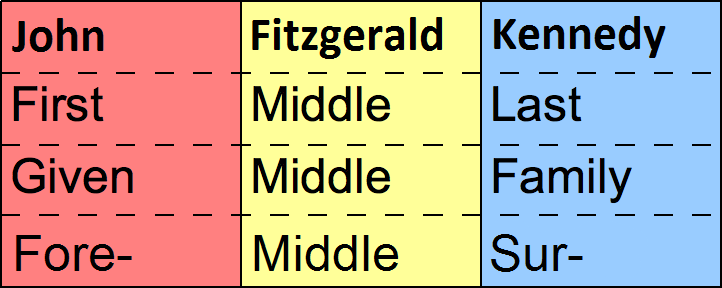
Surname
16
MENTIONS
7
EPISODES
7
PODCASTS
Search complete. 16 mentions across 7 episodes found for "Surname".
Sep 8, 2026

Campese Ma'afuGUEST
A lot of, a lot of, a lot of, a lot of, uh, how do you say? A lot of pressure.
Campese Ma'afuGUEST
No, well, not just too much pressure, but a lot of, a lot to uphold in terms of, of, of the family name, you know? Just representing on the world stage-
Ben HerringHOST
Mm
Campese Ma'afuGUEST
... putting your name up high, so.
Campese Ma'afuGUEST
Yes, I did.
Ben HerringHOST
So he was playing for Australia in 2010 and you were playing for Fiji, and you packed down against each other.
Ben HerringHOST
What a special occasion that would've been for the family name, mate, to pack down on debut against, against the bro.
Campese Ma'afuGUEST
Mate, it probably, till today, it's probably still the highlight of my career.

KayHOST
Yeah.
KayHOST
Like normally, yes, normally that's Mr. Surname is your dad, but now it's you.
KayHOST
Oh,
KhakiHOST
yeah.

Rory FosterGUEST
Entonces, si no sabes el nombre del paciente, puede ser: ¿cómo se llama? ¿Cómo se llama? Produce técnicamente el nombre.
Rory FosterGUEST
¿Cuál es su apellido? Para saber su apellido, ¿verdad? Last name.
Rory FosterGUEST
Y posiblemente algunas preguntas sencillas para establecer confianza y una relación puede ser: ¿cuántos años tiene? Una pregunta normal en el contexto clínico, ¿verdad? How old are you? ¿Cuántos años tiene? ¿En qué trabaja? ¿En qué trabaja? What do you do for work? ¿En qué trabaja? Y tal vez una pregunta para, eh, continuar la conversación y a la vez abrir la puerta al problema de hoy o a la queja principal, como decimos, eh, preocupación principal, podría ser: ¿cómo se siente hoy? ¿Cómo se siente? Uno de los verbos reflexivos, sentirse.
Rory FosterGUEST
¿Cómo se siente? How do you feel? ¿Cómo se siente hoy? Otras preguntas también relevantes al contexto clínico puede ser: ¿con quién vive? Who do you live with? ¿Con quién vive? Ah, porque siempre queremos saber l-- el entorno familiar o do-- el entorno doméstico, ¿verdad? Con quién vive.

WilkinHOST
He mopped his brow, checked the central logs one last time, I murmured.
WilkinHOST
This'll sound insane, I can't even remember your last name.
WilkinHOST
I just, Del Della, Delphine.
WilkinHOST
You sure you're still locked in as yourself? I started to answer yes, but the word got hung on my tongue, splintering away as soon as I tried to verify it.

speaker_11NARRATOR
By his side, fighting bravely, fell the lords of Taffia and Firard, two of his nephews, and others of his personal attendants and companions.
speaker_11NARRATOR
the dublin danes had in their turn a day of rejoicing and of revenge for the defeats they had suffered at congol's hands this reign is not only notable for the imputed first conversion of the danes to christianity but also for the general adoption of family names Hitherto we have been enabled to distinguish clansmen only by tribe names, formed by prefixing High, Kennel, Sill, Munter, Dahl, or some synonymous term, meaning race, kindred, sept, district, or part, to the proper name of a remote common ancestor, as High Neal, Kennel Connell, Sill Murray, Munter Eolei, Dahl Kai, and Dahl Riata.
speaker_11NARRATOR
but the great tribes now begin to break into families, and we are hereafter to know particular houses, by distinct hereditary surnames, as O'Neill, O'Connor, McMurrow, and McCarthy.
speaker_11NARRATOR
Yet the whole body of relatives are often spoken of by the old tribal title, which, unless exceptions are named, is supposed to embrace all the descendants of the old connection to whom it was once common.
speaker_11NARRATOR
At first this alternate use of tribe and family names may confuse the reader, for it is rather puzzling to find a MacLachlan with the same paternal ancestor as an O'Neill, and a MacMahon of Thalmond as an O'Brien.
speaker_11NARRATOR
But the difficulty disappears with use and familiarity, and though the number and variety of newly coined names cannot be at once committed to memory, the story itself gains in distinctness by the change.
speaker_11NARRATOR
In the year 955, Donald O'Neill, son of the brave and beloved Mercertach, was recognized as Ard-Re, by the recognized number of provinces, without recourse to coercion.

Matt FlynnHOST
So South Louisiana, around Baton Rouge area, Taylor, when you grew up and you knew somebody's, like their parents.
Matt FlynnHOST
Let's say your friend's name was Buster Rhymes And his last name was Rhymes.
Matt FlynnHOST
Did you say-
TaylorPANELIST
But his real name was Buster Rhymes?
TaylorPANELIST
Yeah.
Matt FlynnHOST
Where I grew up, no one ever-
AlondraPANELIST
You put last names?
Matt FlynnHOST
It was Mr. Rhymes always.

Leon HarveyNARRATOR
It was not even normally English until the time of Henry VIII.
Leon HarveyNARRATOR
It still remains anthropologically Welsh, and the study of its surname shows, as Gubby states in his Homes of Family Names, that it is even more Welsh than Wales.
Leon HarveyNARRATOR
The counties here included in the Welsh border are all much more thoroughly anglicized, but Welsh was spoken in most of them until comparatively recent times, even in Gloucestershire, undoubtedly a very mixed county.
Leon HarveyNARRATOR
The language of Shropshire has been described as English spoken in a foreign language.