Supermassive black hole
82
MENTIONS
7
EPISODES
7
PODCASTS
Search complete. 82 mentions across 7 episodes found for "Supermassive black hole".
Oct 8, 2026

Billy HenryNARRATOR
A quiet monster lurks in the heart of M31, the Andromeda Galaxy.
Billy HenryNARRATOR
Known as M31 Star, it's a black hole 100 million times the mass of the Sun and 25 times heavier than the black hole at the heart of the Milky Way.
Billy HenryNARRATOR
Every large galaxy probably has a supermassive black hole, and many of them are quite bright.
Billy HenryNARRATOR
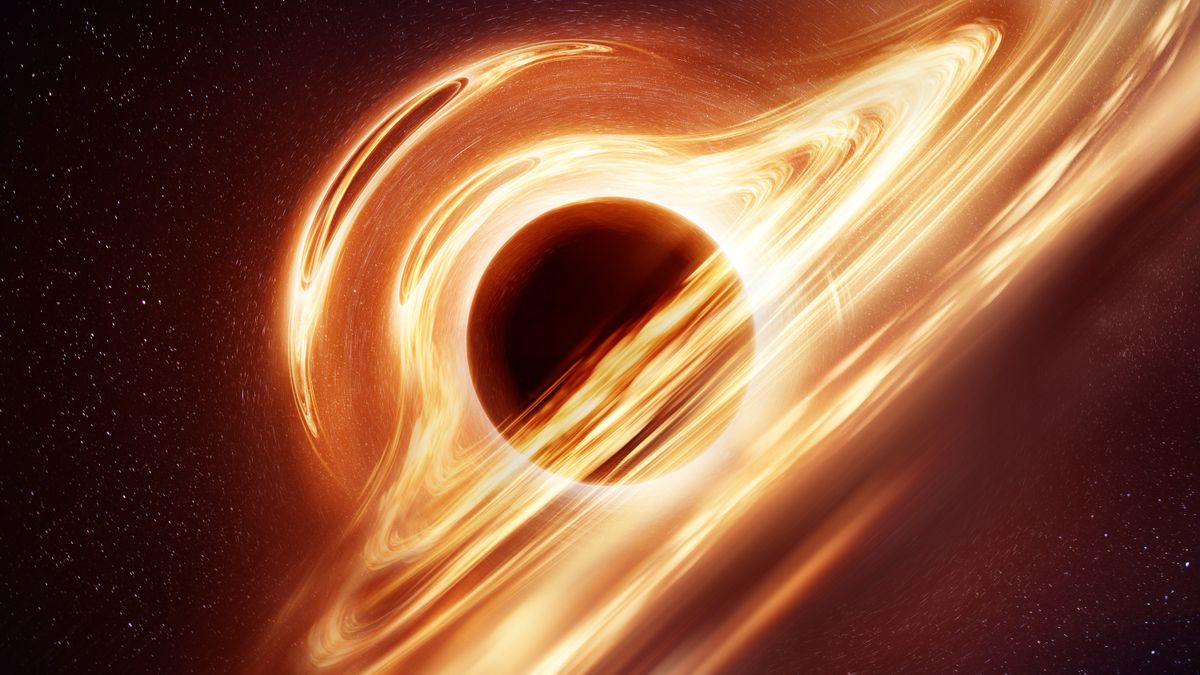
The black hole itself is completely black.
Billy HenryNARRATOR
It swallows up all the matter and energy that falls into it, and nothing can come back out.
Billy HenryNARRATOR
But the black hole's gravity pulls in huge amounts of gas and dust, along with an occasional asteroid, star, or other large object.
Billy HenryNARRATOR
This debris forms a disk around the black hole.
Billy HenryNARRATOR
As material in the disk spirals closer to the black hole, it gets extremely hot, so it shines brightly.

speaker_0NARRATOR
If you approached a stellar-mass black hole, the gravitational pull on your feet would be vastly stronger than on your head, tearing you apart through a process sometimes called spaghettification.
speaker_0NARRATOR
Supermassive black holes have gentler tidal forces at their event horizons because their immense size spreads the gradient across larger distances, so an astronaut could theoretically cross the boundary without immediate harm.
speaker_0NARRATOR
Yet once inside, all paths through spacetime inevitably lead toward the singularity at the centre, a point of infinite density where our current understanding of physics breaks down.
speaker_0NARRATOR
Time moves differently near black holes, a phenomenon that scientists call gravitational time dilation.
8 MINS LATER
speaker_0NARRATOR
Their rotation influences the structure of the accretion disk and the jets that emerge from near the event horizon.
speaker_0NARRATOR
Stellar-mass black holes often exist in binary systems with normal stars, making them easier to detect and study through the radiation from accreting material.
speaker_0NARRATOR
Supermassive black holes reside at the centres of most galaxies, including our own Milky Way.
speaker_0NARRATOR
These objects contain millions or even billions of times the mass of our Sun.

Sarah RugheimerGUEST
Why
David CooperHOST
do black holes excite young children to the next level? Like I remember as a kid learning about space, it was all very cool.
David CooperHOST
But when we finally got to black holes, I was like, this is amazing.
David CooperHOST
Why are people so struck by these objects?
Sarah RugheimerGUEST
It's a really good question because when I often ask my students what they're most excited about to learn in an Astro 101 class, they always say black holes.
Sarah RugheimerGUEST
And part of me is like, they're very simple objects.
Sarah RugheimerGUEST
I'm not actually sure why you're as excited about them as you are.
David CooperHOST
I'm pretty sure there isn't one, but we don't know.

Neil deGrasse TysonHOST
Oh.
Lindsey Nyx WalkerGUEST
Supermassive black hole.
Paul MecurioHOST
A supermassive black hole?
Neil deGrasse TysonHOST
Oh, wow.
Neil deGrasse TysonHOST
Yeah.
Paul MecurioHOST
In super scenes.
Neil deGrasse TysonHOST
That, that was the worst supermassive black hole that I've ever seen.
Paul MecurioHOST
Yeah.

Hope GohHOST
So where is all that energy coming from?
Nancy SunHOST
The researchers think there is a supermassive black hole, 超大质量黑洞, at the center.
Nancy SunHOST
But the black hole is surrounded by extremely dense gas, 高密度气体.
Nancy SunHOST
The researchers believe that the center is actually a supermassive black hole surrounded by high-density gas.

Charles BailynHOST
Uh, you can look them up on the little black hole website and find out all sorts of things about them.
Charles BailynHOST
Uh, and one of them is, uh, there exists, uh, a category of, uh, what's called supermassive black holes.
Charles BailynHOST
Uh, I mentioned the black holes that are, uh, that come from stars, and I'll talk about that much more today.
Charles BailynHOST
But I don't think I'm gonna have a chance to talk about the supermassive black holes.
Charles BailynHOST
These are black holes that live in the centers of galaxies, uh, and can have masses, uh, of hundreds of thousands, millions, sometimes even billions of times the mass of the Sun.
Charles BailynHOST
So very massive, uh, black holes, uh, in the centers of galaxies, including our own galaxy, by the way.
Charles BailynHOST
And you may, uh, if they succeed in this, somebody's winning the Nobel Prize, uh, and so you may, uh, find out about it by reading in the paper five years from now or so.
Charles BailynHOST
Yes.

Priyamvada NatarajanGUEST
They could eat a lot of gas around them, they could get bigger.
Priyamvada NatarajanGUEST
And, you know, so that was the prevailing idea, that you would grow them from these light seeds, the stellar corpses, and you would make the supermassive black holes.
Priyamvada NatarajanGUEST
But then something interesting happened observationally.
Priyamvada NatarajanGUEST
People started finding these billion solar mass black holes further and further back in time, which meant that you did not have enough time in the universe to grow from these little seeds to those monsters.
Priyamvada NatarajanGUEST
It was a sky survey that was done from the ground, telescopes on the ground.
Priyamvada NatarajanGUEST
And they were finding these quasars.
Priyamvada NatarajanGUEST
Basically, quasars are actively feeding supermassive black holes, so just gobbling up all the gas.
Priyamvada NatarajanGUEST
So basically, the reason you see the light, they are very bright beacons.