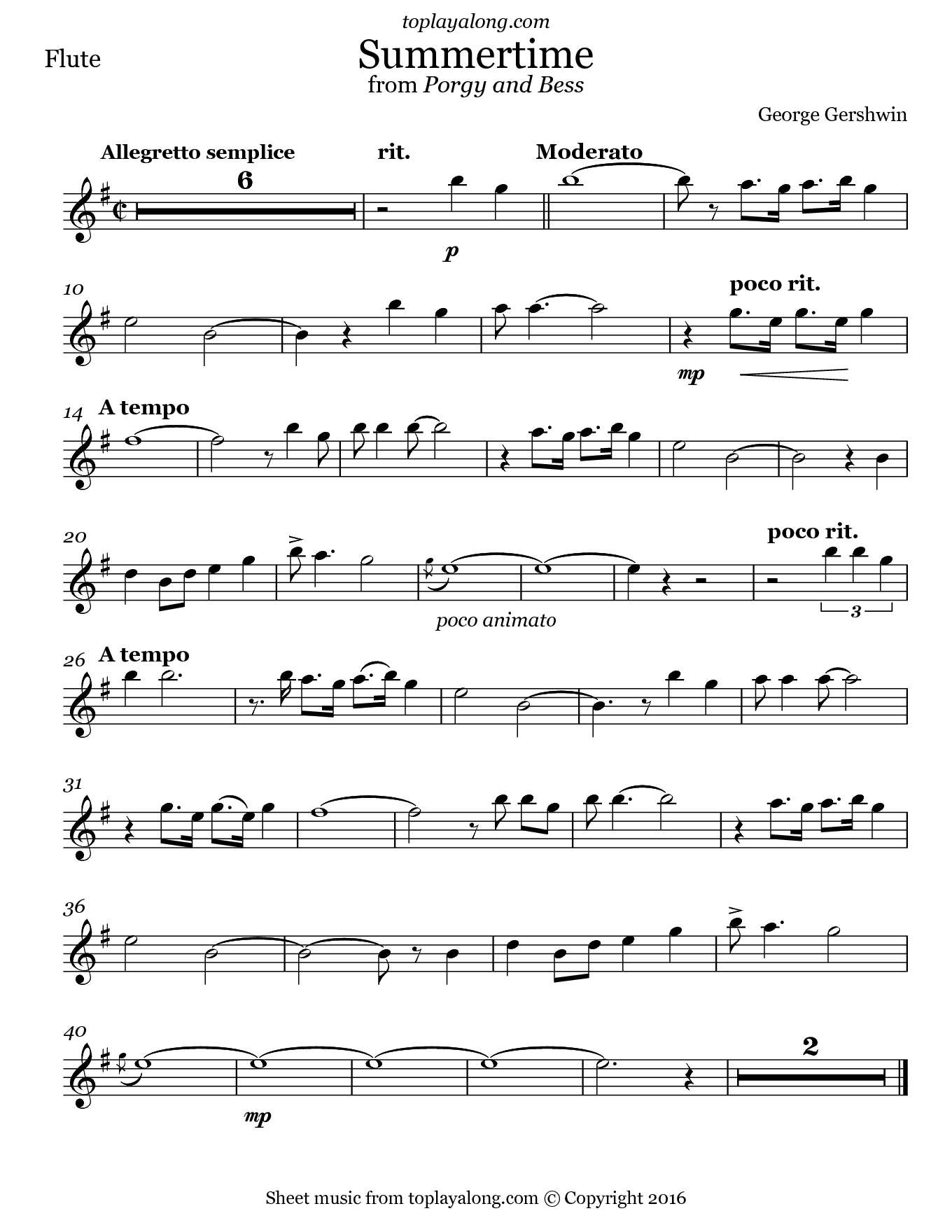
Summertime
Aria by George GershwinWikipedia
45
MENTIONS
9
EPISODES
6
PODCASTS
Search complete. 45 mentions across 9 episodes found for "Summertime".
Nov 25, 2026

Bob LawrenceHOST
Hard to believe, I know.
Bob LawrenceHOST
Week four of our exploration of George Gershwin's beautiful jazz standard, Summertime.
Bob LawrenceHOST
And what a journey it's been.
Bob LawrenceHOST
As always, we began by examining the harmonic architecture of this timeless composition.
7 MINS LATER
Bob LawrenceHOST
We use time to organize our music, not music to keep track of time.
Bob LawrenceHOST
And finally, we're going to play.
Bob LawrenceHOST
We're going to apply these concepts to Gershwin's Summertime, developing a solo piano performance that begins with a beautiful rubato presentation and then transitions into a strum presentation.
Bob LawrenceHOST
We'll explore how the same harmony and melody can produce two distinctly different musical experiences simply by changing how we choose to express time.

Larry MaslonHOST
And I'll tell you why a little later in the broadcast.
Larry MaslonHOST
That, of course, was Summertime from his totally seminal Porgy and Bess album.
Larry MaslonHOST
We'll get back to that.
Larry MaslonHOST
The Gershwins, of course.
Bob LawrenceHOST
It's time to discover, learn, and play jazz piano.
Bob LawrenceHOST
Well, here we are together again, ready to continue our November exploration of George Gershwin's beautiful jazz standard, Summertime.
Bob LawrenceHOST
And as all of you regular listeners to Jazz Piano Skills already know, I get excited every Tuesday when it's lesson time.
Bob LawrenceHOST
But I've got to tell you, today's lesson, today's exploration of improvisation has me pumped up beyond normal.
20 MINS LATER
Bob LawrenceHOST
Wow, I'm going to say that again.
Bob LawrenceHOST
Creativity comes from limitation and musical freedom comes from boundaries.
Bob LawrenceHOST
And that's exactly what we're going to explore today as we continue our study of George Gershwin's beautiful jazz standard, Summertime.
Bob LawrenceHOST
But before we go any further with our exploration of improvisation, I want to revisit something that is absolutely fundamental to everything that we do here at Jazz Piano Skills.

Itzhak PerlmanGUEST
which it was a couple of years ago and which is quite amazing because and it was with with actors who actually did not speak the language and studied the language particularly for this particular play and it was absolutely wonderful. . .
Doug DoyleHOST
You have some wonderful vocalists, as well as these tunes without any singing, but Summertime, featuring the wonderful vocals of Grammy Award winner John Batiste, and I saw a couple of clips of you both in the studio.
Doug DoyleHOST
You had a great time with John, didn't you? Oh, absolutely.
Doug DoyleHOST
First of all, he is
Itzhak PerlmanGUEST
And I was not disappointed.
Itzhak PerlmanGUEST
He was just absolutely wonderful to work with.
John BatisteSOUNDBITE_SPEAKER
Summertime And the living is easy Fish are jumping And the cotton is high Oh,
John BatisteSOUNDBITE_SPEAKER
your dad is rich.

Jessica MarieHOST
She continued perfecting her craft and auditioned for the third season of American Idol.
Jessica MarieHOST
Her initial performance was a rendition of Summertime by Porgy and Bess that left her in tears from the immense emotion she felt while singing for the judges.
Jessica MarieHOST
It was stamped in history as one of AOL's greatest television moments of 2004.
Jessica MarieHOST
For her finale, she performed the same song again and knocked the judges off their feet.

Kiana DellHOST
By age 13, she had been given her first steel guitar and was playing in clubs around Los Angeles.
Kiana DellHOST
She started as a session musician on guitar in 1957, playing on tracks like Sam Cooke's Summertime.
Kiana DellHOST
Summertime
speaker_1SOUNDBITE_SPEAKER
And the living is here
Kiana DellHOST
and Ritchie Vallon's La Bamba.
Bob LawrenceHOST
Well, here we are, together again, ready to continue our November exploration of one of the most beloved compositions in American music.
Bob LawrenceHOST
I'm talking about George Gershwin's Summertime.
Bob LawrenceHOST
And I have to tell you, I'm especially excited about today's lesson.
Bob LawrenceHOST
Last week, we began our study of summertime by examining its harmony.
Bob LawrenceHOST
Get comfy, settle in, and let's continue discovering just how much musical understanding we can develop when we learn to recognize the familiar within the unfamiliar.
Bob LawrenceHOST
Because today we're going to discover that two very different musical compositions can have much more in common than we might ever imagine.
Bob LawrenceHOST
So today we're going to discover that George Gershwin's Summertime, despite having its own beautiful, its own distinctive melodic personality, is constructed using the same fundamental melodic shapes, sounds, and movement that we've encountered in countless other jazz standards, including the one we did last month, Bobby Hebb's Sunny.
Bob LawrenceHOST
We're going to discover that studying a new melody doesn't necessarily mean studying new musical material.
Bob LawrenceHOST
We examined its harmonic foundation, we studied its melodic characteristics, we developed improvisational ideas, and we brought everything together with our solo piano development.
Bob LawrenceHOST
And now, as we begin November, we're turning our attention to one of the most beloved compositions in American music— I'm talking about George Gershwin's Summertime.
Bob LawrenceHOST
It's such a beautiful tune and what a terrific composition for developing our jazz piano skills.
Bob LawrenceHOST
Now, here's something I want you to think about as we begin our November studies.
Bob LawrenceHOST
Last month, we studied Sunny.
Bob LawrenceHOST
This month, we're studying Summertime.
Bob LawrenceHOST
two different tunes right well yes but perhaps not as different as you might think you see one of the most important things we can discover as jazz pianists is that every new tune does not require us to learn an entirely new collection of musical skills in fact it's quite the contrary The more tunes we study, the more we should begin recognizing musical material we already know.
Bob LawrenceHOST
Familiar harmonic shapes, familiar harmonic sounds, familiar melodic movement, the same musical language appearing in different compositions.

Thos RibbitsHOST
It was an interesting selection.
Thos RibbitsHOST
And you said there was Summertime.
Thos RibbitsHOST
And Summertime by Gershwin, as we're on that theme.
Thos RibbitsHOST
You're quite right.
Thos RibbitsHOST
Well remembered, yes.
Thos RibbitsHOST
They didn't always fit, just so you get a sense of it.
Thos RibbitsHOST
You know, the questions that Martin Bashir had asked Her Royal Highness the Princess of Wales as she was styled at the time were the questions I believe from the actual interview and then a piece of music.
Thos RibbitsHOST
So the question was how do you protect your then teenage sons or young sons from the media's glare and Diana then gave the answer or an abridged version of the answer that she gave in the interview and leapt into Summertime I mean beautifully sung quite whether it cohered as a piece I think is another