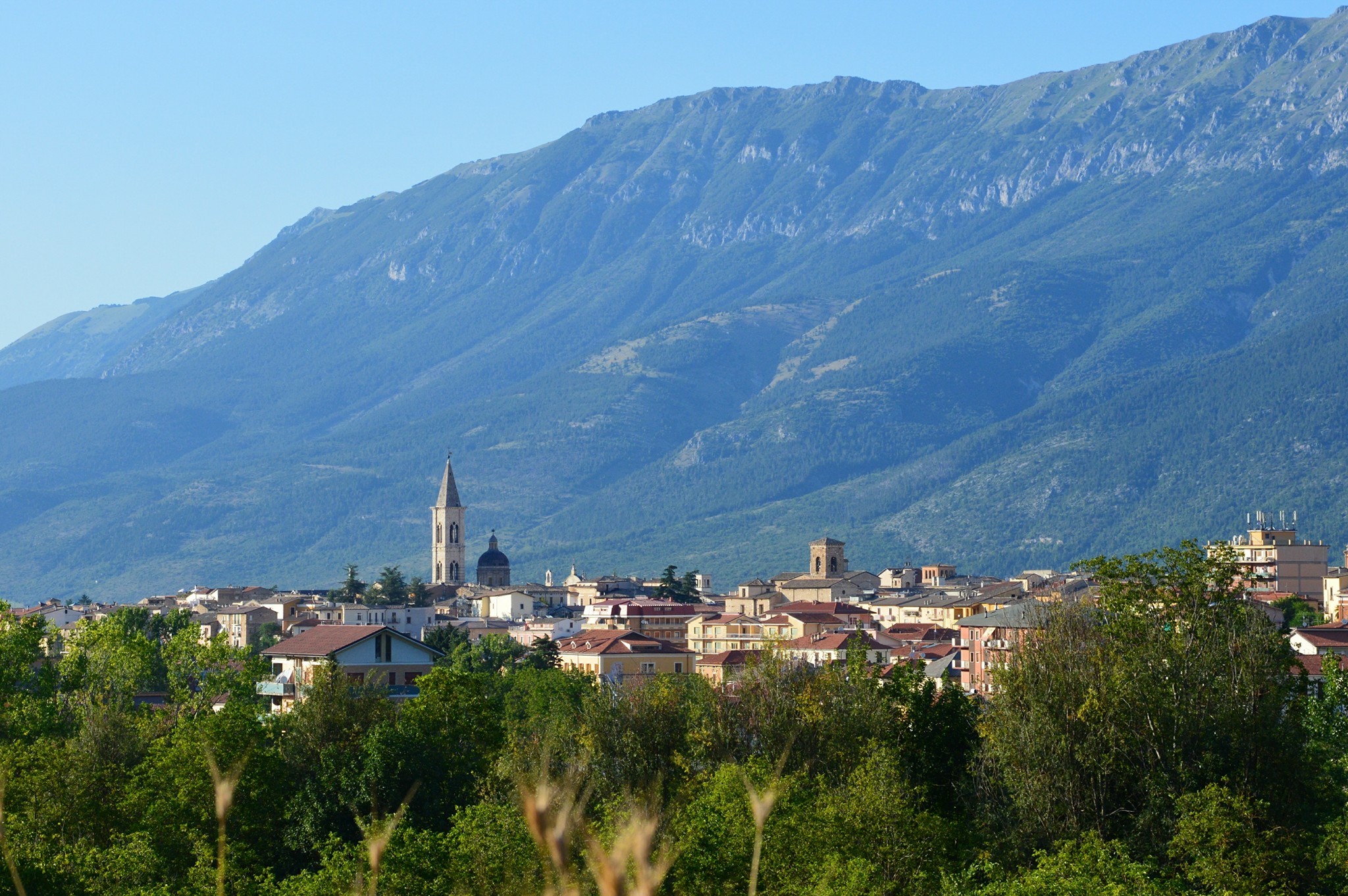
Sulmona
Comune in ItalyWikipedia
13
MENTIONS
7
EPISODES
7
PODCASTS
Search complete. 13 mentions across 7 episodes found for "Sulmona".
Sep 14, 2026

Mark HarringtonNARRATOR
He writes rather as a citizen of the cosmos than as a subject of imperial Rome.
Mark HarringtonNARRATOR
Ovid's native place, Sulmo, lay in a region, now called the Abruzzi, that even today stirs longings for the romantic and the wild.
Mark HarringtonNARRATOR
The poet did not forget his birthplace.
Mark HarringtonNARRATOR
He revisited it, and in his latest poetry cherishes its memory with affection.
3 HRS 54 MINS LATER
Mark HarringtonNARRATOR
There the wizard died, but he still visits his villa and every Saturday night he goes off with the witches to the nut tree of Benevento.
Mark HarringtonNARRATOR
Here is a curious weaving of popular fancy about the tales of the Metamorphoses.
Mark HarringtonNARRATOR
Once Ovid's stories were let loose by some cleric, the good people of Sulmona could readily have attached them to the poet himself, along with other marvels.
Mark HarringtonNARRATOR
This process may indicate that the stories about Virgil the Magician were more largely a product of Italian fancy than Camparetti, in his famous work Virgil in the Middle Ages, would admit.

Algie PuggNARRATOR
O ungrateful fatherland, what frenzy, what recklessness possessed thee, or doth still possess, that thou didst chase into exile, with such strange cruelty, thy dearest citizen, thy chief benefactor, thy unique poet? If perchance thou shouldst plead the common madness of that ill-counselled time, why when passions had abated didst thou not return to tranquillity of mind and repenting of the deed recall him ah grudge not to stay awhile to discourse with me who am a son of thine and thou shalt gather that which righteous indignation bids me speak as from a man who longs for thee to amend and not to be punished dost thou seem to thyself to be glorified by such and so many titles that thou hast desired to chase away from thee that one wherein thou hast not a neighbouring city that can make alike vaunt ah tell me with what victories with what triumphs with what excellencies with what worthy citizens art thou resplendent thy wealth a thing fluctuating and uncertain thy beauty a thing fragile and deciduous thy refinements culpable and effeminate make thee of note in the false judgment of the peoples which doth ever look more to the appearance than to the thing itself alas wilt thou glory in thy merchants and the abundance of artists wherewith thou art filled foolishly wilt thou do the first perpetually girded by avarice ply a servile trade and the art which was once ennobled by men of genius till they made it a second nature is now corrupted by that same avarice and is nothing worth wilt thou glory in the baseness and worthlessness of them who because they can quote a long string of ancestors would fain hold in thy midst the chiefdom of that nobility against which they are for ever sinning with their plunderings their treacheries their falsehoods vain will be thy vaunt and mocked by all whose judgment hath a right base and a stable firmness ah wretched mother open thine eyes and gaze not without remorse on that which thou hast done and take shame to thyself at least that being as thou art reputed wise thou hast made the false choice in thy sins o why if thou hadst not so much wisdom of thyself didst thou not imitate the acts of those cities which are still famous by reason of their praiseworthy deeds athens which was one of the eyes of greece at the very time when there abode in her the supremacy of the world glorious alike in knowledge in eloquence and in war argos still arrayed in the pomp of the titles of her kings smyrna ever to be revered by us for her pastor nicholas pylos of highest note for the ancient nestor cyme chios and colophon cities most glorious in time past one and all at the hour of their highest splendour shamed not nor shrank from closing in sharp debate as to the origin of the divine poet homer declaring each one of them that he had drawn it from herself and so did each one confirm her contention with arguments that the debate still lives nor is it certain whence he was since the one equally with the other still boasts of so great a citizen and as to Mantua, our neighbour, in what else hath any greater fame remained to her than from Virgil's having been a Mantuan, whose name they yet hold in so great reverence, and so great acceptance hath it with each and all of them, that not only in the public places, but even in many private ones, his image is seen figured, showing thereby that, albeit his father was but a maker of earthen pots, it is he who hath ennobled them all.
Algie PuggNARRATOR
sulmona based of ovid venusia of horus equinium of juvenal and many others each of its own and insists on their merit it had been no shame for thee to follow the example of these who are not like to have been thus yearning and tender towards such citizens without due cause They knew what thou thyself hadst power to know, and still hast, to wit, that the lasting influences of these men would be, even after their own ruin, eternal splendours of their name, even as to this day, extending throughout the whole world, they make them known to such as have never seen them.
Algie PuggNARRATOR
thou alone clouded by some strange blindness hast chosen to take another path and as though shiny enough in thyself hast been heedless of these splendours thou alone as though the camilli the publicoli the torquati the fabrici the catos the fabii and the scipios had made thee famous with their mighty works and had abode in thee not content with having let thy former citizen claudian drop through thy fingers hast taken no regard to the poet of to-day but hast chased him away from thee into exile and if thou hadst had the power bereft of the adjunct of thy name i cannot escape from shame on thy behalf but behold not fortune but the course of the nature of things hath so far favoured thy shameful desire that what in thy brutal longing thou wouldst gladly have done had he come into thy hands to wit slain him it with its eternal law hath accomplished Dead is thy Dante Alighieri, in that exile which thou, envious of his worth, didst unjustly inflict upon him.
Algie PuggNARRATOR
O shame! not to be chronicled, that a mother should bear envy to the virtues of any her son.
Algie PuggNARRATOR
Now that he is dead, he cannot do against thee what when living he would never have done.
Algie PuggNARRATOR
He lieth under another heaven than thine, nor needst thou look to see him ever again, save on that day when thou shalt have leave to see all thy citizens, and see their faults by a just judge examined and punished.
Algie PuggNARRATOR
and so if as is held hatred wrath and hostility are quenched by the death of whosoever dieth begin now to return to thyself and to thy right mind begin to take shame at having done counter to thy former gentleness begin to desire to seem like a mother and no longer a foe yield the tears that are due to thy son yield to him a mother's pity and whom when alive thou didst reject nay chase into exile as one to be feared desire to have back again at least when he is dead proffer thy citizenship thy bosom thy grace to his memory in truth however ungrateful and tyrannical thou wast to him he ever held thee in reverence as a son nor ever desired to rob thee as thou didst rob him of thy citizenship of that honour which needs must cleave to thee because of his works ever did he name himself and desire to be named a florentine however long his exile endured yet did he ever place thee before any other city and ever loved thee what then wilt thou do wilt thou abide for ever obstinate in thy injustice shall there be less humanity in thee than in the barbarians whom we find not only to have demanded the bodies of their dead again but to have been willing to die like men that they might have them back thou wouldst have the world believe thee to be granddaughter of the illustrious troy and daughter of rome surely the children should be like the parents and grandparents priam in his misery not only begged back the body of the dead hector but bought it again with its weight in gold the romans as some seemed to hold had the bones of the first scipio fetched from meturnum though at his death he had with reason enough forbidden that they should have them and albeit hector was by his valour the defence for the long season of the trojans and scipio was the liberator not only of rome but of all italy neither of which two things i suppose can in the literal sense be said of dante yet is he not to be held their inferior for never was the time that arms did not yield precedence to knowledge if thou in the first instance and when it would most have beseemed thee didst not imitate the example of the doings of those wise cities make present amends by following them not one of the above said seven was there but raised to homer a sepulchre real or fancied and who doubts that the mantuans who still do honour in pietila to the poor cabin and the fields that were virgil's would have given him honourable sepulchre had not octavianus caesar who had transported his bones from brundisium to naples declared it his will that the spot where he had placed them should be their perpetual resting-place sulmona for long season wept for nought else than that an island in pontus somewhere held her ovid and in like manner palma rejoices to possess cassius do thou then go about to desire to be the guardian of thy dante require him again make show of so much gentleness even if thou hast no desire to have him back remove from thyself by this fiction some part of the blame thou hast acquired in the past demand him back certain i am that he will not be surrendered to thee and at one and the same time thou shalt make sure of piety and shalt rejoice not having him back in thine innate cruelty but whereto am i urging thee scarce do i believe that if dead bodies have any perception at all dante's body could endure to depart from where it is for the sake of coming back to thee he lieth in company far more desirable than any which thou couldst give him he lieth in ravenna far more venerable than thee for antiquity and though her age hath somewhat disfigured her yet was she in her youth far more blooming than thee she is like one great sepulchre of most holy bodies nor can any part of her be trodden without passing over ashes most reverend who then would desire to come back to thee and to have to lie amongst thine which may be supposed still to preserve the madness and injustice they had in life and at ill accord one with another each to shrink from the other no otherwise than did the flames of the two thebans and albeit ravenna was in former times bathed with the precious blood of many a martyr and still reverently preserves their remains together with the bodies of many mighty emperors and others most illustrious both for their ancestors and for their own virtuous deeds yet doth she rejoice no little for that it was granted to her over and above her other gifts to be the perpetual guardian of such a treasure as is the body of him whose works hold all the world in admiration and of whom thou knewest not to make thee worthy yet surely her joy in having him is not so great as the envy she bears to thee because thou canst boast the title of his origin, as though she were indignant that, whereas she is held in remembrance because of his last day, thou art named by her side in virtue of his first.
Algie PuggNARRATOR
And so do thou abide with thine ingratitude, and may Ravenna, rejoicing in honours that are rightly thine, take glory to herself amongst those to come.

Mark HarringtonNARRATOR
He writes rather as a citizen of the cosmos than as a subject of imperial Rome.
Mark HarringtonNARRATOR
Ovid's native place, Sulmo, lay in a region now called the Abruzzi that even today stirs longings for the romantic and the wild.
Mark HarringtonNARRATOR
The poet did not forget his birthplace.
Mark HarringtonNARRATOR
He revisited it and in his latest poetry cherishes its memory with affection.
3 HRS 36 MINS LATER
Mark HarringtonNARRATOR
In one night he put up a splendid villa surrounded by gardens, vineyards, and spring which still is called the fount of love to punish the curiosity of sight-seers he changed the men into birds and the maidens into a long line of poplars when the terrified inhabitants prayed his mercy he mounted a great chariot with horses of fire and dashed off to rome there he plied his profession as before creating warriors from dragons teeth giving life to statues changing a woman's hair to snakes or her legs to a fish's tail finally the king's daughter fell in love with him and he with her but the king was obdurate and sent the conjurer away to siberia a land of perpetual snow There the wizard died, but he still visits his villa, and every Saturday night he goes off with the witches to the nut tree of Benevento.
Mark HarringtonNARRATOR
Here is a curious weaving of popular fancy about the tales of the Metamorphoses.
Mark HarringtonNARRATOR
Once Ovid's stories were let loose by some cleric, the good people of Sulmona could readily have attached them to the poet himself, along with other marvels.
Mark HarringtonNARRATOR
This process may indicate that the stories about Virgil the Magician were more largely a product of Italian fancy than Camparetti, in his famous work Virgil in the Middle Ages, would admit.

Mark HarringtonNARRATOR
He writes rather as a citizen of the cosmos than as a subject of imperial Rome.
Mark HarringtonNARRATOR
Ovid's native place, Sulmo, lay in a region, now called the Abruzzi, that even today stirs longings for the romantic and the wild.
Mark HarringtonNARRATOR
The poet did not forget his birthplace.
Mark HarringtonNARRATOR
He revisited it, and in his latest poetry cherishes its memory with affection.
3 HRS 30 MINS LATER
Mark HarringtonNARRATOR
There the wizard died, but he still visits his villa and every Saturday night he goes off with the witches to the nut tree of Benevento.
Mark HarringtonNARRATOR
Here is a curious weaving of popular fancy about the tales of the Metamorphoses.
Mark HarringtonNARRATOR
Once Ovid's stories were let loose by some cleric, the good people of Sulmona could readily have attached them to the poet himself, along with other marvels.
Mark HarringtonNARRATOR
This process may indicate that the stories about Virgil the Magician were more largely a product of Italian fancy than Camparetti, in his famous work Virgil in the Middle Ages, would admit.

Mark HarringtonNARRATOR
He writes rather as a citizen of the cosmos than as a subject of imperial Rome.
Mark HarringtonNARRATOR
Ovid's native place, Sulmo, lay in a region, now called the Abruzzi, that even today stirs longings for the romantic and the wild.
Mark HarringtonNARRATOR
The poet did not forget his birthplace.
Mark HarringtonNARRATOR
He revisited it, and in his latest poetry cherishes its memory with affection.
3 HRS 20 MINS LATER
Mark HarringtonNARRATOR
There he plied his profession as before, creating warriors from dragons teeth giving life to statues changing a woman's hair to snakes or her legs to a fish's tail finally the king's daughter fell in love with him and he with her but the king was obdurate and sent the conjurer away to siberia a land of perpetual snow There the wizard died, but he still visits his villa, and every Saturday night he goes off with the witches to the nut tree of Benevento.
Mark HarringtonNARRATOR
Here is a curious weaving of popular fancy about the tales of the Metamorphoses.
Mark HarringtonNARRATOR
Once Ovid's stories were let loose by some cleric, the good people of Sulmona could readily have attached them to the poet himself, along with other marvels.
Mark HarringtonNARRATOR
This process may indicate that the stories about Virgil the Magician were more largely a product of Italian fancy than Camparetti, in his famous work Virgil in the Middle Ages, would admit.

Algy PugNARRATOR
showing thereby that albeit his father was but a maker of earthen pots, it is he who hath ennobled them all.
Algy PugNARRATOR
Sulmona boasts of Ovid, Venusia of Horace, Aquinium of Juvenal, and many others each of its own, and insists on their merit.
Algy PugNARRATOR
It had been no shame for thee to follow the example of these, who are not like to have been thus yearning and tender towards such citizens without due cause.
Algy PugNARRATOR
They knew what thou thyself hadst power to know, and still hast, to wit, that the lasting influences of these men would be, even after their own ruin, eternal splendours of their name, even as to this day, extending throughout the whole world, they make them known to such as have never seen them.
Algy PugNARRATOR
Not one of the above said seven was there but raised to Homer a sepulchre real or fancied.
Algy PugNARRATOR
And who doubts that the Mantuans, who still do honour in Pietola to the poor cabin and the fields that were Virgil's, would have given him honourable sepulchre, had not Octavianus Caesar, who had transported his bones from Brundisium to Naples, declared it his will that the spot where he had placed them should be their perpetual resting-place.
Algy PugNARRATOR
Sulmona for long season wept, for nought else than that an island in Pontus somewhere held her Ovid.
Algy PugNARRATOR
And in like manner Palma rejoices to possess Cassius.