Substance use disorder
DisorderWikipedia
17
MENTIONS
9
EPISODES
9
PODCASTS
Search complete. 17 mentions across 9 episodes found for "Substance use disorder".
Sep 7, 2026

Stephen TaylorHOST
And you've alluded to addiction and you've alluded to some of the other harms.
Stephen TaylorHOST
But if you want to take a minute and take a deep dive into some of these issues, these adverse consequences like addiction, like the connection with SUD, the connection with mental health, what are some of the things you'd like to highlight for our listeners?
Timothy FongGUEST
Yeah, and again, public health impact, that's how we look at it.
Timothy FongGUEST
The vast majority of people who do gamble do so recreationally without any harm, without any long-lasting damage.

Thomas McCollumHOST
Here's another question about your programs in the chat over here.
Thomas McCollumHOST
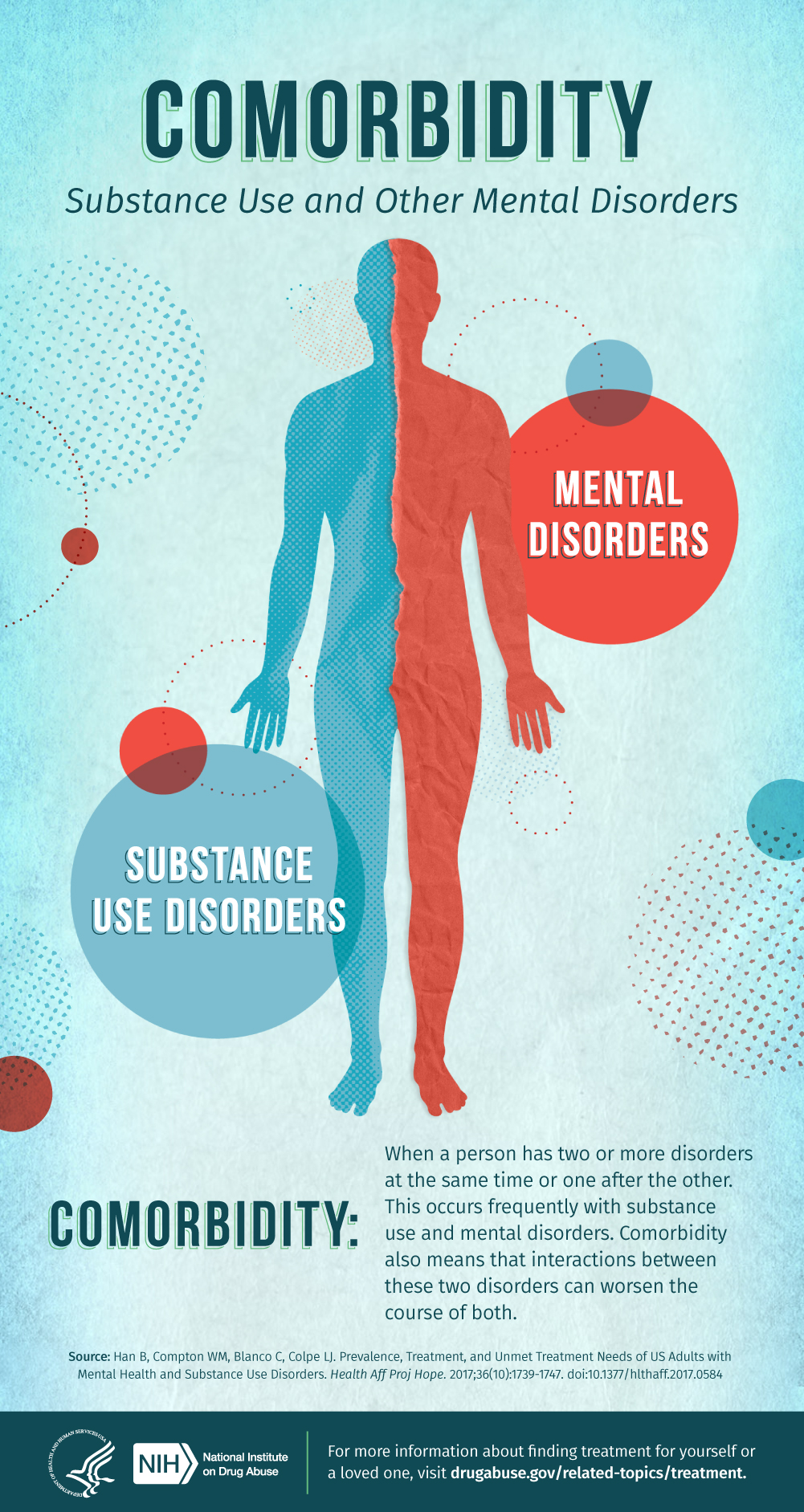
Does your men's SUD programs include a mental health focus?
Caitlin StowellGUEST
Absolutely.
Caitlin StowellGUEST
These days, you pretty much have to.

Mark EhrenkranzGUEST
Same thing with any sort of, you know.
Mark EhrenkranzGUEST
opioids or cannabis and people get addicted to that, that's called a substance use disorder, SUD.
Mark EhrenkranzGUEST
Same thing.
Mark EhrenkranzGUEST
And then when people, what's known as a relapse, if they're going along very well and all of a sudden they couldn't take it anymore and they picked up the drink or they picked up the drug and that conventionally is called a slip or I fell off the wagon or which is like an ancient term from like the 20s in America anyway.

Brent McGintyHOST
So fascinating for the, for the list.
Brent McGintyHOST
I kind of, when I started my career in about 2007 or so, Percy at DMH kind of came over from the department or from the Senate and, and came kind of over to DMH and was really kind of watching, I think this transformation of our system and incorporating medications and hearing presentations on that and, And obviously, you know, Mark was a leader in bringing SUD and behavioral health together, as well as then kind of took over for the department as a department head.
Brent McGintyHOST
But that whole time he kept kind of pushing and then subsequent leaders and kind of me hearing about, you know, Missouri is a national leader and people are asking, how did you get people to adopt medications? And Mark said, well, we just basically the science is there and we demanded programs do it.
Brent McGintyHOST
And, you know, states were just in shock that we were getting the rates we were getting.
38 MINS LATER
Brent McGintyHOST
So just, we're running out of time, but like one last question to kind of end on.
Brent McGintyHOST
We just had a board meeting today.
Brent McGintyHOST
We had an SUD committee report talking about a new type of opiate that's hitting the marketplace.
Brent McGintyHOST
It has a different name.

Alan MorrisseyHOST
And we do have to leave it there, but I really appreciate both of you giving us your perspectives on that.
Alan MorrisseyHOST
That's Michael Lacey there, facilitator and coordinator of the Dual Diagnosis Co-Current Mental Health and Substance Dependency Group and the Substance Use and Mental Health Project at Bushy Park Residential Treatment Centre.
Alan MorrisseyHOST
And also with us, the Midwest-based addiction counsellor, Michael Guerin.

Larry SextonGUEST
And unfortunately, the stigma behind having those disorders leads folks to self-medicate so that they can feel all right.
Larry SextonGUEST
But then that also comes with the abuse and the need for more medication and everything and then creates that SUD problem or, you know, makes the mental health problem even worse before they go reach out for help.
Todd HolstHOST
Well, I appreciate you chatting with us, Larry.
Todd HolstHOST
I mean, this is, like I said, this is such a great event.

Heather de BlasiGUEST
so when you look at two people let's say kids even if you have two twins right or even a brother and sister different age groups but they grow up in the exact same environment they don't always get the exact same experience so even though the environment is the same so it's how they also cope with things it's how they are as a person it's the resiliency skills that maybe they have adapted versus the other sibling hasn't adapted And it could also be the role in the family that they take on.
Heather de BlasiGUEST
A lot of times with more than one sibling, especially if you have a parent who is, say, a substance user, and they have a substance use disorder, one of the children may take on a parentified role.
Heather de BlasiGUEST
And they may step up to be that parent where the other child doesn't
speaker_7GUEST
have
5 MINS LATER
Heather de BlasiGUEST
And what does that look like for them? And it could be different for every single person.
Heather de BlasiGUEST
The person who uses substances can put them down and walk away.
Heather de BlasiGUEST
The person who has, say, a substance use disorder or a gambling disorder can't walk away from it.
Heather de BlasiGUEST
It's not the person who walks into a casino and may lose, say, $1,000.

Annie RogersHOST
[upbeat music] Welcome to the Attention-Deficit Disorder Expert podcast series by ADDitude Magazine.
Carol FleckHOST
[upbeat music] Everyone, I'm Carol Fleck, and on behalf of the ADDitude team, I'm delighted to welcome you to today's ADHD Experts presentation titled ADHD Treatment and Substance Use Problems, the Latest Research on Stimulants and SUD.
Carol FleckHOST
Leading today's presentation is Dr. Brooke Molina and Dr. Brian D'Onofrio.
Carol FleckHOST
Dr. Molina is a professor of psychiatry, psychology, pediatrics, and clinical and translational science at the University of Pittsburgh.

Zack CarusoHOST
Today is Tuesday, August 18th, and I'm Zach Caruso.
Zack CarusoHOST
Our lead story this week is in the Journal of Substance Use and Addiction Treatment and is titled Reflections on the Preparation, Implementation, and Sustainability of a Virtual SUD Clinic, a Public Health Response to the Opioid Epidemic.
Zack CarusoHOST
This exploratory case study identifies barriers, facilitators, and implementation needs during the phases of implementation of a virtual SUD clinic offering low-barrier MOUD across the state of Texas.
Zack CarusoHOST
From January 2022 to September 2023, researchers conducted 10 individual and 11 group periodic reflections with 16 individuals to evaluate implementation activities, clinic processes, and events during the rollout of the virtual clinic.
Zack CarusoHOST
In the preparation phase, participants emphasized the importance of strong leadership, effective workforce and technology infrastructure, staff training, and mission alignment.
Zack CarusoHOST
Psychiatric comorbidity, particularly depression and anxiety, was frequently observed in clinical and high-risk samples.
Zack CarusoHOST
Evidence regarding psychological interventions remains limited but suggests potential benefits.
Zack CarusoHOST
Our next article is in drug and alcohol dependence and is titled Substance Use and Epigenetic Age Acceleration, Associations with Alcohol, Tobacco, Illicit Drugs, and SUD Severity.