Styria
Region in AustriaWikipedia
117
MENTIONS
52
EPISODES
45
PODCASTS
Search complete. 117 mentions across 52 episodes found for "Styria".
Sep 18, 2026

Pamela NagamiNARRATOR
In 1564 Pope Pius IV was as good as his word, and confirmed the concession of the cup which the estates of Lower Austria had obtained in 1555, and those of Upper Austria in the following year.
Pamela NagamiNARRATOR
In Styria, Carinthia, and Carniola the great majority of the nobility together with nearly all the burghers of the towns were Protestants.
Pamela NagamiNARRATOR
In Bohemia, where ultraquism was tending to merge into Lutheranism, while the more advanced doctrines of the Bohemian brethren continued to be widely cherished, Ferdinand I likewise soon found a policy of mere repression impossible.
speaker_4ADVERTISER
Forget whatever plans you have this weekend because you're staying at home and playing on SpinQuest.
6 MINS LATER
Pamela NagamiNARRATOR
These fears, however, proved premature.
Pamela NagamiNARRATOR
In his hereditary dominions, Maximilian, while exacting securities of fair treatment for the Catholics, permitted the estates of the laity to order the services of the church in accordance with the confession of Augsburg.
Pamela NagamiNARRATOR
But even in Lower Austria he refrained from establishing a Protestant consistory under his own headship and instructed the Lutheran Kutrius, who drew up the service book both here and in Styria, to include in it as many passages as might be from the Roman ritual.
Pamela NagamiNARRATOR
In Austria above the ends, the estates maintained a more complete religious independence.

Ben TuckerNARRATOR
There was Marina lying dead, and on her bosom the dead albatross shot through the heart, and circling round, in circles sometimes wide and sometimes narrow, a male albatross bewailing the death of his mate.
Ben TuckerNARRATOR
End of Section 5 The Egg of the Albatross THE TRUE STORY OF A VAMPIRE Vampire stories are generally located in Styria.
Ben TuckerNARRATOR
Mine is also.
Ben TuckerNARRATOR
Styria is by no means the romantic kind of place described by those who have certainly never been there.
Ben TuckerNARRATOR
It is a flat, uninteresting country, only celebrated by its turkeys, its capons, and the stupidity of its inhabitants.
Ben TuckerNARRATOR
Vampires generally arrive at night, in carriages drawn by two black horses.
Ben TuckerNARRATOR
Irregular features, large mouth and large wild eyes.
Ben TuckerNARRATOR
I was by way of being naughty, not so naughty as Gabriel in the opinion of Mademoiselle Vernert.

speaker_5NARRATOR
End of Part 4 part v the rosamunde overture to his death in eighteen twenty three the same year in which schubert brought to paper the operas die verschwornen and firabras he wrote for a romantic play called rosamunde princess of cyprus by the half-mad poetess helmine von chaise a number of vocal and instrumental pieces which are perhaps the best-loved samples of theatre music he ever composed the play itself was a sorry failure had exactly two performances though schubert gallantly assured the unfortunate librettist that he considered her work excellent and the book was lost the overture we call rosamunda to-day and which had been written originally for the magic harp was never used to preface the work whose name it has borne for generations was in fact not entitled rosamunda till later the one with which schubert had prefaced helmin von chaise's drama was the introduction he had used for alfonso und there are lovely and striking things in the rosamunda score a soprano romanza an ensemble for spirits and two other choruses as well as some ballet music and various the third interlude brings us that deathless melody which seems to have haunted schubert's imagination and reappears in the slow movement of the a minor quartet and the b flat impromptu for piano the rosamunde score disappeared from view for more than forty years and the tale of its recovery belongs to the exciting legends of music like most legends even this one needs to be qualified the story usually goes that the englishmen george grove and arthur sullivan in eighteen sixty seven came upon the manuscript in a dusty cupboard at the viennese home of dr edward schneider husband of schubert's sister what the two british explorers found in that famous closet were the complete orchestral and vocal parts of the score which made clear the correct sequence of the pieces and supplied certain accompaniments which had been missing but grove himself records that besides the entraux in b minor and b flat and the ballet numbers two and nine which we had already acquired in eighteen sixty six we had found at mr spina's the publisher an antrchta after the second act and a shepherd's melody for clarinet bassoon and horn but we still required the total number of pieces and their sequences in the drama for all his difficulties and privations schubert's health had been up to eighteen twenty three perhaps the least of his worries but early in that year he had been ailing and soon his illness took a serious turn confined to his lodgings at first he was presently taken to the general hospital he became darkly despondent and wrote to his friend leopold kuppelwaser a mournful letter in which he alluded to himself as a man whose health can never be right again whose fairest hopes have come to nothing who wishes when he goes to sleep never more to waken who joyless and friendless passes his days a little later he sets down in his diary the bitter reflection there is none who understands the pain of another and none his joy nor is this by any means his only pessimistic entry the exact nature of schubert's malady has never been definitely established even by modern medical authorities who have studied the case we know that his hair fell out and that till it grew in again he had to wear a wig some have hinted at irregularities of one sort or another at different times he complained of headaches vertigo and high blood pressure his condition was to improve greatly in the course of time but he was never again wholly well the melancholy of schubert was surely not lessened by his dealings with publishers who took the most despicable advantage of his woeful inexperience in business affairs diabelli once persuaded him to sign over for a mere eight hundred gulden all his rights in a set of works the publisher and later his successor made twenty-seven thousand gulden on the wanderer fantasy for piano alone schubert got exactly twenty about ten dollars another viennese firm went so far as to ask him to sell them his compositions at the most favourable starvation rate paid a beginner while publishers in germany were if anything even worse yet when schubert had a few dollars in his pocket he thought nothing of spending a part of it on tickets for himself and his friend bauernfeld for a concert by paganini whose spectacular violin playing excited schubert quite as much as it did the rest of vienna in spite of illness and discouragement many of his works at this time rank among his very greatest there are first of all the twenty-three songs of the schnermuller encycl the unhappy story of the love of a youth for a miller's daughter who jilts him for a green-clad hunter containing such lyrics as wohin und ungeduld which have virtually become folk-songs the piano sonatas opus one forty three the famous octet written for an amateur clarinetist count and after a few hearings put away and forgotten till eighteen sixty one and that sweetest and most tender of schubert's chamber music works the a minor quartet with its lovely rosamunde melody the indescribable lilt of its minuet and the slovic and hungarian influences in its finale he was to experience more of these influences the summer of eighteen twenty four for at that time he went once again to the esterhazes and zealots the country air and the quiet life of the place in addition to regular meals and comfortable quarters exercised a recuperative effect moreover the countess caroline was now a slightly young lady of seventeen Possibly Schubert was not indifferent to her charms, but his letters to his father and his brother Ferdinand make it clear that he was homesick and often decidedly blue.
speaker_5NARRATOR
Still, he wrote some admirable music at Zeilitz—the Divertissement à l'anglaise, the stunning Grand Duo for four hands, the Sonata for arpeggione and piano, and thoughts of a great symphony more imposing than any he had composed so far began to occupy his mind he had heard also that beethoven intended to give a concert at which his ninth symphony would be produced and he wrote to kuppelwieser if god wills i am thinking next year of giving a similar concert in may eighteen twenty five vocal invited schubert to accompany him on an outing which proved to be the longest trip he was ever to take franz brought with him a number of compositions finished and unfinished among them settings of songs from sir walter scott's the lady of the lake of which the ave maria is one of the best-loved things he ever wrote the friends revisited the haunts of their previous journey but this time vogel took schubert further to gemuden on the transee in the salzkammergut to salzburg then southward as far as badgastein all along the way there was no end of music-making charming new acquaintances hospitable folk who threatened to kill the travellers with kindness schubert cut up all manner of music capers on occasion one of his favourite pranks was to give a performance of der erlkennig on a comb covered with paper he was careful not to forget his parents in an affectionate letter to his father he asked chaffingly if his brother ferdinand had not been ill seventy-seven times again and surmises that he has surely imagined at least nine times that he was going to die as if death were the worst thing that could befall one he suddenly exclaims growing serious could ferdinand only look on these divine lakes and mountains which threaten to crush and overwhelm us he would no longer love this puny human life but deem it a great happiness to be restored for a new life to the inscrutable forces of the earth it is a question how pleased father schubert was with this pantheistic declaration of his sons when franz was in zeitz ferdinand had warned him against discussing religious matters when writing to his parent curiously enough schubert passed through salzburg without any allusion to his idol mozart in gastein he found time to complete the great piano sonata in d and to write several songs one of them a setting of ladislaus pricker's die allmacht a grandiose musical duplication of that statement of faith he had fearlessly written his father at this health resort furthermore schubert is supposed to have completed that famous gastein symphony of which nobody has ever been able to find a trace all manner of theories have been advanced with respect to this mysterious work some of schubert's intimates have insisted that the composer worked on it in the summer of eighteen twenty five and intended it for a benefit concert by the vienna society of the friends of music others charged the society with negligence resulting in the loss of the score while still other investigators have imagined that the grande duo composed a year earlier might be an unorchestrated version of the missing score or else that schubert had merely contemplated a revision of the early sixth symphony with which he had never been satisfied whether the hypothetical gastein or the subsequent c major of eighteen twenty eight represents the great symphony to which schubert aspired we have no way of knowing in eighteen twenty six a conductor's post had become free and although schubert had not long before turned down an organ position offered him probably because he did not like the idea that his freedom might be curtailed he did apply for this conductorship attracted by the moderate salary it promised it was not schubert who got it but the popular mediocrity joseph weigel how little schubert harboured jealousy is clear from his satisfaction that the job had gone to so worthy a man as weigel then a vacancy occurred at the ktnerthor theatre the candidate for a minor conductor's post had to submit a specially composed dramatic air for the singer nanette and of course schubert did so but the schtner we are told demanded changes in the music and schubert peremptorily refused to make them in spite of passionate entreaties and a spectacular fainting fit by the soprano the composer pocketed his score and walked off coldly announcing i will change nothing so things remained about as they were true the friends of music in eighteen twenty five had permitted him to substitute for a viola player at some of their concerts after first rejecting his plea to do so on the ground that he made a living of music and that professionals were ineligible thus when in the summer of eighteen twenty six he would have liked to go once more to linz there was no money for him to go anywhere he had to content himself with the suburb of verring and to aggravate matters it rained for a month all the same eighteen twenty six was a year of significant works in june schubert composed within ten days his last string quartet the vast and almost orchestrally colored one in g major during the preceding winter he had written what is undoubtedly the most familiar of his quartets the d minor the slow movement of which consists of those variations on his song death and the maiden which are among the supreme variations of musical literature further there were the melodically blooming b flat trio for piano violin and cello the lovely g major piano sonata the rondo brillante for violin and piano and numerous songs among them the two shakespearean settings hark hark the lark and who is sylvia almost everybody who has ever interested himself in schubert is familiar with the fable about the origin of hark hark the lark how one day schubert picked up a volume of shakespeare in a waring beer garden and how after skimming through cymbeline he suddenly exclaimed a lovely melody has come into my head if only i had some music paper whereupon a friend drew some staves on the back of a bill of fare and the song was instantly written unfortunately for legend the song was written originally not on a bill of fare but in a small note-book including a number of other compositions one of them on the reverse side of the very page containing hark hark the lark what seems a likelier story is that schubert wrote it in schwenn's room while the latter was trying to draw his picture march eighteen twenty seven was the date of beethoven's death schubert was one of the torch-bearers at the funeral back from the waring cemetery he went with some friends to a coffee-house in the inner town the gathering was in a solemn yet exalted mood schubert filled his glass and drank a toast to him we have just buried then another to him who will be next did that strange clairvoyance in which michael vocal once said he composed his music show him in mystic vision that his own sands had just twenty months more to run but before this he still had a little worldly journey to make and a pleasant one karl pachtler a cultured and musical lawyer and his wife marie leopoldine an accomplished pianist whom beethoven admired invited schubert to visit their home in graz the honored guest was to have been beethoven but shortly after his passing maria koschak expressed a desire to know schubert whose importance she fully realized so accompanied by his friend yenger who some years earlier had brought him his notice of membership in the styrian musical association he went in september eighteen twenty seven to graz in the home of the pachtlers schubert passed a happy carefree inspiring time there was no end of sociability music picnics excursions he was even introduced to a local celebrity named franz schubert who had a reputation as a folk-song singer and who rendered styrian folk melodies for his viennese namesake the music society gave a concert in honour of its visiting member who also went to the theatre with anselm httenbrenner to hear an early opera of meyerbeer's though after the first act he protested i can't stand it any longer let's get out into the air he played his own alfonso und estrella to an operatic conductor who made wry faces over its difficulties so that schubert ended by leaving the score with pachtler who kept it until eighteen forty one several songs were composed at graz also a quantity of waltzes and galops franz left graz promising to come back another year which was never to dawn it is probably unlikely that at the gathering of the schubertians on new year's eve schubert realized as poignantly as some may imagine that he was standing on the threshold of his last year on earth but the winter was hard there was little or no money and it seemed likely that the good stepmother up in the rousseau schoolhouse had to help out with occasional pennies from the household stocking to be sure a little earlier the friends of music had elected schubert a member of the representative body of the society and the composer felt much honoured but such honour would not buy a meal even when half-starved schubert contrived to work between january and november eighteen twenty eight he turned out some of the most incomparable songs he ever composed yes even though planning to give up such trifling matters as leader issued posthumously under the collective title schwanngesang the great symphony in c major of the heavenly length the score is dated march eighteen twenty eight a cantata the three wonderful piano sonatas in a c minor and b flat that towering monument of chamber music the c major string quintet the mass in e flat he had written a so-called misa solemnis in a flat as far back as eighteen twenty besides a quantity of smaller masses and much else he devoted himself to the e flat mass with such intensity that joseph httenbrenner described him as living in his mass the supreme leader one is tempted to say the most grandiose and prophetic of all the odd six hundred he wrote are the settings of six poems from heinrich heine's buch der lieder which had just come to his notice they are am meer der doppelgänger die stadt der atlas and ihr bild anticipations of the whole song technique of the nineteenth century the c major symphony is without its like in the whole range of music and by one magical pen stroke schubert made it even a greater thing than when he first conceived it the autograph score shows that by the substitution of a d natural for a g in the theme of the first allegro the composer transformed what was scarcely more than a rhythm into one of the great symphonic subjects of all time but he was never to hear the work it came to a rehearsal by the friends of music was found too difficult and overloaded and on the composer's own advice dropped in favour of the sixth the little c major and yet it was the one symphony of its time which could have endured the sunlight of beethoven undiminished and unashamed exactly a year after beethoven's death schubert at last gave the concert of his own works that he meant if god wills to give some day it was the urging of bauernfeld and other friends which finally caused things to materialize the idea was that if all went well schubert might offer his private concert annually and the rascally publishers would at long last be singing a different tune his friends rallied nobly to his aid vogel sang josephine frlich's pupils gave louise gosmer's birthday serenade there was chamber music and a male chorus the musikverein hall was packed encores were innumerable the applause would not end and best of all there was a clear profit of more than half a hundred dollars the only fly in the ointment was that no critics came though several foreign publications carried flattering accounts but the little wealth quickly ebbed away again there were futile bickerings with publishers schubert would have liked to go to graz once more but baden and excursions to nearby grinzing and sievering were as much as he could allow himself headaches and other symptoms of a year before troubled him alarmingly his doctor advised him to leave the stuffy centre of town for some place where he could have plenty of fresh country air so in september he moved to a house in the neu of eden section where his brother ferdinand had taken rooms the building was new still damp and unhealthy aside from a pilgrimage to haydn's tomb at eisenstadt and some annoyances with the publishers shot both september and october were uneventful suddenly while at dinner one day in the lichtenthal neighborhood of his berth he threw down his fork shouted that the food tasted like poison and refused to eat further probably nobody suspected a serious illness let alone a fatal one at that schubert did not immediately take to bed he dragged himself a few days later to hear a requiem by his brother shortly before which he had been fearfully agitated by a first hearing of beethoven's c major minor quartet yet so little does his condition appear to have worried him that he went to the theorist simon sechter to arrange for instruction and counterpoint his intimates and a study of handel's oratorios having supposedly persuaded him of his deficiencies in that branch of technique nothing came of the project by november twelfth he wrote schober that he is sick has eaten nothing in eleven days and can do no more than crawl from his bed to a chair and he implores his friend to procure him reading matter preferably fenimore cooper the sickness made rapid inroads though he continued to toy with the operatic scheme of the count of gleichen and carefully corrected the proofs of his winderise cycle soon he became delirious and the doctors held a consultation the diagnosis was nerve fever or typhus the same sickness which had carried off his mother pathetically he begged his brother not to leave him in this corner underground and when the anguished ferdinand assured him he was in his own room he insisted no that's not true beethoven is not here a little later he turned his face to the wall and murmured we are told here here is my end the days of affliction wrote father schubert to ferdinand lie heavy upon us and he presently made in the old list of births and deaths in the schubert family the entry with the mortuary cross franz pater wednesday november nineteenth eighteen twenty eight at three o'clock in the afternoon of nerve fever buried saturday november twenty two eighteen twenty eight it was ferdinand who decided that his brothers should in death be brought closer to beethoven than ever he had been in life and since beethoven was not there where schubert would ordinarily have been buried ferdinand saw to it that franz should rest as close to his divinity as an intervening grave or two permitted they were destined in the process of time to lie closer still for threescore years later the two masters were exhumed and placed side by side in two of those graves of glory in vienna's great central cemetery music has buried here a rich treasure but fairer hopes read the epitaph which grillpartzer set on the original tomb in the waring cemetery fairer hopes indeed how could grillpartzer know what even the wisest musical heads of his day did not know eleven years after schubert died all paris was said to be astounded at the posthumous diligence of a song-writer who while one might think his ashes repose in vienna is still making eternal new songs it took decades to reveal the incalculable richness of this treasure and even now the world is not finally aware of its fullness another deathless master robert schumann gave the world schubert's c major symphony redeeming it from ferdinand's heaped but silent hoard of unprinted nay unsuspected scores who can do anything after beethoven the half-starved convict student had wistfully asked here was at least one triumphant answer made by schubert himself at a distance of only eight months from his early tomb End of Part 5 End of Schubert and His Work by Herbert Pazer

Roman HorvathGUEST
Yeah, Austria in general, a, a great, uh, wine-growing country, and reds, uh, from Burgenland can cont- create Blaufränkisch wines.
Roman HorvathGUEST
Styria with amazing Sauvignon Blanc wines that you don't find that often on the export markets because they are pretty high priced, but they are extremely mineral terroir-driven.
Roman HorvathGUEST
Here on the neighboring regions of Wachau, Kamptal, Kremstal, Wagram, Traisental are doing, doing great.
Roman HorvathGUEST
Vienna as, as a capital, one of the top wine regions in Austria with this Gemischtesatz.

Pamela NagamiNARRATOR
The head of the family, the Emperor Rudolf II, was Archduke of Austria, a name which in those days was used simply to indicate the Archduchy itself and not the group of territories which are at present ruled over by the Austrian sovereign, and he was also King of Bohemia and of Hungary.
Pamela NagamiNARRATOR
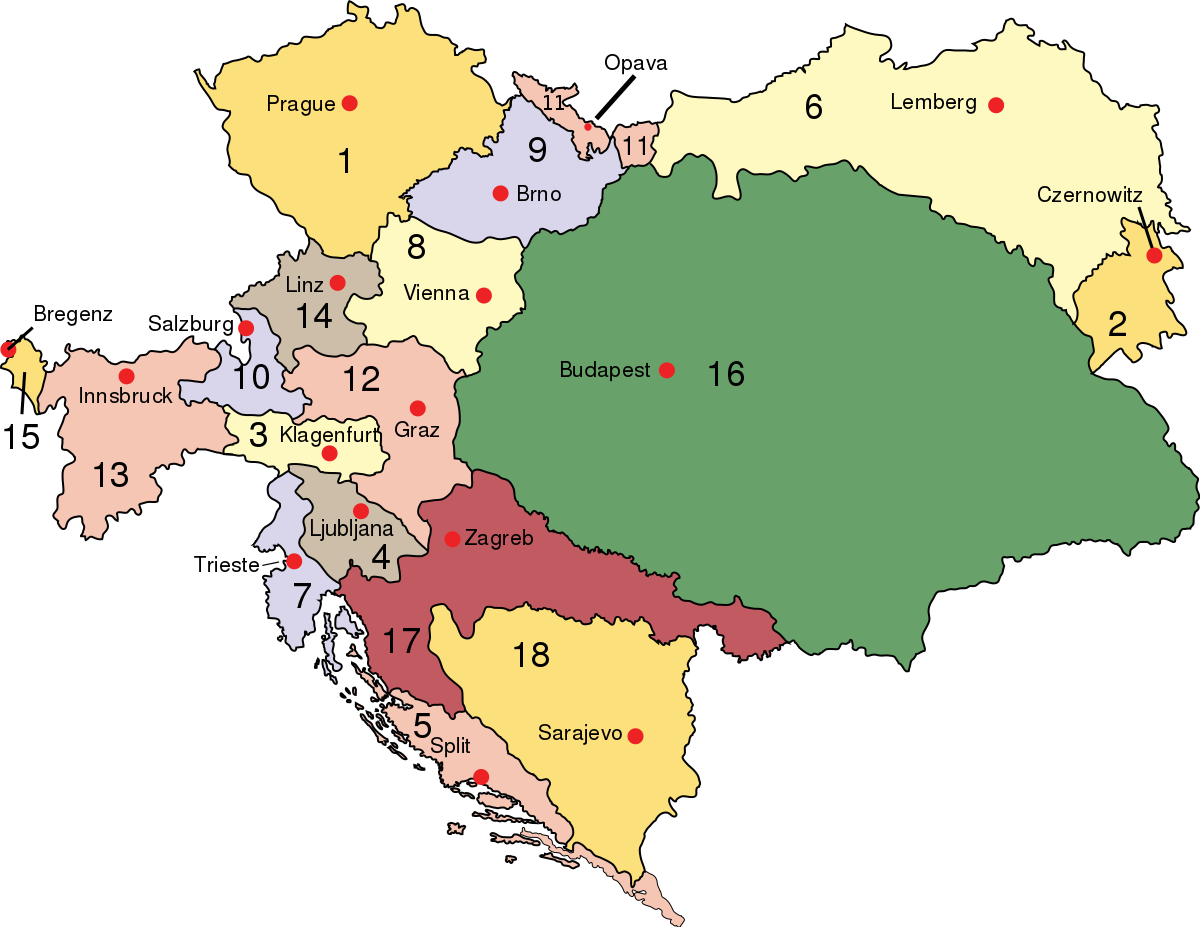
His brother Maximilian governed Tyrol, and his cousin Ferdinand ruled in Styria, Carinthia, and Carniola.
Pamela NagamiNARRATOR
The main difficulty of government arose from the fact that whilst every member of the family clung firmly to the old creed, the greater part of the population, excepting in Tyrol, had adopted the new, that is to say, that on the great question of the day, the subjects and the rulers had no thoughts in common.
Pamela NagamiNARRATOR
And this difficulty was aggravated by the further fact that Protestantism prospered mainly from the support given to it by a powerful aristocracy, so that political disagreement was added to the difference in religion.
9 MINS LATER
Pamela NagamiNARRATOR
If ever there was a moment for resistance, if resistance was to be made at all, it was this.
Pamela NagamiNARRATOR
The arguments of the court were undoubtedly strong, but a skillful lawyer could easily have found technicalities on the other side, and the real evasion of the royal charter might have been urged as a reason why the court had no right to press technical arguments too closely.
Pamela NagamiNARRATOR
The danger was all the greater as it was known that by the renunciation of all intermediate heirs the hereditary right fell upon Ferdinand of Styria, the man that had already stamped Protestantism out in his own dominions.
Pamela NagamiNARRATOR
Yet in spite of this the diet did as it was bidden, and renounced the right of election by acknowledging Ferdinand as their hereditary king.

ToddHOST
And where are you in Austria?
Gerhard WieslerGUEST
So at the moment, we are living in Styria, which is in the southern part of Austria.
ToddHOST
Okay.
Gerhard WieslerGUEST
But we originally, we lived in Vienna, so I met my wife in Vienna.
Gerhard WieslerGUEST
Uh, then we went on a around the world trip for one and a half years.
Gerhard WieslerGUEST
And after the trip, we decided to come back to Austria for family reasons.
Gerhard WieslerGUEST
Uh, but it, we didn't want to go back to the big city, so we were looking for a property on the countryside, and in the end, we decided on Styria.
Gerhard WieslerGUEST
So now we have a 200-year-old farmhouse with a property of roughly 15 acres around it, which is great for archery.

speaker_1HOST
They manufacture complex components and subassemblies for German industrial giants.
speaker_1HOST
The moment demand softens in Germany, machinery falls silent across factories in Styria, Upper Austria, and Lower Austria.
speaker_1HOST
The second pressure on business is energy.
speaker_1HOST
In the closing weeks of summer, prices for fuel, electricity, and gas rose again compared with the previous year.
18 MINS LATER
speaker_6NARRATOR
The state recommends a fee of around one euro per hour, but the final price is set by each municipality.
speaker_6NARRATOR
The crucial shift is that responsibility for finding a childcare place now rests with the authorities, not with bewildered parents.
speaker_6NARRATOR
In neighboring Styria, doctors have drawn attention to yet another childhood health concern as the new school year begins.
speaker_6NARRATOR
Approximately one in three schoolchildren has a visual impairment, most commonly shortsightedness.

Corinna HarrodHOST
He's one of the only people in this whole story who never once fell for what came next.
Corinna HarrodHOST
Born on the 16th of August 1950 in Judenburg, Styria, to a young Austrian woman named Theresia.
Corinna HarrodHOST
His father was an American GI stationed in occupied Austria, and he met her in Trieste, left, never met his son.
Corinna HarrodHOST
He's actually called Johann Unterweger, but was called Jack.

ZenaHOST
And then on the eastern side, you have all the wine regions.
ZenaHOST
And it goes down to Bergenland and Steiermark all the way up to north in Kamptal.
ZenaHOST
and where we are today, and we're going to go to Wachau, and we've already been to Wagram, and so, like, all these different wineries.
ZenaHOST
And Lower Austria, Nieder-Ost...

speaker_3NARRATOR
Please enjoy responsibly.
speaker_1NARRATOR
refused for he got little money from the serenades and choir work in which he took part though at other times it left him the wish for leisure for study and composition the quiet loneliness in that little dark garret under the tiles the complete lack of those things which can entertain an unoccupied mind and the utter piteousness of his condition at times led him into such unhappy reveries that he was driven to his music to chase away his troubles at one time says gys his thoughts were so gloomy or more likely his hunger was so keen that he resolved in spite of his prejudices to join the servite order so that he could get sufficient to eat this however was only a fleeting impulse for his nature would never allow him to really take such a step his disposition happily inclined to joyousness and saved him from any serious outbreaks of melancholy when the summer rain or the winter snow leaking through the cracks of the roof awoke him he regarded such little accidents as natural and made sport of them for some time he was not positively sure what course to pursue and he projected a thousand plans which were abandoned almost as soon as they were formed for the most part hunger was the motive that urged him on to rash resolves, for instance, a pilgrimage to the Maria Cloister in Styria.
speaker_1NARRATOR
There he went at once to the choirmaster, announced himself as a chapel scholar, produced some of his musical sketches, and offered his services.
speaker_1NARRATOR
The choirmaster did not believe his story and dismissed him, as he became more importunate, saying, There are too many ragmuffins coming here from Vienna, claiming to be chapel boys, who can't sing a note.
42 more episodes mention Styria.
Create an account to see the whole feed, search across every transcript, and follow the entities you care about.