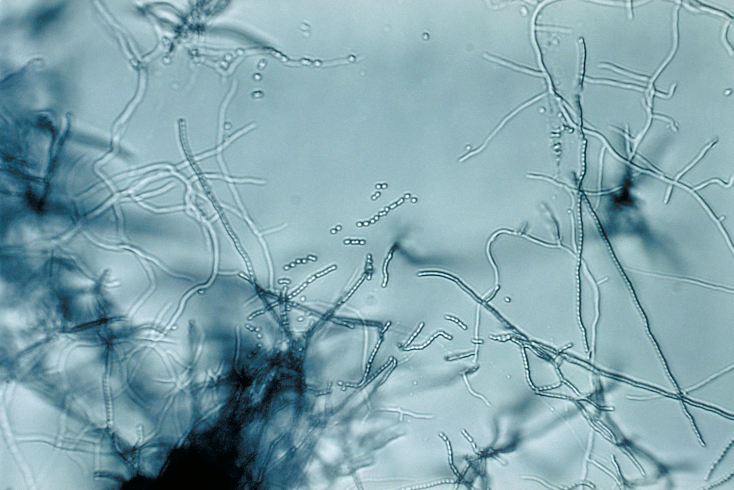
Streptomyces
BacteriaWikipedia
9
MENTIONS
5
EPISODES
4
PODCASTS
Search complete. 9 mentions across 5 episodes found for "Streptomyces".
Oct 14, 2026

KellyHOST
Just like penicillin comes from a mold, some of these drugs also have natural origins.
KellyHOST
Tetracyclines are produced by Streptomyces bacteria.
KellyHOST
They bind to the 30S ribosomal subunit, which shuts down protein production.
KellyHOST
A common example you've probably heard of is doxycycline.
KellyHOST
In nature, organisms compete for space and nutrients, and many produce chemicals that inhibit or kill competitors.
KellyHOST
Many antibiotics are derived from soil bacteria such as Streptomyces, and one of the most important discoveries in medicine you should be aware of is penicillin.
KellyHOST
It dramatically reduced deaths from bacterial infections.
KellyHOST
Today, many drugs are semi-synthetic or fully synthetic, meaning they've been modified or designed to improve infectiveness or reduce resistance.

speaker_3HOST
How does that work in practice?
speaker_4HOST
Well, researchers can now identify these silent clusters digitally, clone the specific gene sequences, and splice them into a highly optimized surrogate host like a specialized strain of Streptomyces or E. coli.
speaker_3HOST
Wow.
speaker_4HOST
Or alternatively, they can use CRISPR-based tools to insert genetic promoters right next to the silent cluster in the original organism, artificially forcing the bacteria to turn the genes on and manufacture the compound.

Sabine HazanGUEST
Look at Japan, okay? And this is like, I'll just go off topic there.
Sabine HazanGUEST
Um, Japan has a good soil, right? Streptomyces is in their soil, right? Which is the fermented product, which is the bacteria, fermented product that made ivermectin, right? Their soil is rich.
Sabine HazanGUEST
Is the soil rich in Japan, and is that why they're surviving COVID? Because their foods are getting the right microbes, and therefore they're eating the right microbes, and therefore they're healthier? We have, in America, you know, removed, killed our soils.
Sabine HazanGUEST
How do you replenish that, you know? And then so you're doing-- And this is the problem, and this is the problem we keep doing, right? We keep killing.

Vincent RacanielloHOST
[laughs] But they make a deletion mutant of the fungus lacking the beauvericin synthase gene, and those fungi do not cause disease in tomato.
Vincent RacanielloHOST
They do not decrease the growth of Streptomyces, uh, in the soil.
Vincent RacanielloHOST
Uh, just o- a few more ex- one more experiment here.
Vincent RacanielloHOST
So the beauvericin also does other things to the soil.
Vincent RacanielloHOST
It, it changes the, the, the community diversity, so it's not just hitting Streptomyces.
Vincent RacanielloHOST
And so what else is going on? They, they want to, uh, find out.
Vincent RacanielloHOST
They do an experiment which shows that there are consequences of this beauvericin-induced microbiota shifts.
Vincent RacanielloHOST
So it's not just Streptomyces, it's, it's other things as well.