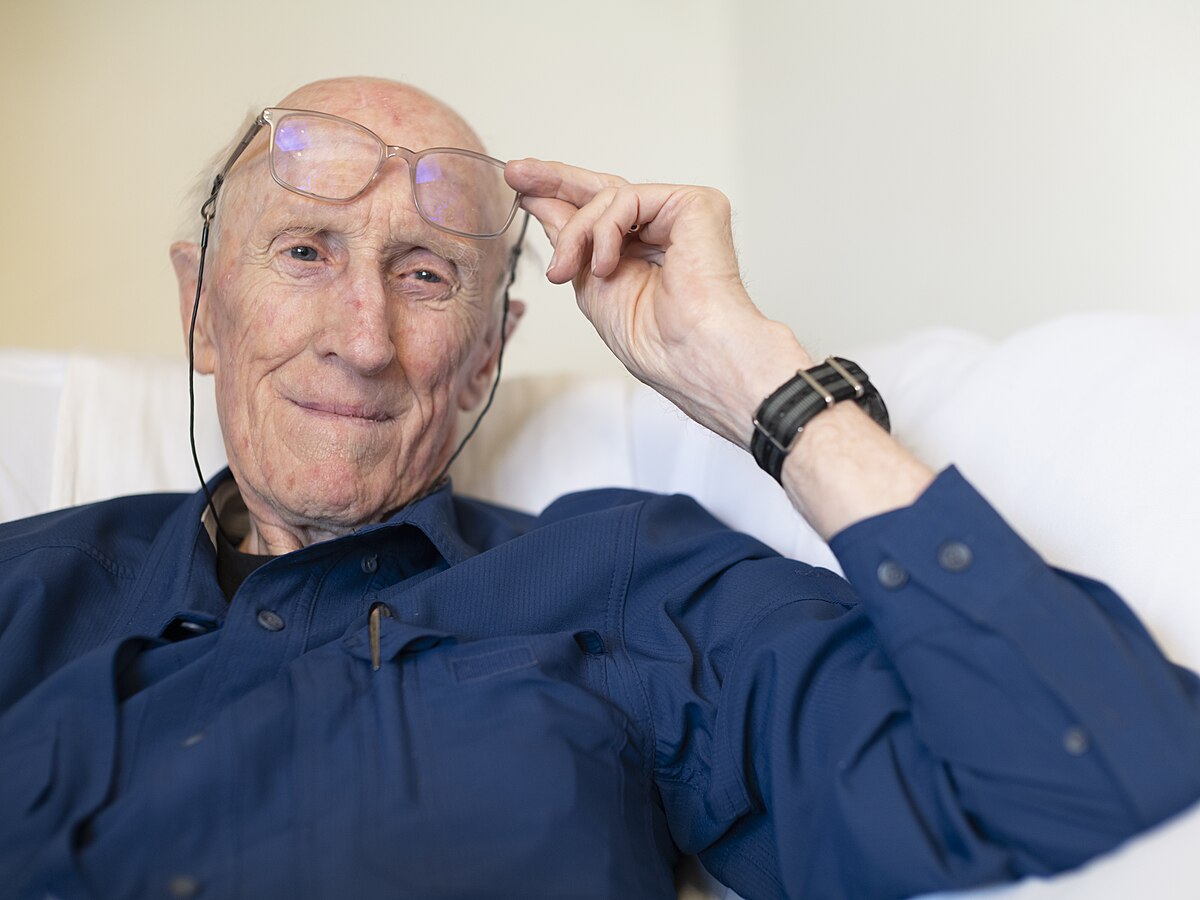
Stewart Brand
American writerWikipedia
48
MENTIONS
31
EPISODES
30
PODCASTS
Search complete. 48 mentions across 31 episodes found for "Stewart Brand".
Oct 30, 2026

Mike RapiciHOST
And I'll read a little bit more about Mr. Illich's From the biographical note, we're actually using an Internet source, the publication of this short speech essay in the Co-Evolution Quarterly in winter 1983.
Mike RapiciHOST
And this was Stuart Brand's description of what Ivan Illich does.
Mike RapiciHOST
And it will set up.
Mike RapiciHOST
It'll set up maybe the essay for our listeners and perhaps set up our discussion as well.

Rich BonnifaceNARRATOR
When the system shut down each day for maintenance, there was an hour of volleyball.
Rich BonnifaceNARRATOR
When Stewart Brand came by to write about it for Rolling Stone, he said it was the busiest scene he had seen since the acid tests, and a good many of the people at those terminals were deadheads.
Rich BonnifaceNARRATOR
A group from the lab and the research institute down the road had been going to see the band together since the ballroom days.
Rich BonnifaceNARRATOR
Naturally they started using the lab's electronic mail to sort out rides to the shows.
Rich BonnifaceNARRATOR
He had been, years before, one of two doctors riding along with the Hog Farm Buses, Wavy Gravy's traveling commune.
Rich BonnifaceNARRATOR
Later he founded a charity called SEVA, and he had a company that sold computer conferencing equipment, which is a very dry phrase for a machine that lets strangers talk to each other in writing.
Rich BonnifaceNARRATOR
Brilliant went to Stewart Brand, the man who had made the Whole Earth Catalog, with an idea.
Rich BonnifaceNARRATOR
Put the catalogue online, he said, and let the readers write back about the items in it.

Philip SchellekensGUEST
The present used to be the unimaginable future.
Philip SchellekensGUEST
I think it was Stuart Brand who said this.
Philip SchellekensGUEST
And then someone else, I think Alan Kay said, the best way to predict the future is to shape it.
Philip SchellekensGUEST
So let's do that.

Mark LynasGUEST
I also wrote a book called The God Species way back in 2013, which considered geoengineering and this idea of humans as planetary stewards, if you like.
Mark LynasGUEST
And that was based on Stuart Brand's sort of epithet of we are as gods and have to get good at it.
Mark LynasGUEST
So, yeah, I took that and sort of tried to figure out what it would mean to be the god species and actually to try to get good at it, which is, again, something you cover a lot, of course, in this show.
Dan MillerHOST
Well, we're going to actually cover some of the other things, the wheat planet and the other things you're working on currently.

John PotashGUEST
and um you know including experienced sergeants and he went from that to uh exploring psychedelics in new york city before he's all of a sudden out in san francisco was one of the merry pranksters on this bus and the um number two guy to uh ken kesey who he was often driving the bus you know it was just helping organize everything, was also a pilot in the Marines in Vietnam when it was just shooting and getting started in Vietnam.
John PotashGUEST
And Stuart Brand, his name was, said there was a number of military in the Merry Pranksters, so it was easy to organize things.
John PotashGUEST
So poor Ken Kesey is just being manipulated like hell because the acid makes you more suggestible, they found.
John PotashGUEST
And so that's part of it all.

Joseph L. FlatleyGUEST
It's a toolkit, right? It could be applied to anything.
Joseph L. FlatleyGUEST
The episode of my podcast that was just released today is kind of a look at Bay Area cyber culture in the 90s, like Mondo 2000 and Wired Magazine and Stuart Brand, who was kind of the nexus for connecting all these people in the counterculture with all these people in business.
Joseph L. FlatleyGUEST
And the Mondo people who I...
Joseph L. FlatleyGUEST
You know, like, are you serious? Wrote the introduction to my Timothy Leary book.

Salim IsmailPANELIST
Bottleneck, I think, is the wrong way of doing this or talking about this.
Salim IsmailPANELIST
I think the framing I would use is Stuart Brand's pace layers.
Salim IsmailPANELIST
where he has a bunch of nested layers saying government metabolism moves slower than culture and technology has a very fast metabolism.
Salim IsmailPANELIST
I think that's the bigger problem.

Joseph L. FlatleyHOST
And he is to have an outsized impact in the coming years.
Joseph L. FlatleyHOST
The WELL, which stands for Whole Earth Electronic Link, was a bulletin board system run out of the Sausalito offices of Stewart Brand's Whole Earth Software Review.
Joseph L. FlatleyHOST
The board's early users included computer hackers, science fiction writers and reporters from the New York Times, the San Francisco Chronicle, and Rolling Stone magazine.
Joseph L. FlatleyHOST
The Well was established as a self-governing, self-designing experiment.
Joseph L. FlatleyHOST
On one end was the counterculture's dream of liberated consciousness.
Joseph L. FlatleyHOST
On the other end, the emerging world of networked computing.
Joseph L. FlatleyHOST
And Stewart Brand and his cronies were standing in the middle, making the introductions.
Joseph L. FlatleyHOST
Now let us return to that house on Shasta Road.

BettyHOST
Exactly.
BettyHOST
And the article pairs that with Stuart Brand, the Whole Earth Catalog guy, from his book How Buildings Learn.
BettyHOST
All buildings are predictions.
BettyHOST
All predictions are wrong.

speaker_3UNKNOWN
And there's a lot of...
speaker_3UNKNOWN
You know, if you've got Stewart Brand here, they, they know.
speaker_3UNKNOWN
Ward Cunningham, who invented wikis, he, he's on one of the 380 invitation lists.
Quentin HardyGUEST
Mm-hmm.
21 more episodes mention Stewart Brand.
Create an account to see the whole feed, search across every transcript, and follow the entities you care about.