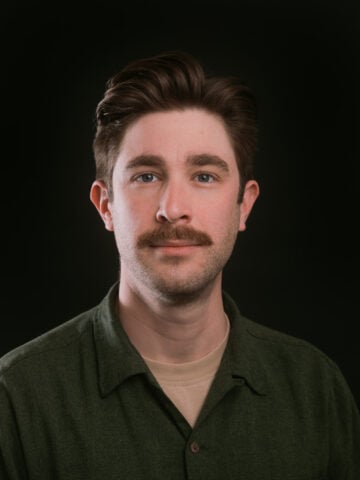
Steven Monacelli
Journalist
11
APPEARANCES
4
PODCASTS
May 3, 2026
Hazel AcaciaGUEST
And I, I wonder if that is part of what she is doing, is she is, like, trying to intentionally get people to flex that muscle, and to think about where else they could flex that muscle, you know?
Steven MonacelliGUEST
I mean, I think, you know, the pairing of the stories answers one of those questions pretty clearly, with the bridge being Le Guin's own words in the couple paragraphs we mentioned earlier.
Steven MonacelliGUEST
You know, I think it's, in at least Le Guin's mind, that someone like Lia is someone who walked away, but also you could view what she's done as fighting, as being imprisoned and resisting the oppression that she's faced.
Steven MonacelliGUEST
So in, in that sense, I, I think it, you know, takes many forms, but you know, that's why I think of it as an allegory, right? I mean, it's, it's less about the actual act of walking away.
Steven MonacelliGUEST
Because within, you know, the boundaries of this allegorical frame, like, we have the choice to either, you know, accept the social peace and the, all those nice things that rely on that suffering, or to refuse it as the basic assumption.
Steven MonacelliGUEST
That doesn't necessarily mean actually removing yourself from the world, because that's not possible within the context of actually doing anything in the world.
17 MINS LATER

Hazel AcaciaGUEST
It's choosing the path that often feels lonely when everyone else around you is literally buying into it all.

Steven MonacelliGUEST
The idea of walking away, in my mind, when I consider the pairing of these stories, is that it's not just this single monumental act.
Steven MonacelliGUEST
And what happens after that is... kind of, you know, up to you and the responsibility of your choice.
Steven MonacelliGUEST
And then we see that later, you know, with Laia and, you know, she's grappling with all of her choices and is kind of criticizing herself for being a bad anarchist, quote unquote, and the imperfectness of her choices.
21 MINS LATER


Michael PhillipsGUEST
In this episode, we'll look at the career of Judge James Ho, his alarming right-wing judicial activism, and the strange history of the Fifth Circuit Court of Appeals, which since the Reagan administration has transformed from one of the most liberal judicial bodies in the country to perhaps the scariest court in America.
Steven MonacelliGUEST
Given its current reactionary reputation, it's a bit ironic the Fifth Circuit Court convenes in a New Orleans courthouse named after John Minor Wisdom, a New Orleans native who formed a critical part of a quartet of liberal judges known simply as The Four, who in the 1950s and 1960s issued a series of revolutionary rulings that advanced the civil rights movement.
Steven MonacelliGUEST
He quickly formed an alliance with three other liberal judges on the Fifth Circuit, Albert P. Tuttle of Georgia, John R.
Steven MonacelliGUEST
Rivas was the only Democrat on the squad that came to be known as The Fifth Four.
Steven MonacelliGUEST
These liberals typically prevailed over the conservatives serving on the Fifth Circuit, and at that point, the Fifth Circuit heard cases from states that spread across the core of the one-time Confederacy, including Louisiana, Florida, Alabama, Mississippi, Texas, and Georgia.
5 MINS LATER

Michael PhillipsGUEST
In this episode, we'll look at the career of Judge James Ho, his alarming right-wing judicial activism, and the strange history of the Fifth Circuit Court of Appeals, which since the Reagan administration has transformed from one of the most liberal judicial bodies in the country to perhaps the scariest court in America.
Steven MonacelliGUEST
Given its current reactionary reputation, it's a bit ironic the Fifth Circuit Court convenes in a New Orleans courthouse named after John Minor Wisdom, a New Orleans native who formed a critical part of a quartet of liberal judges known simply as The Four, who in the nineteen fifties and nineteen sixties issued a series of revolutionary rulings that advanced the civil rights movement.President Dwight Eisenhower appointed Wisdom to the bench in nineteen fifty-seven.
Steven MonacelliGUEST
He quickly formed an alliance with three other liberal judges on the Fifth Circuit, Albert P. Tuttle of Georgia, John R.
Steven MonacelliGUEST
Rivas was the only Democrat on the squad that came to be known as the Fifth Four.
Steven MonacelliGUEST
These liberals typically prevailed over the conservatives serving on the Fifth Circuit, and at that point, the Fifth Circuit heard cases from states that spread across the core of the one-time Confederacy, including Louisiana, Florida, Alabama, Mississippi, Texas, and Georgia.
Steven MonacelliGUEST
This placed the Fifth Four on the front lines of the civil rights struggle.
5 MINS LATER
Michael PhillipsGUEST
In this episode, we'll look at the career of Judge James Ho, his alarming right-wing judicial activism, and the strange history of the Fifth Circuit Court of Appeals, which since the Reagan administration has transformed from one of the most liberal judicial bodies in the country to perhaps the scariest court in America.
Steven MonacelliGUEST
Given its current reactionary reputation, it's a bit ironic the Fifth Circuit Court convenes in a New Orleans courthouse named after John Minor Wisdom, a New Orleans native who formed a critical part of a quartet of liberal judges known simply as the Four, who in the 1950s and 1960s issued a series of revolutionary rulings that advanced the civil rights movement.
Steven MonacelliGUEST
He quickly formed an alliance with three other liberal judges on the Fifth Circuit, Albert P. Tuttle of Georgia, John R.
Steven MonacelliGUEST
Rivis was the only Democrat on the squad that came to be known as the Fifth Four.
Steven MonacelliGUEST
These liberals typically prevailed over the conservatives serving on the Fifth Circuit, and at that point, the Fifth Circuit heard cases from states that spread across the core of the one-time Confederacy, including Louisiana, Florida, Alabama, Mississippi, Texas, and Georgia.
33 MINS LATER
speaker_12SOUNDBITE_SPEAKER
University officials have determined that drag shows are sexist for the same reason that blackface performances are racist, and Supreme Court precedent demands that we respect university officials when it comes to regulating student activities to ensure an inclusive educational environment for all.

speaker_8ADVERTISER
So diving into the specifics of the case a little bit more, Steven, who exactly are these defendants and how did they come together?
Steven MonacelliGUEST
So there are a total of 19 people who have been arrested and charged with various crimes in relation to this case.
Steven MonacelliGUEST
But those that are on trial this week are nine that have not pled guilty to any charges, and they were all in attendance of this protest.
Steven MonacelliGUEST
The group of folks that, you know, gathered outside of Prairieland on, on July 4th, they are, you know, from this sort of activist milieu in the North Texas area.
Steven MonacelliGUEST
So, you know, folks that had ties to leftist organizing w- of one form or another.
Steven MonacelliGUEST
Some had been members of the Socialist Rifle Association, some had been affiliated with an organization I believe is now defunct.
Steven MonacelliGUEST
Calling it an organization may not even be the correct way, but a, a group called the Elm Fork John Brown Gun Club, which is a part of this sort of decentralized movement of, uh, organizations similar to that across the country that are leftist in nature and have sort of engaged in this practice of bringing firearms, when legal, to protests or, uh, sort of, you know, drag shows, for example, that have been targeted by protests in places like Texas and other states.
18 MINS LATER
speaker_8ADVERTISER
Stephen, could you walk us through some of the kind of individual allegations against these alleged Antifa members?

Steven MonacelliGUEST
the person who is more than willing to set aside all of the good things about whatever field they nominally belong to in order to, like, push some sort of quackery or ideology.
45 MINS LATER
Steven MonacelliGUEST
They're playing this role that is predefined for them and they know what they're supposed to do and they just go along with whatever, uh, the request is.
Steven MonacelliGUEST
Oh, well, I mean, (sighs) I, I think, um, you know, if you haven't listened to the Viral Texas series I did for Cool Zone, um, on It Could Happen Here, please go listen to that.
Steven MonacelliGUEST
Um, I just wrote something angry for MSNBC about the awful, catastrophic Texas flood.
Steven MonacelliGUEST
So, uh, yeah, check that stuff out and, um, I guess, you know, there's one question, um, I neglected to ask, or I don't think you got into Robert, but was there anything in common that a lot of these people, um, that Dr.
Steven MonacelliGUEST
Death testified against? Did they have anything in common? Like was there a thread? I mean, were they-
Michael PhillipsGUEST
While CRT is studied in some graduate schools and law programs, it hasn't been taught at the grade school level where the outrage has been directed.
Steven MonacelliGUEST
That's certainly not the case in Texas, which influences curriculums across the nation due to its large population and purchasing power of textbooks.
Steven MonacelliGUEST
Rather, it was to refashion CRT into a sort of political cudgel, something that Rufo admitted to in a series of tweets in 2021.
Steven MonacelliGUEST
"The goal is to have the public read something crazy in the newspaper and immediately think critical race theory," Rufo wrote.
Steven MonacelliGUEST
"We have decodified the term and will recodify it to annex the entire range of cultural constructions that are unpopular with Americans." End quote.
Steven MonacelliGUEST
On Fox News, Newsmax, and other right-wing media outlets, Rufo convinced parents that instead of teaching kids reading, writing, and arithmetic, public school teachers were using CRT to brainwash white children into hating themselves and goading Black children into hating white people.
speaker_23UNKNOWN
Thank you.
Michael PhillipsGUEST
Kennedy would be central in the imagination of what came to be known as the QAnon movement.
Steven MonacelliGUEST
Q, or QAnon, developed a huge following that interpreted these confusing and often contradictory posts as actually revealing a secret global cabal that included top Democrats like Hillary Clinton and liberal celebrities like Tom Hanks.
Steven MonacelliGUEST
These people were all accused of being a part of a child sex trafficking ring in which the young victims were molested and tortured, and in some interpretations of the theories, had their precious bodily fluids harvested to manufacture a drug known as adrenochrome, a drug that produces hallucinations and supposedly grants eternal youth.
Steven MonacelliGUEST
These stories resembled anti-Semitic legends about Jews kidnapping Christian children before Passover in order to use their blood in matzo bread, a trope or canard, really, that has become known as blood libel.
Steven MonacelliGUEST
In the QAnon mythology, Donald Trump plans to conduct mass arrests and executions of these satanic child molesters in an event called The Storm.
Steven MonacelliGUEST
Trump has winked and nodded to the QAnon movement, encouraged believers, and even incorporated some of its key slogans and imagery in speeches and posts online, such as, "Where we go one, we go all." And as I've reported for Rolling Stone, a cult-like spinoff group of QAnon believers have repeatedly gathered at Dealey Plaza, the site of JFK's murder, to wait for the prophesized return of JFK and his son, JFK Jr., who both are dead, but these believers think were either miraculously resurrected or never actually died, and have been secretly working with Trump to take down the aforementioned global satanic pedophile cabal.
Steven MonacelliGUEST
Some believe that when JFK and JFK Jr. finally reveal themselves, a sort of kingdom of righteousness will reign, and good will ultimately prevail over evil.
speaker_23UNKNOWN
I think fluoride is on the way out.
Michael PhillipsGUEST
In 1873, anti-vice activist Anthony Comstock of Connecticut successfully lobbied the Congress to pass legislation, known as the Comstock Act, that made distribution through the US Mail or common carriers of birth control devices, or any information about birth control or how to obtain an abortion, a federal crime.
Steven MonacelliGUEST
Social reformers noted that bearing multiple children often shorted women's lives and drove their families into poverty, and they battled for women to gain control over their reproductive choices.
Steven MonacelliGUEST
One such reformer was Margaret Sanger of New York, the daughter of a radical Irish father and mother who died at 50 after bearing 11 children.
Steven MonacelliGUEST
Sanger coined the term birth control in 1915, and just before World War I, launched a movement that promoted contraception as sexual and political reform aimed to reduce human misery.
Steven MonacelliGUEST
She had to flee the country in 1914 because her publication, The Woman Rebel, intentionally defied the Comstock law and promoted the distribution of information about contraception through the United States Postal Service.
Steven MonacelliGUEST
When she returned to this country, she was an international celebrity for women's rights and free speech, and she opened a family planning clinic, which faced continual police harassment.
Steven MonacelliGUEST
Lack of access to birth control, Sanger complained, led to abortion, as she has said in a 1957 interview with reporter Mike Wallace on CBS News.
20 MINS LATER