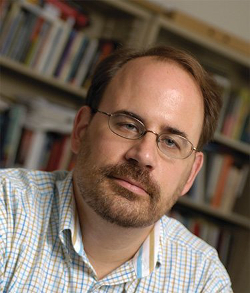
Steven Teles
Political scientist
5
APPEARANCES
4
PODCASTS
Jul 31, 2026


Glenn LouryHOST
There is no objective, uh, adjudication of the dispute between these two historians, or is there? Uh, and can you distinguish between, uh, the clean, uh, analytic, uh, uh, a-affirmation of what we're doing at the university in the case of the scientists on the one hand, and the more interpretive, value-laden, uh, subjective, uh, disputes such as what we might have between a left-wing and a right-wing historian on the other? And does your concern apply to both?

Steven TelesGUEST
So one is, I think it's easy to underestimate how, how much disciplinary content there is in history, right? That is, you know, norms of what counts as appropriate, um, uh, you know, use of sources, um, how you piece a narrative together, right? There, there are things that are associated with being a good historian, right? So it's not a complete free-for-all, um, but it doesn't look like physics either.
Steven TelesGUEST
Um, in the case of history, I do think that's where some degree of diversity is particularly important because, you know, what a historian does is they knit together often a very different set of- Sources, um, and various different methods, and they can tell-- they can piece the narrative together in different ways.
Steven TelesGUEST
And unless you have somebody who's got a strong motivated reason to wanna go into the footnotes and go back into the archive and check everybody's, uh, stuff, right, then that work isn't gonna happen.
Steven TelesGUEST
It's more likely to happen if you actually have an affirmative normative disagreement.
Steven TelesGUEST
You might remember, you know, a few years ago, there was a book, um, uh, that touched on our gun debate about, you know, how often they, um, you know, the early colonists owned, uh, firearms and all that, all that.
25 MINS LATER
Glenn LouryHOST
Uh, do you have that same sense? Are you trying to, uh, chart a new course, uh, intellectually, or are you trying to reform, uh, the incumbent departments by, uh, creating an example of something that you hope they will want to emulate?


Steve TelesGUEST
So one, you know, in some ways, I don't have a problem with a sort of philosophical idea of moderation, right? Uh, and again, one problem is there's lots of things that are, like, going underneath this label that probably ought to get distinguished, right? So my probably favorite philosopher is Michael Oakeshott, and I think of Michael Oakeshott, in a way, as a philosopher of moderation, right? He has this idea that what he calls the pole of faith and the pole of skepticism, which are a little bit of what we can think of as, um, the left and right, uh, should be understood at their best as being in what he calls a sort of magnetic tension, right? That they can kind of correct, um, the, the vices, uh, of each other, right? And so a properly organized polity, um, is one that has a sort of equilibrium between, between these two, right? And so the thing that that's produced at the level of the whole system is moderation, right? Um, and that's one of the reasons why our constitutional order forces people into deliberation, right? We don't have a parliamentary system where we just, you know, have one election, you add it all up, and then that party gets total dictatorial powers until the next election, right? Uh, which is a way to organize democracy, and it's got benefits, right? Um, but ours doesn't.
Steve TelesGUEST
Um, and one story about what the problem with American government is, is we have a system that's designed to produce cross-party kind of governance in order to correct our, our vices and bring out our virtues, but we're trying to run it like a parliamentary system, right? And so a theory of what our thing is wrong is that we don't have that kind of moderation.
Steve TelesGUEST
Now, it's not obvious that that moderation is produced by just having a bunch of people who themselves are moderate, which is a kind of paradox maybe.
36 MINS LATER
Steve TelesGUEST
Right? The higher moderation is the thing saying, what we're trying to do is, like, intrude this thing onto the...
Steve TelesGUEST
So back in twenty seventeen, I wrote a book with also Niskanen Center fellow, uh, Brink Lindsey, uh, called The Captured Economy, which made the argument that, in fact, lots of our economy, as it's in the title, right, was in fact captured by entrenched incumbent interests.
Steve TelesGUEST
Um, and that there was a, a political economy to that, um, that there was actually ways that, um, whether it was in finance or medicine or intellectual property or housing, you could go down the, down the, um, down the list.
Steve TelesGUEST
Our economy over, you know, over the decades had become more and more brittle, that the creative destruction that's supposed to be kind of the argument for capitalism had ground to a halt, and so y- you could see this in lots of different, different areas, um, and that people should be mad at that, right? Um, that that was an actual breakdown of our politics and that we, um...
Steve TelesGUEST
And that people had rightly kind of could sense that a lot of our inequality was downstream from politics.
19 MINS LATER

Steven TelesGUEST
So one, as I've been thinking a lot about varieties of abundance recently, um, that there are, in fact, abundances across the entire left-right spectrum.
Steven TelesGUEST
So we just nominated, um, uh, somebody for mayor of New York who at least claims to be in the category of, you know, left abundance or red plenty or whatever you wanna call it, right? Um, you know, who does recognize that there are all these coalitional problems.
Steven TelesGUEST
I always, I always say, you know, the joke is you can't get to full communism through the National Environmental Protection Act.
Steven TelesGUEST
If you really wanna do really big things through public ownership, you're not gonna be able to do it through the whole panoply of procedural systems we created in the 1970s.
8 MINS LATER

Yascha MounkHOST
When you ask them about cutting some of that regulations, at some level of abstraction, they might say yes, but the moment that means that they might be looking at a windmill somewhere in the distance from the house, they say, "This is terrible and destroying our landscape, and we absolutely don't want that." Um, aren't there a lot of cultural normies who are gonna have a pretty strong NIMBY instinct, whether out of sort of cultural predilection or just out of material self-interest, because, for example, they already are those incumbents who own a home?


Steve TelesGUEST
Um, one is, especially in the housing, the basic problem with localism is where you have governments that are making decisions about their jurisdiction, but the influenced parties are in some other jurisdiction, right? So again, in lots of the- these cases, um, you know, the thing that's a problem is the people who would benefit from new housing are not only, like, they're in the jurisdiction, but they're not participating, right? They're somewhere else.
Steve TelesGUEST
And so that's a particular problem of, of, uh, putting decisions that have enormous national or even s- or, or statewide implications in the hands of local governments.
Steve TelesGUEST
As you were saying, we do have this basic, really corrosive problem of incredibly low participation in local elections and, um, especially when you get to pretty small jurisdictions, the other problem is we don't have functional, um, party competition in most of those places.
7 MINS LATER