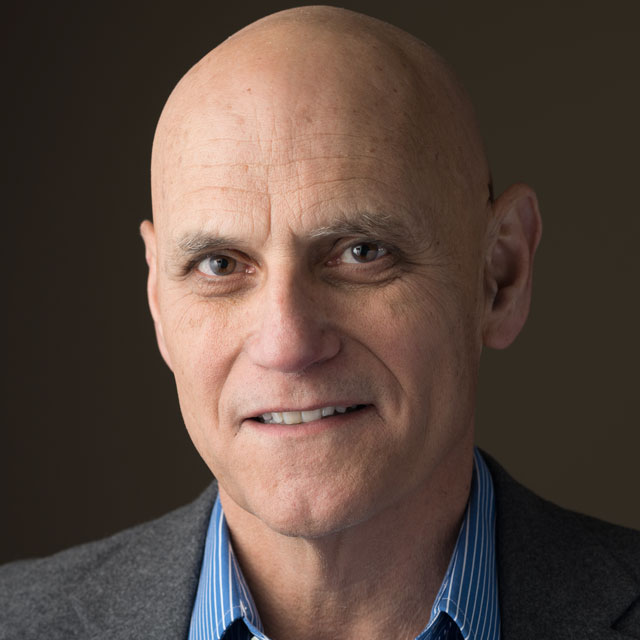
Steven C. Hayes
American clinical psychologistWikipedia
18
MENTIONS
10
EPISODES
10
PODCASTS
Search complete. 18 mentions across 10 episodes found for "Steven C. Hayes".
Oct 24, 2026

Todd SchmenkHOST
The first is Reimagining ACT in Rhode Island, December 12th and 13th, 2026 at Bryant University.
Todd SchmenkHOST
This is a two-a-day event with Stephen Hayes, who's going to be focused on the future of ACT, process-based therapy, and the extended evolutionary metamodel, or EEMM.
Todd SchmenkHOST
Try saying that three times fast.
Todd SchmenkHOST
This training is especially exciting because it's going to look at ACT not simply through a traditional hexaflex, but through a broader process-based frame.
Todd SchmenkHOST
After that, the next event is the ACT Integrated Process-Based Act Across Schools and Methods in Los Angeles in February of 2027.
Todd SchmenkHOST
Sounds like a pretty cool event.
Todd SchmenkHOST
This training is also Stephen Hayes and focuses on the use of the extended psychological flexibility model to integrate across the schools and their methods.
Todd SchmenkHOST
So we're going to figure out how to apply this to a school system.

Finn AdamsHOST
I'm off for coffees for the moment anyway.
Finn AdamsHOST
So founded in 1986 by American behavioral therapist Stephen Hayes.
Finn AdamsHOST
Have you heard of him? ACT actually has two central goals.
Finn AdamsHOST
acceptance and commitment.
Finn AdamsHOST
And my cat also agrees, who is unusually vocal this morning.
Finn AdamsHOST
So ACT, thinking in images.
Finn AdamsHOST
The founder Stephen Hayes often uses metaphors to help illuminate ways of dealing with stress.
Finn AdamsHOST
And I'm going to come back to that after we hear from our sponsors right here on TT Radio.

Amen KaurHOST
And here's the third piece.
Amen KaurHOST
A psychologist called Steven Hayes developed something called the acceptance and commitment theory, and the research behind it shows there is a difference between having a thought and being a thought.
Amen KaurHOST
When you say, "I am the woman with the abandonment wound," the wound becomes you.
Amen KaurHOST
When you say, "I notice I am having a thought that I am the woman with the abandonment wound," suddenly there's space, and that's how we can then become the CEO that actually runs the intelligence system rather than it becoming part of the system, that our abandonment wound take over us.

Karin Anderson AbrellHOST
It's interesting, we've had conversations with psychologists.
Karin Anderson AbrellHOST
One is, uh, Steven C. Hayes, the originator of ACT-
TimGUEST
Yeah
Karin Anderson AbrellHOST
...

Julia FeltonHOST
And the commercial cost shows up as people who quietly stop bringing you the decisions you claim you want them to bring.
Julia FeltonHOST
So let's just talk a little bit about acceptance and commitment theory, which was designed by Steven Hayes, a psychologist, and he describes values as directions and goals as destinations, and you can arrive at a goal and tick it off, but you can never complete a value because the value is the direction that you keep choosing to travel in.
Julia FeltonHOST
And this is a distinction that really helped me get some clarity around this, and it also helped me explore what freedom actually means to me as a directive rather than a phrase.
Julia FeltonHOST
And I realized that I had welded my values to one particular arrangement.

Lou LasprugatoGUEST
Sure.
Lou LasprugatoGUEST
So I guess as a start with Steve Hayes, he's considered the originator of ACT, and he developed it along with colleagues in the 1980s.
Lou LasprugatoGUEST
Originally, it was called comprehensive distancing because it was focused on one primary process, which is cognitive diffusion, which we can get into later.
Lou LasprugatoGUEST
And then later and then gradually he developed the model and integrated different processes into the model throughout the 80s and early 90s.

Marlon MorganHOST
I've had a few opportunities to go to, you know, some of, some of the more efficiency focused companies of our time and talk to people who are just absolutely in love with the idea of, uh- Optimization ... optimization and how can I, you know, get the most out of or be the most efficient, effective in my life.
Marlon MorganHOST
But what I share with them, and, and I mentioned this to you earlier, is I talk about s- some of the work, um, from Dr. Steven Hayes around acceptance and commitment therapy.
Marlon MorganHOST
And Dr. Steven Hayes is one of, uh, sort of like a living legend forefather when you talk about, um, psychology.
Marlon MorganHOST
And he's someone that when I first learned about ACT, is what they call it, um, I, I thought, "Wow, this is as close as it gets to, like, cognitive behavior therapy that also allows me to have a purpose in life and can be mindful." And one of the activities that we do with some of these high-level executives to get them to- Reflect ...
Marlon MorganHOST
reflect and maybe even, and I think it could come across boring at first, is to choose from a list of values that they would wanna hear, things that they would wanna hear said about them at their eulogy, which some of them, uh, just won't do it.

Brian JohnsonHOST
That was her heroic vow, and she has honored that through the creation of DBT, dialectical behavior therapy.
Brian JohnsonHOST
In our last episode, we talked about Steven Hayes' acceptance and commitment therapy.
Brian JohnsonHOST
Well, dialectical behavior therapy and acceptance and commitment therapy are both third wave cognitive behavioral therapy modalities, and they're very, very similar.
Brian JohnsonHOST
They were created for different purposes.
Brian JohnsonHOST
Marsha for suicidal ideation, et cetera.
Brian JohnsonHOST
And for Steven Hayes, he had panic attacks.
Brian JohnsonHOST
Same thing.
Brian JohnsonHOST
The hero struggles.

Forrest HansonHOST
It's not saying, "Oh, I'm accepting this, so I'm not seeking to change it." From our conversation that we had ages ago with Dr.
Forrest HansonHOST
Steve Hayes, who's the creator of acceptance and commitment therapy, uh, he had this great quote in it.
Forrest HansonHOST
"What we're talking about here is not tolerance or resignation.
Forrest HansonHOST
Acceptance is to receive as if a gift." And I think that that's probably the simplest way to put it, to receive something as if a gift.

Eva GoldGUEST
Um, and then other...
Eva GoldGUEST
So there was EFT and then, um, Steven Hayes' Acceptance and Commitment Therapy.
Eva GoldGUEST
So none of these are the same as Gestalt therapy.
Jeff GuentherHOST
Mm-hmm.