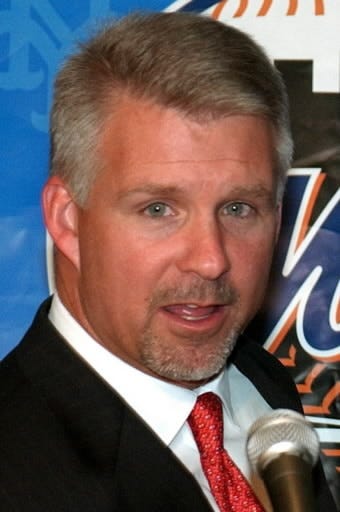
Steve Phillips
American baseball analyst
7
APPEARANCES
6
PODCASTS
Jul 23, 2026


Steve PhillipsGUEST
And so they're saying that even the Civil War itself, and we talk about, again, Lincoln was, you know, all these books written about Lincoln, and he's like this great unifier.

Mark ThompsonHOST
Is there a tonic for this? I mean, is there, what is the, what do you suggest? And from what possible perspective can this be diluted anyway?

Steve PhillipsGUEST
Well, I started on the book in the context of the... asking what happened to the commitments around racial justice after George Floyd was killed.
Steve PhillipsGUEST
You had this kind of brief period of racial reckoning, lots of commitments, Walmart sang an ad, Black Lives Matter, and people making these different commitments, including Walmart, $100 million for a racial justice center, et cetera.
Steve PhillipsGUEST
And then obviously everybody has backtracked, which is important to note, predated this current Oval Office occupant coming into office.
Steve PhillipsGUEST
then you have the ferocity of these attacks from the current administration so and we had the underlying inequality which everybody had said that they cared about six years ago now you have all these attacks on any remedy to the inequality and so what are we saying about what that inequality and now we okay with that and then do we think that white men are overrepresented because they're smarter so this was the basic premise In this process, it became clear to me that I do feel we've reached the limit of the approach that we had been taking, which was to focus on the underrepresentation of people of color and of women.
6 MINS LATER
Steve PhillipsGUEST
How do you advance electoral politics? How do you connect to the civil rights movement? What's the modern-day expression of the work from the civil rights movement? And so what Reverend showed was how all those things come together, and that, you know, I, I, I dedicated the, the Brown is the New White in part to Reverend Jackson, saying that he had demonstrated the power and potential of a movement for social and economic justice in the electoral sphere.

Richard ChuHOST
He was one of the, um, first Black billionaires that bought a company and did a number of acquisitions to build a billion-dollar company, and he wrote a book that was titled Why Should White Guys Have All the Fun? And it's kind of interesting that, that Steve has written this book, um, uh, Are White G- Are White Men Smarter Than Everybody Else? Um, did, did, uh, Reg's book have any impact on you indirectly or directly? And tell us a little bit about, a lot, a lot about your, uh, your most recent, uh, writing.

15:17

Why do you think the weak finish, I don't want to call it a third place finish because it's not definitive yet with so many votes uncounted, but certainly didn't propel him to the front of the pack.
Steve PhillipsGUEST
There's some level there's a tactical issue is that, and I'm not quite sure who was advising Tom or whether or not, and it's always interesting for really almost a decade that Tom has been running ads since he started running for president and, you know, the next gen work and the environmental piece.
Steve PhillipsGUEST
And you know, when he was doing the ads in like around 2018, 2020, I'm Tom Steyer.
Steve PhillipsGUEST
And it made a certain amount of sense when he was raising his name ID to run for president.
Steve PhillipsGUEST
But clearly after $200 million of spending your numbers, not moving in the polls, you should switch it up a little bit.

Steve PhillipsGUEST
So we're having this conversation, the country is engaged at this point in time in the context of the 250th anniversary of the Declaration of Independence.
Steve PhillipsGUEST
And so the two pillars that I use in my book to frame this moment and this analysis and this inquiry are the Declaration of Independence and the George Floyd racial reckoning moment.
Steve PhillipsGUEST
And so the founding document of this country, even though most people couldn't participate when it was actually founded, is that we hold these truths to be self-evident that all are created equal, and then was reaffirmed in Lincoln's Gettysburg Address during the Civil War, where he was saying that we went to war, literal war, to defend the proposition that all are created equal.
Steve PhillipsGUEST
And so it's not a question of a radical composition or radical articulation that should be scaring people off.
Steve PhillipsGUEST
And the other aspect of this is that we should be forcing a conversation and a dialogue.
7 MINS LATER
Mila AtmosHOST
How does power, not persuasion, work? And how can it help a multiracial democracy defend the gains and build on them?


Steve PhillipsGUEST
And I do believe that the majority of people, m- not the overwhelming majority, but the majority of people want this to be a, a country, right, we're talking about where there is preferences for none and justice for all, in that we don't, and, and this is also th- just substantively and then strategically and tactically, is that-Nobody, even including the sitting president of the United States, is going to or can or will de- say that there should be preferences for white men.
Steve PhillipsGUEST
Like Erica Green of The New York Times did this interview, or she was part of a team that interviewed the president around race, and he talks about, you know, things being unfair to white men, et cetera.
Steve PhillipsGUEST
But I was struck by how, uh, timid he was in that regard for somebody who clearly has been so forceful around articulating the grievances of, uh, whites and white men, that he was qualifying his language and saying different things.
Steve PhillipsGUEST
So even he, with all of his power and all of his, uh, you know, positioning, won't forcefully say that we should be preferring white men.
13 MINS LATER


Steve PhillipsGUEST
I mean, look, if you look back over the last two weeks, I think it's been from the business standpoint, a up and down narrative, you know, on the downside, the video, you know, singling out somebody in front of their home.
Steve PhillipsGUEST
Yeah, because I don't think you should turn anybody into a villain, especially in a world where you have CEOs that were assassinated, like the UnitedHealthcare situation.