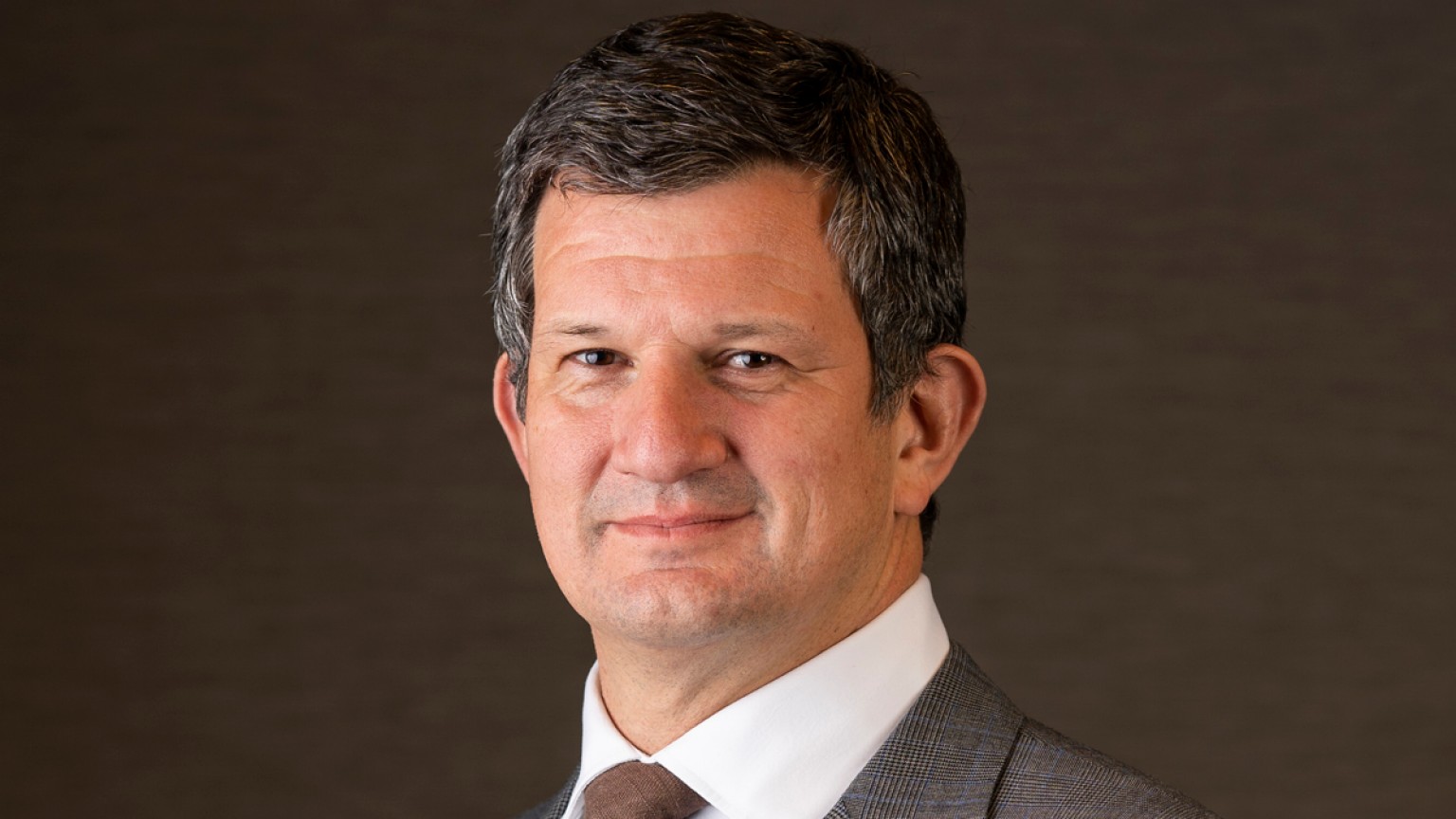
Steve Hasker
CEO of Thomson Reuters
6
APPEARANCES
6
PODCASTS
Sep 2, 2026


Steve HaskerGUEST
So what we provide is fiduciary-grade AI, and that's a term that we coined basically to define AI used by professionals who have to be right.
Steve HaskerGUEST
So if you're a lawyer, a tax accounting audit professional, and you produce a tax return or a brief or a contract, an opinion, that's incorrect, that hallucinates, that includes inaccurate citations or arguments, then there might be a fine.
Steve HaskerGUEST
And so, fiduciary grade AI is that additional higher standard where the results need to be deterministic, not probabilistic.
12 MINS LATER


Steve SedgwickHOST
I- is that the biggest part of your role, and has that been the biggest part of your decision-making?
Steve HaskerGUEST
One, go from what was basically a portfolio or holding company to an operating company, and there's real scale across the different technology applications and the platforms that we build and maintain.
Steve HaskerGUEST
Um, and, and the second part was to go from predominantly content, uh, to content-driven technology, as we called it.
Steve HaskerGUEST
And that, that, that second part, you know, I always f- I always think the hardest part in most CEOs' job is not to figure out necessarily the sort of direction of travel, but it's the speed of travel.
Steve HaskerGUEST
So, you know, you, you do not wanna move too slowly and be left behind, but you also don't wanna move so fast that, that, that the organization sort of, um, cracks beneath you or around you.

Steve HaskerGUEST
I mean, I was a partner at McKinsey in New York and thoroughly enjoying the work I was doing there.
Steve HaskerGUEST
I was on the partner election committee at McKinsey, and, and really, I think, viewed as, as sort of part of the furniture there, as someone who'd probably stay for their entire career.
Steve HaskerGUEST
And a guy called Dave Calhoun came along, and David spent 27 years at GE under Jack Welsh, amongst others, and he had come to be the, the CEO of, uh, Nielsen when five private equity firms took Nielsen private.
Steve HaskerGUEST
And he approached me and he said, "Look, I'd like you to leave McKinsey, and I'd like you to join Nielsen to help sort of turn around that business." And I said, "Oh, you know, that sounds interesting.
Steve HaskerGUEST
T- say more." And he said, "Well, I'm gonna teach you how to operate businesses." And he said, "You consultants think you can do that, but very few of you can.
8 MINS LATER

Sally PattenHOST
And so just on AI, what does it mean for Thomson Reuters, and how are you approaching AI as an organization?

Mike AbbottHOST
And I'd like to know from you, Steve, what are the biggest challenges that you're seeing right now?
Steve HaskerGUEST
Look, I think there's key challenges really leap out of the out of the research and out of the report.
Steve HaskerGUEST
So in other words, the tools are increasingly in place amongst professionals, but their organizations are not.
Steve HaskerGUEST
So adoption's not the problem to the point you just made, but value delivery is.
8 MINS LATER
Mike AbbottHOST
Um, I feel, I feel silly even asking the question because as quickly as things change, but if you could fast forward to 2030, so, you know, three or four years down the road, kind of, what do you think, um, what, what does it look like for professionals? What does work look like for professionals?

Mike AbbottGUEST
And I'd like to know from you, Steve, what are the biggest challenges that you're seeing right now?
Steve HaskerGUEST
Uh, look, I think the, these key challenges really leap out of the, out of the research and out of the report.
Steve HaskerGUEST
So in other words, the tools are increasingly in place, uh, amongst professionals, but their organizations are not.
Steve HaskerGUEST
So adoption's not the problem, to the point you just made, but value delivery is.
6 MINS LATER


Dan FaggellaHOST
Can you, can you give us maybe one of your workflows and then talk about the components that have to go in to make that 100% something we can feel confident about?
Steve HaskerGUEST
One is in the context of our legal assistant CoCounsel and our flagship legal research product, Westlaw, Westlaw Advantage.
Steve HaskerGUEST
And the second is, uh, a new product we've launched called Ready to Review, which is an end-to-end, almost like a driverless car for the tax return process that, that's in service of, you know, the people who do your tax and my tax and, and a, and a corporation's tax.
Steve HaskerGUEST
So with regard to the first one, in the context of a litigation, essentially what both Westlaw Advantage and CoCounsel, the agentic version of CoCounsel, which is now in beta, what they essentially do is they're grounded in, as I said, decades, in some cases centuries, of Westlaw and practical law content.
Steve HaskerGUEST
So this is sort of the definitive source of both case law and know-how, best practice language and terminology, and our products are built upon that and those data sources.
5 MINS LATER