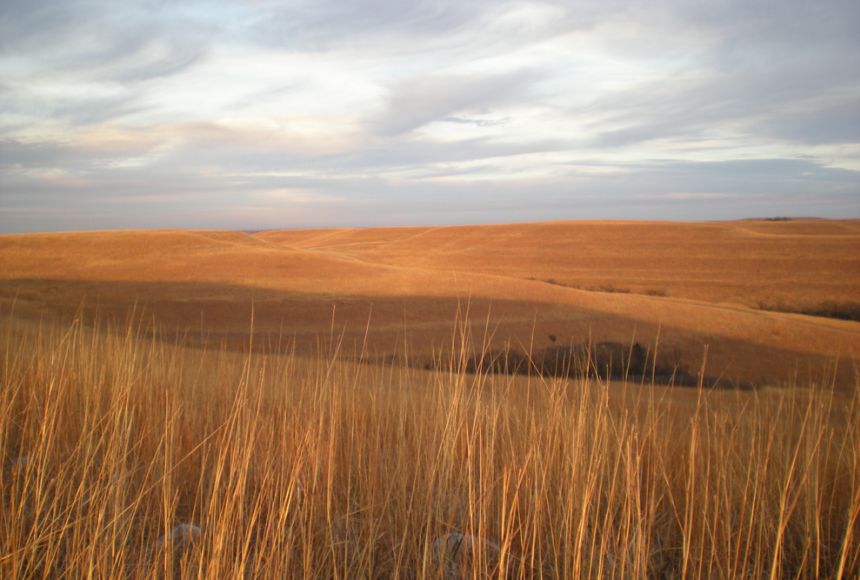
Steppe
36
MENTIONS
21
EPISODES
18
PODCASTS
Search complete. 36 mentions across 21 episodes found for "Steppe".
Oct 13, 2026

JP BristowHOST
Hello and welcome to the Russian Empire History Podcast, the history of all the peoples of the Russian Empire.
JP BristowHOST
I'm your host, JP Bristow, and this is Season One, The Forest, The Steppe, and the Birth of the Russian Empire.
JP BristowHOST
Episode 126, The Thirteen Years' War.
JP BristowHOST
Before we begin, a quick thank you to new boyars Kenny and Sean, and everybody supporting the podcast on any other platform.

speaker_0NARRATOR
The ship's sail catches the wind, and the waters of the Gulf open before him, carrying Ibn Battuta onward once more into the unwritten pages of his own extraordinary life.
speaker_0NARRATOR
Chapter five: The Steppes and the Golden Horde, thirteen thirty-two to thirteen thirty-three.
speaker_0NARRATOR
The road north out of Ladikea does not announce itself as a turning point.
speaker_0NARRATOR
It looks at first like any other track worn into the earth by centuries of hooves and sandals, climbing gently away from the Mediterranean coast toward hills still green with the last of the spring rain.
3 HRS 47 MINS LATER
speaker_0NARRATOR
He is appointed, it seems, to a position as a judge in Morocco, drawing on the legal training that first equipped him for travel three decades earlier.
speaker_0NARRATOR
The young scholar who left Tangier intending to study law under distinguished teachers has, by a circuitous route spanning most of the known world, arrived finally at the kind of settled scholarly and judicial life that might have been his had he never left home at all.
speaker_0NARRATOR
Except that he arrives at it having seen everything that lies between Tangier and the shores of China, everything between the Volga Steppes and the Niger River, a breadth of experience that no other judge in Morocco, or perhaps anywhere in the Muslim world, could claim.
speaker_0NARRATOR
What must these final years have felt like for a man built by circumstance and temperament into an instrument of almost perpetual motion? There is a particular kind of stillness that settles over a life once its great work is finished.

Jeremy Patrick BrockmanAUDIENCE
Oh, thank you.
Jeremy Patrick BrockmanAUDIENCE
The, the, the one thing that I wanted to talk about briefly, and I'll get off the line, is that, is that, uh, you know, there's a book called Warriors of the Steppe, and that's about, uh, about, uh, all those steppe warriors in Mongolia, et cetera, et cetera.
Julie FrancellaGUEST
Hm.
Jeremy Patrick BrockmanAUDIENCE
And, and, and, uh, uh, th- they talk about, uh, Genghis Khan.

Nicholas GordonHOST
In this podcast, we interview fiction and nonfiction authors working in, around, and about the Asia-Pacific region.
Nicholas GordonHOST
Winston Churchill famously called Russia, quote, "A riddle wrapped in a mystery inside an enigma." But what if this riddle is partly of our own making, the product of a habit of only looking west for answers? Michael Gorokhovsky today argues that to understand Russia, we should look east to the steppe and the empires it shaped.
Nicholas GordonHOST
Michael's new book, The Steppe and Its Empires: The Russian Empire and Its Eurasian Counterparts, sets Russia beside the Ottoman, Persian, and Mughal Empires in order to uncover the things that connect them.
Nicholas GordonHOST
Universal monarchy, reliance on outsider elites, law in the service of the state.
Nicholas GordonHOST
From the Mongol conquest to Putin's Russia, the steppe ends up explaining more than we'd expect it to.
Nicholas GordonHOST
Michael is a professor of history at Yale University in Chicago.
Nicholas GordonHOST
He is the author most recently of Russia's Twentieth Century: A Journey in One Hundred Histories and Russia's Steppe Frontier: The Making of a Colonial Empire, 1500 to 1800.
Nicholas GordonHOST
So Michael, thank you so much for coming on the show today.

Nicholas GordonHOST
In this podcast, we interview fiction and nonfiction authors working in, around, and about the Asia-Pacific region.
Nicholas GordonHOST
Winston Churchill famously called Russia, quote, "A riddle wrapped in a mystery inside an enigma." But what if this riddle is partly of our own making, the product of a habit of only looking West for answers? Michael Gorokhovsky today argues that to understand Russia, we should look East to the steppe and the empires it shaped.
Nicholas GordonHOST
Michael's new book, The Steppe and Its Empires: The Russian Empire and Its Eurasian Counterparts, sets Russia beside the Ottoman, Persian, and Mughal Empires in order to uncover the things that connect them.
Nicholas GordonHOST
Universal monarchy relies on outsider elites' law in the service of the state.
Nicholas GordonHOST
From the Mongol conquest to Putin's Russia, the steppe ends up explaining more than we'd expect it to.
Nicholas GordonHOST
Michael is a professor of history at Yale University in Chicago.
Nicholas GordonHOST
He is the author, most recently, of Russia's Twentieth Century: A Journey in One Hundred Histories, and Russia's Steppe Frontier: The Making of a Colonial Empire, 1500 to 1800.
Nicholas GordonHOST
So Michael, thank you so much for coming on the show today.

Joe ZawadaGUEST
[laughs]My next book is by one of my favorite authors, Emma Wong, who wrote Blood Over Brighthaven, The Sword of Kaigan.
Joe ZawadaGUEST
And she recently just put out this story called Destiny's Edge, which follows the most powerful warlord in the Steppe who sends a convoy consisting of his 10 best men and his fourth wife, Chie, to escort his newest bride home.
Joe ZawadaGUEST
When an undead monster attacks the bride's party on the road, killing all 10 of the champion's men, Chie's sword skills barely keep her alive, leaving her as the last line of defense for the young bride.
Joe ZawadaGUEST
And one of my favorite parts about this book is that it's a book that she exclusively put out for her newsletter subscribers.

Alvaro JaramilloHOST
I don't know.
Mollee BrownHOST
Mm-hmm.
Alvaro JaramilloHOST
Steppes are kind of dry.
Mollee BrownHOST
I was thinking that too.
Alvaro JaramilloHOST
Yeah.
JP BristowHOST
Hello and welcome to the Russian Empire History Podcast: the history of all the peoples of the Russian Empire.
JP BristowHOST
I'm your host, J.P. Bristow, and this is Season 1: The Forest, the Steppe, and the Birth of the Russian Empire.
JP BristowHOST
Episode 125: Prussia Joins Poland.
JP BristowHOST
Before we get to war between Moscow and Lithuania, we need to catch up on what has been happening in Lithuania since Casimir became Grand Duke of Lithuania and King of Poland.

speaker_0HOST
...
speaker_0HOST
the Steppes are inhospitable, where will they find food there, you know?
speaker_1HOST
He's got a bad angle, but on the flip side, I feel like if the Dead King is invading Praes, then that means Praes is all that's left.
speaker_1HOST
I don't, I don't think he's saying, "Uh, let me just scooch on by you to Procer." [laughs]

David WalesNARRATOR
Even a marked Slavic character is evident in places which is only natural.
David WalesNARRATOR
As is well known, Tchaikovsky's Overture Fantasy, Romeo and Juliet, is often dubbed Romeo and Juliet of the Steppes.
David WalesNARRATOR
A first mention of the Souvenir occurs in a letter to Ippolitov Ivanov, dated May 5, 1890, written shortly after Tchaikovsky's return from abroad.
David WalesNARRATOR
It is quoted by his brother Modest, My visit brought forth good fruit.
11 more episodes mention Steppe.
Create an account to see the whole feed, search across every transcript, and follow the entities you care about.