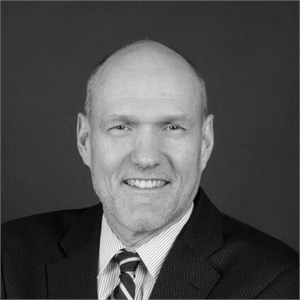
Stephen Walt
American political scientistWikipedia
32
MENTIONS
21
EPISODES
19
PODCASTS
Search complete. 32 mentions across 21 episodes found for "Stephen Walt".
Oct 1, 2026

David WearingGUEST
You think about where that theory came from.
David WearingGUEST
It came from John Mearsheimer and Stephen Walt, like back in sort of 20 years ago.
David WearingGUEST
These two American international relations academics who come from the quote, unquote, realist school of international relations, which is basically the center right.
Alex DohertyHOST
Yeah.

E. Michael JonesGUEST
If you criticize Israel, you're dead.
E. Michael JonesGUEST
Now, now, the, this is goes back to Jo- John Mearsheimer and Stephen Walt.
E. Michael JonesGUEST
They come up with this, uh, conceit, what should I call it? A conceit where criticism of Israel does not mean anti-Semitism.
E. Michael JonesGUEST
Well, good luck.

David WaldmanHOST
Mm.
Greg DworkinPANELIST
Stephen Walt, who is a longtime foreign policy talking head from Harvard, uh, had this piece in foreign policy.
David WaldmanHOST
Mm-hmm.
Greg DworkinPANELIST
What Machiavelli would say about Trump.

Tom SwitzerHOST
Patrick, I'm glad you raised the issue about the Shia militia in Iraq because, John, one of the unintended consequences of the Iraq invasion in 2003 and now is as good a time as any is to recognize that and to remind some of our viewers that you, John, were one of the leading intellectual opponents of the Bush administration's decision to launch that preventive war against Saddam Hussein's Iraq invasion.
Tom SwitzerHOST
In 2003, he wrote a very important essay with Steve Walt called An Unnecessary War in Foreign Policy.
Tom SwitzerHOST
That was a version that appeared in the New York Times.
Tom SwitzerHOST
But one of the unintended consequences of that war was that by overthrowing Saddam Hussein and dismantling Iraq's Sunni-dominated political order, the US, as Patrick's implied, it effectively handed Iran control enormous strategic influence in Iraq.

Peter EricksonHOST
I, I'm reading the book Is-Israel's Lobby, which is, you know, I highly recommend, and it's, uh, it was actually recommended by the author, one of the co-authors rather, of the Israel Lobby, you know, John Mearsheimer, and he remarked on how things have changed.
Peter EricksonHOST
It's just that, well, back then, you know, he, he and Stephen Walt, they were really voices in the wilderness, immediately condemned as anti-Semites, et cetera, et cetera.
Peter EricksonHOST
Um, and, and back then, too, uh, th-the political situation was really very different.
Peter EricksonHOST
You know, it was the, the Zionists really controlled the discourse.

Jonathan GeyerHOST
And our polling from the Institute for Global Affairs shows that public opinion has really moved on this.
Jonathan GeyerHOST
To explore how and why all of these political dynamics have shifted, I'm joined by Stephen Walt, the distinguished scholar of international relations at Harvard, who co-authored that original book.
Jonathan GeyerHOST
and Eli Clifton of the Quincy Institute for Responsible Statecraft, who has just co-written a sequel of Stortz entitled Israel's Lobby, America in the Grip of a Foreign Power.
Jonathan GeyerHOST
Thanks for listening to None of the Above.
Jonathan GeyerHOST
We hope you enjoy this conversation.
Jonathan GeyerHOST
Eli Clifton, Stephen Walt, welcome to None of the Above.
Jonathan GeyerHOST
Nice to be here.
Eli CliftonGUEST
Thanks for having us.
E. Michael JonesHOST
So I just did an article on John Mearsheimer's category mistake.
E. Michael JonesHOST
You know, John Mearsheimer and Stephen Walt wrote a book called The Israel Lobby.
E. Michael JonesHOST
It came out about 20 years ago.
E. Michael JonesHOST
And in it, they said, it's not the Jews.

Maria SultanHOST
In this episode, he examines a powerful new book by Eli Clifton and Ian Lustig titled Israel's Lobby, America in the Grip of a Foreign Power.
Maria SultanHOST
Meir Scheimer explains how this book builds on, expands, and in many ways challenges the arguments he and Stephen Walt first introduced 20 years ago in their landmark work, The Israel Lobby.
Maria SultanHOST
He walks us through the evolution of the lobby's influence, how public discourse has shifted, how accusations of anti-Semitism have been weaponized to silence criticism, and how the collapse of traditional media gatekeeping has opened space for new voices to speak openly about U.S. policy toward Israel.
Maria SultanHOST
He explores the changing political landscape after October 7th, the rise of alternative media, the role of plutocrats and campaign finance, the pressure placed on universities, and the growing divide between American public opinion and Washington's political establishment.

Mark LeidorfNARRATOR
He has fulsomely embraced Trump's policies to dismantle foreign assistance and ramp up deportations.
Mark LeidorfNARRATOR
He's gone along with everything the president has proposed, even when it appeared that he was uncomfortable with it, says Stephen Walt, an international affairs professor at Harvard University.
Mark LeidorfNARRATOR
In the Senate, Rubio was a leading critic of China, which he labeled a brutal totalitarian state that had lied and cheated to achieve its global position, and an unshakable defender of the U.S. military alliance with Europe against Russia's Vladimir Putin, whom he denounced as a war criminal.
Mark LeidorfNARRATOR
NATO is one of our strategic strengths that we have in the world, Rubio told NBC in 2024, because China doesn't have these alliances, for example, and neither do the Russians, for that matter, or the Iranians.

Glenn DiesenHOST
Yeah.
Glenn DiesenHOST
Well, uh, before, before we started recording today, uh, you know, you and I were talking about, uh, uh, Stephen Walt for a bit, um, about his warnings in the 1990s about, uh, I guess the, the, the burdens and the challenges of hegemony.
Glenn DiesenHOST
That is you-- if you want to-- You know, when, when the United States was unconstrained and seemingly all-powerful in the early '90s, uh, the, you know, the key argument was this, uh, you know, in, in all the celebrations and the optimism, uh, you know, he wanted to shine some light towards the threat, which is, what does such a powerful country do when it's not constrained anymore? I mean, when there's no-- seemingly can do anything in the world, absorb any pain, uh, suddenly you would assume that the leash would be taken off on, uh, on the military industrial complex and run crazy over the world.
Glenn DiesenHOST
And, uh, you know, he compared it to a 500-pound gorilla, uh, with [chuckles], with, with no limitations.
11 more episodes mention Stephen Walt.
Create an account to see the whole feed, search across every transcript, and follow the entities you care about.